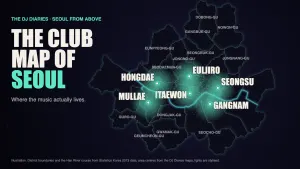
My first mix went up on Mixcloud in 2012. It was a two hour set recorded off a Pioneer DJM-800 in a practice room in Itaewon (이태원), nothing special technically, but it had a run of about forty minutes in the middle that I was proud of. Over the following week it got a hundred and twelve plays, more people than I’d played to in the previous three months combined. I checked the stats obsessively for a fortnight, then life moved on. When I looked again three months later, the number was still a hundred and twelve.
That pattern held for most of the next decade, and it’s why I’ve stopped uploading new mixes there. Mixcloud got the licensing right and never solved discovery, so my new mixes now go to YouTube, as video, because that’s where the listeners are. The old ones stay up as an archive. The reasoning applies to any DJ still treating Mixcloud as their main home for mixes in 2026.
Mixcloud Got the Hard Part Right
I chose Mixcloud in the first place because it was licensed to pay the producers whose tracks were in my mixes, and that mattered to me. Mixcloud pays licensing fees to rights holders, so a DJ mixing copyrighted music can share the work legally, without the constant threat of takedown that has made SoundCloud a precarious home for DJ mixes since around 2015. I had a couple of mixes taken down on SoundCloud back in the day. A legal home for recorded DJ sets that pays artists and producers is hard to build, and Mixcloud has made it work for over a decade.
I liked the interface too. A mix just looked better there, with the tracklist laid out, than it did on SoundCloud. And the early community was real. For a while Mixcloud had an active listener base that treated it the way people treated MySpace Music in 2007, as a place to find DJs you wouldn’t hear anywhere else. A handful of listeners from that period became part of my extended network: people who showed up at gigs, sent messages about specific mixes and cared about what was happening in the set.
Discovery Never Worked for Most of Us
The discovery problem has never been solved. Mixcloud’s recommendations surface what already has engagement, so new uploads from established accounts get pushed and everything else sinks into the archive. If you don’t already have a following on the platform, the mechanics work against you. Plays don’t compound the way they do on YouTube, and the social layer of follows, favourites and reposts is too thin to make the platform sticky for listeners rather than just uploaders.
Over time Mixcloud became a place where DJs post their mixes for other DJs, with no big listenership outside that circle. Most people now listen to music on Apple Music, YouTube Music and Spotify, and that’s where their attention lives. Some of my mixes found a small audience, and a few got picked up in Mixcloud’s own recommendations for a brief spike. Most stayed exactly where I’d left them.
Fan Subscriptions Only Pay If You Already Have Fans
Mixcloud’s fan subscriptions, launched as Select and now part of Mixcloud Pro, were meant to let DJs earn from their listeners directly. In practice they need a listener base engaged enough to pay, which most DJs on the platform don’t have. Creators receive 60 percent of what remains after licensing and transaction fees, and the minimum payout thresholds make it hard going for anyone outside the platform’s top tier. I tried it for eighteen months, and the earnings wouldn’t have covered the coffee I drank while uploading.
The product has moved slowly, too. The app and the website have improved, but next to the pace of change at YouTube, or even Bandcamp, Mixcloud long felt like a product being maintained rather than one being pushed somewhere new.
To Be Fair, Mixcloud Hasn’t Stood Still
Mixcloud has started working on discovery. In January 2026 it launched Spotlights, which lets you feature between three and ten profiles you admire on your own page, each with a personal note and up to three genre tags; the creators get an email and your followers get a nudge to follow them. That’s discovery by recommendation from people rather than playlists, which is the right instinct for a platform built on DJs. Whether it helps the DJ with no following yet is too early to tell.
It has also held a line that matters to anyone who uploads. In May 2025 Mixcloud said plainly that it doesn’t use your music to train generative AI models, the same month SoundCloud was rewriting its own terms of use after a backlash over AI training. And in 2024 it bought Encore, a sign that the company, still independent, is pushing into live bookings.
None of that changes my decision about new uploads. It is the reason I’m leaving the archive where it is rather than pulling it.
Where My Mixes Go Now
These days I post my mixes to YouTube, in video format. It’s not perfect, but that’s where the listeners are, and it has become the practical standard for the DJs I know whose mixes find real audiences. Discovery is better, playback on a phone is better, and a mix that connects can keep finding listeners for years instead of spiking once and settling. The cost is that YouTube’s Content ID system means some mixes get muted, monetised by labels or taken down.
Four Homes for a DJ Mix
What each platform is for in 2026, and the catch
DJ 믹스, 어디에 올릴까
| Platform | Use it for | The catch |
|---|---|---|
| Mixcloud | Your archive; licensed long mixes | Weak discovery without a following |
| YouTube | New mixes, as video | Content ID can mute or claim a mix |
| Bandcamp | Releases and mixes people buy | Needs a release worth paying for |
| SoundCloud | Edits and short material | Inconsistent copyright enforcement |
The ruleYouTube where discovery matters, Bandcamp where you want listeners to invest, SoundCloud if you’re already active there.
Bandcamp is the better answer for original productions and properly released mixes, especially if you’re working with a label or your own imprint. The economics are better than any streaming platform, and the relationship lasts longer because it involves a purchase. People who buy a mix from you on Bandcamp are more likely to come to your gigs than people who queued it up on Mixcloud once and forgot. SoundCloud is still useful for short material and for reaching DJs who use it as a feed, and its electronic music community is denser than Mixcloud’s.
The mixes I’m proudest of are my Metro series. Every couple of months I’d put up a new one, treated almost like a radio show: the music and sounds that were happening at the time, and the records I simply enjoyed playing out, each with its own colour and vibe. Thirteen years of mixes like those are staying on Mixcloud, because some of them document nights that don’t exist anywhere else. Deleting them would feel wrong. Feeding the archive new work would waste the work.
Frequently Asked Questions
Why are DJs leaving Mixcloud?
Discovery works against new uploads from accounts without an established following, the platform has developed slowly next to the alternatives, and fan subscriptions only earn real money for DJs who already have engaged listeners. The audience that uses Mixcloud to find music is much smaller than the one on YouTube.
Is Mixcloud still worth using for DJs in 2026?
As an archive for past mixes, yes, and its licensing model is still valuable. As the main home for new mixes you want people to hear, the effort to reach ratio is poor next to YouTube. Spotlights, launched in January 2026, adds recommendations from people, but it’s too early to say whether it fixes discovery for smaller DJs.
Does Mixcloud pay DJs?
Through its fan subscriptions, launched as Select and now part of Mixcloud Pro, creators receive 60 percent of what remains after licensing and transaction fees. It needs a listener base that already wants to pay. Mixcloud’s bigger contribution is paying licensing fees to rights holders on behalf of DJs.
Should I delete my old mixes from Mixcloud?
Probably not. An existing archive costs little to keep and has real value as a record of nights and periods. The better question is where new mixes go, and for most DJs in 2026 that means platforms with stronger discovery.
Further Reading
- Social Media for DJs: What Works Without Turning You Into Content
- How Streaming Changed the DJ Economy
- Beatport vs Bandcamp: The Battle for Electronic Music Sales
- Who Controls Music Discovery
- Digital DJ Tips: How and Where to Share Your DJ Mixes, a 2021 guide that still puts Mixcloud first, a useful counterpoint
- Boiler Room on YouTube, the clearest example of DJ sets finding a huge audience as video
- Boiler Room: Archive of DJ Mixes Now on Apple Music, how a licensed deal put DJ mixes on a mainstream streaming service
- Wikipedia: Dubset, the company that tried to clear DJ mixes for Spotify and Apple Music
- Wikipedia: Bandcamp and why artists use it for direct sales
- Wikipedia: the DJ mix as a recorded format
Sources
Mixcloud Pro: licensing and creator tools
Wikipedia: Mixcloud, its history and licensing model
NME on SoundCloud, DJ mixes and licensing
Music Business Worldwide: Mixcloud launches Select, a fan to creator subscription service
Mixcloud Help: How the Creator Subscriptions revenue model works
Music Business Worldwide: Mixcloud acquires Encore
Mixcloud blog: Why Mixcloud doesn’t train AI models on your music, 12 May 2025
Mixcloud blog: Mixcloud launches Spotlights, 12 January 2026
Mixcloud Help: Adding or updating Spotlights
TechCrunch: SoundCloud backtracks on AI related terms of use updates, 14 May 2025
YouTube Help: How Content ID works
Bandcamp Help: What are Bandcamp’s fees?
Written from Seoul, by someone who has been in the booth for more than twenty years. More on the site, or book a DJ.
Stay in the Loop
New writing on DJ culture, electronic music, and the Seoul underground, delivered when it matters.
More From The DJ Diaries


Play with the history
Four tools built from the same research as this site.