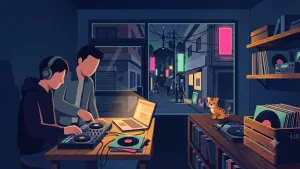
There’s a version of a Seoul night out that has almost nothing to do with the one in the guidebooks. It’s the one most of this city has. The traditional Korean drinking districts run before ten. They happen sitting down, in a room with fluorescent lighting and a gas burner set into the table, on a street with no English signage, usually with people you work with rather than people you chose.
한국어 요약 · Korean summary
관광객이 모르는 서울의 전통 술 동네
가이드북에 나오지 않는 서울의 밤은 앉아서, 불판을 가운데 두고, 대개 직장 동료와 함께 보내는 밤입니다. 종로, 을지로, 무교동, 대학로, 영등포, 신촌이 그 중심입니다.
종로는 피맛골에서 시작된 가장 오래된 술 동네이고, 을지로는 낮에는 인쇄 골목, 밤에는 힙지로가 됩니다. 이런 곳에서는 항상 음식을 함께 주문하고, 일찍 가서 밤 11시쯤 마무리하는 것이 예의입니다.
잘못된 정보나 날짜가 있다면 알려 주세요.
Most expats live here for years without doing it properly. That’s a shame, because it’s where Korean social life happens and it’s the cheapest and warmest thing in the city.
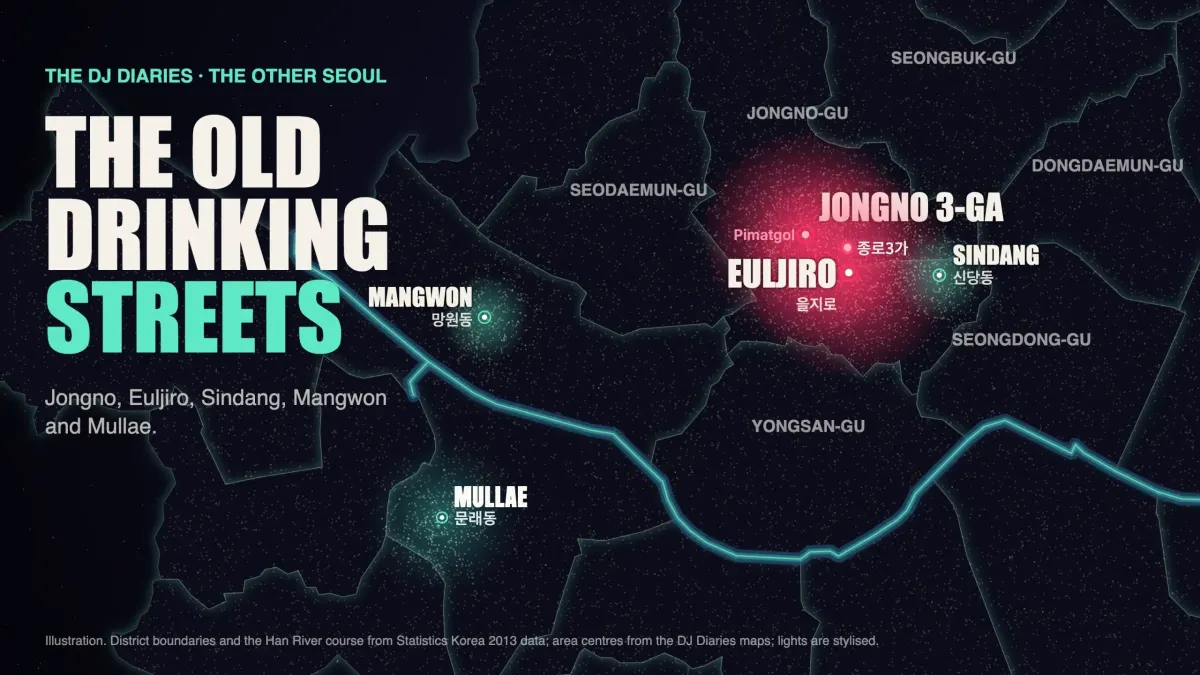
This is a guide to those districts: where they are, what each one is for, why they exist in that particular spot, and how to walk into one without feeling like you’ve gatecrashed. Consider it the counterweight to our club map, which covers the other Seoul entirely.
Jongno: The Deepest Roots in the City
If you do one of these, do Jongno (종로). It’s the oldest continuously operating drinking district in Korea and it has never stopped being one.
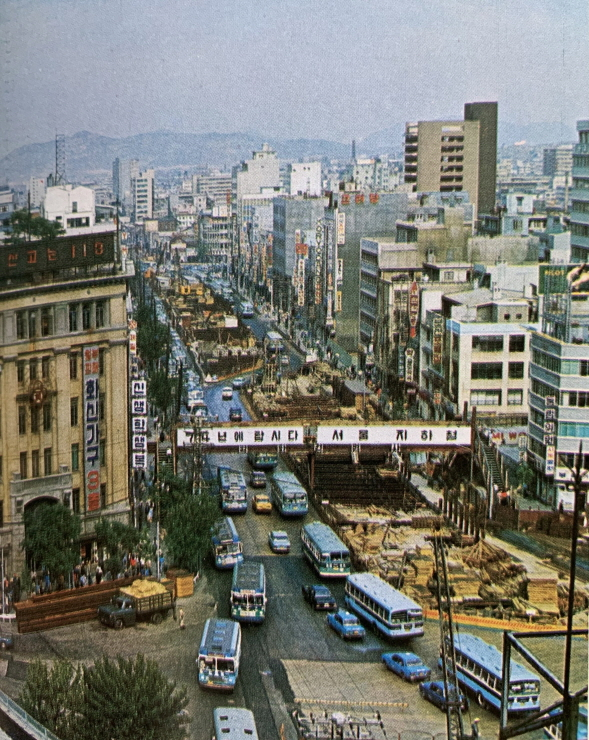
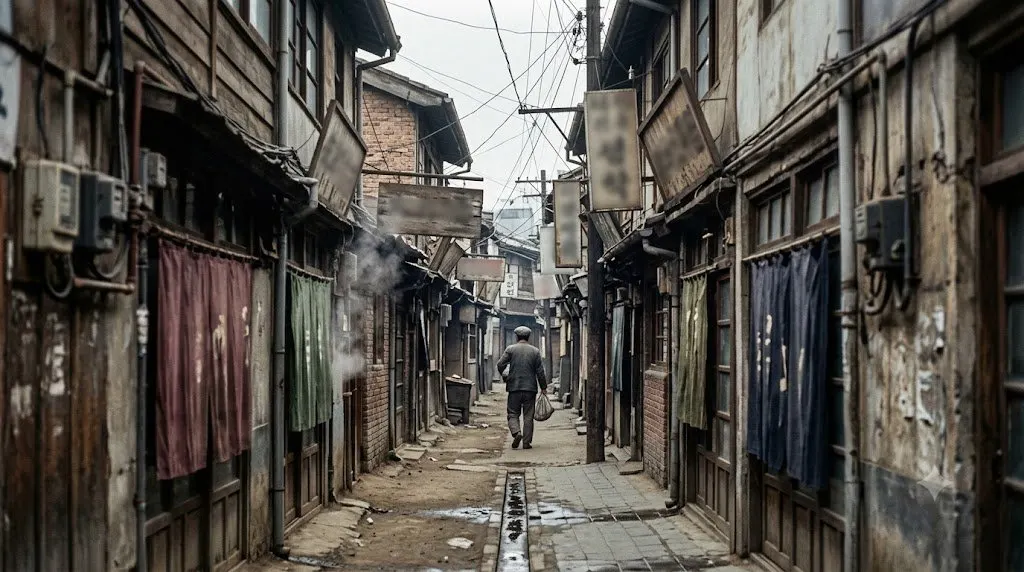
The origin story is a good one. Jongno was the main road of the Joseon capital, reserved in practice for officials on horseback that commoners were expected to bow to. So people walked the back lanes instead. Those lanes became known as Pimatgol (피맛골), the alleys for avoiding horses. They filled with what such a route always fills with: cheap standing bars, griddle shops, taverns for people going about their business out of sight of the important ones.
Reading the Street
Most of the original alley was lost to the office towers that now line Jongno, with a partial reconstruction inside them. Korean writers have been mourning it for twenty years. But the district kept its character. Around Jongno 3-ga (종로3가) you’ll still find standing bars, bindaetteok (빈대떡) shops that have been open for decades, gukbap (국밥) for a few thousand won, the old cinema and arcade blocks, and the highest concentration of men over sixty drinking soju in Northeast Asia.
It’s also where the last music dabang (음악다방) DJs kept working longest, which isn’t a coincidence. Jongno is where the twentieth century went to keep going.
Go for: cheap grilled food, makgeolli (막걸리) and the sense of being in a city that predates everything else on this list.
The Older Gay Community Started Here
Itaewon gets the credit in most people’s minds when the subject is gay Seoul, and its alley, informally called Homo Hill, is the more visible of the two (Wikipedia). Jongno is older. Hankyung Job&Joy reported in April 2023 that several cinemas operated in Nakwon-dong in the late 1970s, and that gay men, with no online communities yet, met in busy offline places, cinemas among them. The community grew as related businesses clustered around it, and that clustering shaped what’s there now.
One account on Korea Expose, which gives no author or date, describes the 1980s as a time of secretive bars you had to be guided to, and says Itaewon’s more open scene drew many younger Koreans away in the 1990s. That’s where the habit of starting a night in Jongno and finishing it in Itaewon comes from, which the same piece calls Jongtaewon. The Korea Herald found in 2022 that bars catering to LGBT customers sit scattered behind the main streets of Nakwon-dong and Ikseon-dong, and that some community members feel their space is being invaded as Ikseon-dong becomes a dating hotspot for straight couples. Hankyung’s 2023 piece put the area at more than 100 establishments, with one bar owner estimating that more than 95 per cent still admit only gay members under a membership system.
Regulars from the older crowd tell a consistent story. Many of the longer running rooms have gone as the streets around them were redeveloped and rents rose, and what’s left is quieter than it was. The Herald’s reporting points the same way, with people in the community describing Ikseon-dong’s gentrification as an intrusion on their space. The places that survive tend to sit in alley basements and on upper floors, often with nothing on the door to say what they are, and the Korea Expose account notes that some look like ordinary bars and that groups often gather in basement venues. That’s the opposite of Itaewon, where the clubs announce themselves from the street. The Jongno crowd skews more mature and more discreet, and it’s still out drinking there. This site hasn’t counted the rooms that have closed, so treat the pattern as what regulars describe rather than as a tally.
This isn’t a guide to those rooms, and this site isn’t the authority on them. It’s a note that the district beside the bindaetteok shops has had this second life for decades, that it’s still there, and that the older community didn’t start in Itaewon.
Euljiro: Workshops by Day, Everything Else by Night
One subway stop away and a completely different logic. Euljiro (을지로) is a working industrial district, mostly printing, lighting and small manufacturing. Its night grew up in the buildings the industry left empty after six.
The bar scene is famous now, and everyone calls it Hipjiro (힙지로). They’re worth the hype: unmarked doors, third floors, no signage, rooms that seat twelve. But the thing most visitors miss is the daytime district underneath it, roughly eleven hundred print shops around Inhyeon-dong (인현동) that are the reason the bars could afford to exist. Walk it on a weekday afternoon before you drink there on a Friday night.
Go for: the old school beer halls under the arches, the noraebang (노래방), and nogari (노가리) with draft beer on plastic stools in the middle of the street in summer, which is one of the great Seoul experiences and costs almost nothing.
Mugyo-dong: Music Lounges, Then Hangover Soup
Mugyo-dong (무교동) sits between City Hall and Jongno, and its drinking history is the best documented of the older downtown pockets. By the late 1960s and into the 1970s it was where the postwar generation went out. Music lounges served beer and played Western pop and rock, and the folk musicians who later helped shape modern Korean pop met in one of them, a lounge called C’est Si Bon.
The food tells the rest of the story. Yonggeumok (용금옥), a loach soup (추어탕, chueotang) restaurant, opened in 1933. Bukeogukjib (북어국집) has served only dried pollack soup since 1968. Woojeong Nakji (우정낙지) and Won Daegutang (원조대구탕) built their menus on spicy octopus and cod soup from the middle of the 1970s. The district became a place people end up after a long night of drinking, with regulars over sixty at the oldest counters and younger diners looking for a cheap, serious bowl.
Go for: a bowl of hot soup at the end of a night out, or the start of the next morning. The lounge era is mostly gone, so treat Mugyo-dong as the place where you can still taste what the old downtown drinking economy ran on.
Daehangno: The Theatre District Rhythm
Daehangno (대학로) takes its name from the old Seoul National University campus that once sat there. When the campus moved the area kept a cultural function, becoming the centre of Korean theatre, with dozens of small stages, most of them basements.
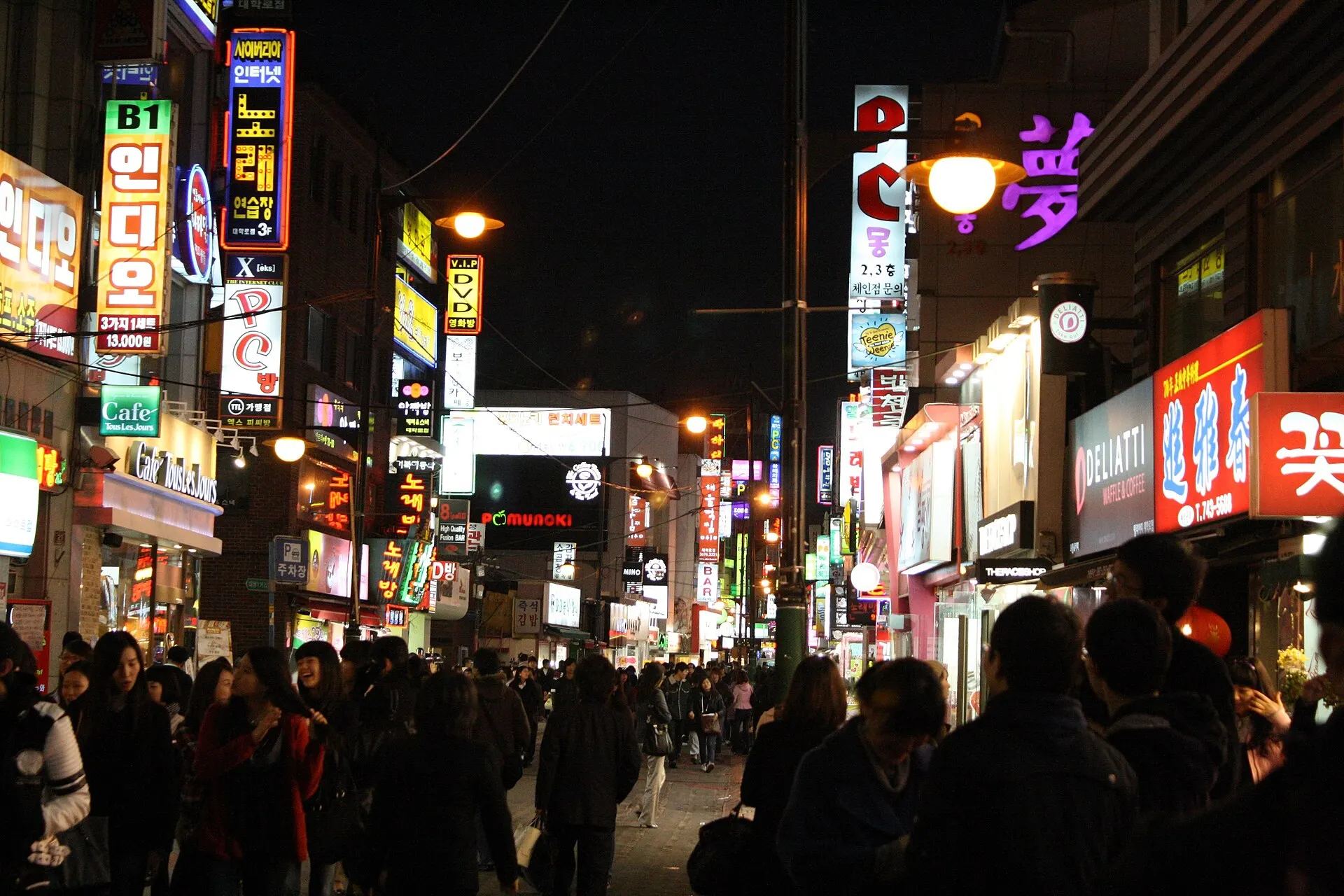
That gives the district an unusual evening shape: everything fills at once when the shows come out, around nine or ten, and then quietens relatively early. The crowd skews young and the drinking is casual rather than heavy.
Go for: a play you won’t fully understand followed by chicken and beer with the audience. That’s a better night than that sentence suggests.
The numbers explain the shape of the night. The Korea JoongAng Daily counted more than 120 theatres in Daehangno in 2009, most with fewer than 300 seats, and about 400 troupes based in the district. Seoul National University’s main campus moved to Gwanak in March 1975, and theatres from Sinchon and Myeongdong followed into the vacated streets in the early 1980s. The road took the Daehangno name on 5 May 1985, when it was designated a street of culture, and the city made it a special district for theatre and the performing arts in 2004 (Wikipedia).
Hakrim Dabang (학림다방), which opened in 1956, is described as the oldest active cafe in Seoul. It’s a useful reminder that this district was drinking coffee and listening to records long before the theatres arrived.
Between Euljiro and Daehangno: Jongno 3-ga, Nakwon-dong and Ikseon-dong
Daehangno runs from the Jongno 5-ga crossroads up to the Hyehwa rotary and centres on Hyehwa station on Line 4. Follow the old road back south and you pass through Jongno 3-ga, Nakwon-dong and Ikseon-dong before you reach Euljiro, which is why a night that starts with a play can end somewhere very different. Think of it as one long strip of the old city rather than five separate districts.
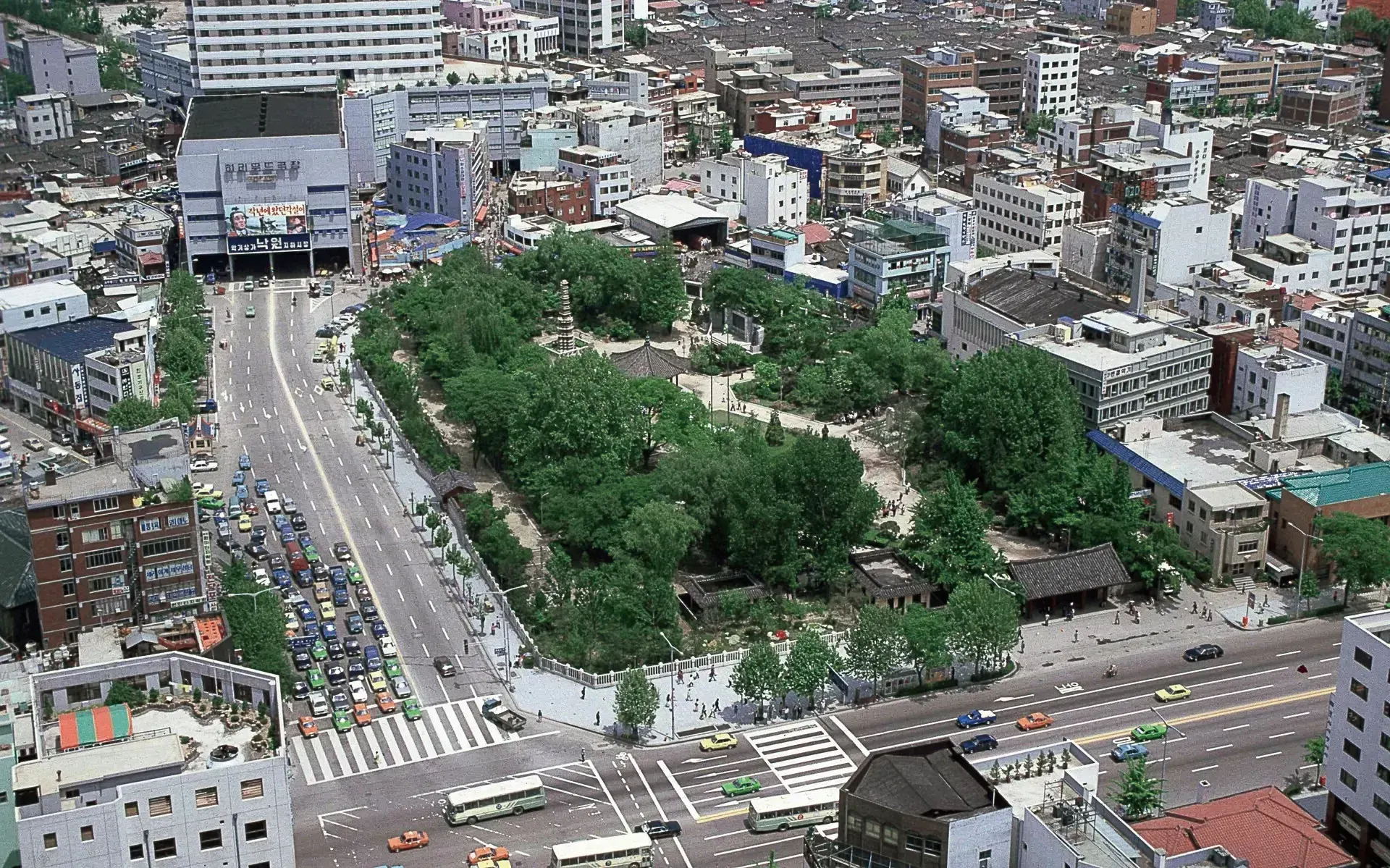
The Korea Herald describes Jongno 3-ga station as having 16 exits and three subway lines. Nakwon-dong’s restaurants typically serve makgeolli (막걸리) and pajeon (파전), and the Nagwon Arcade, built in 1970, holds more than 200 instrument shops. Ikseon-dong sits outside Exit 5, an 800 metre hanok (한옥) lane that Seoul removed from its redevelopment zone in 2018 to keep the houses and limit building heights. Its street food vendors and outdoor tables returned once distancing rules ended. Tapgol Park (탑골공원), the park the 1985 photograph above shows as Pagoda Park, reopened in 2022 after nearly two years closed, and older men still gather there to play janggi (장기).
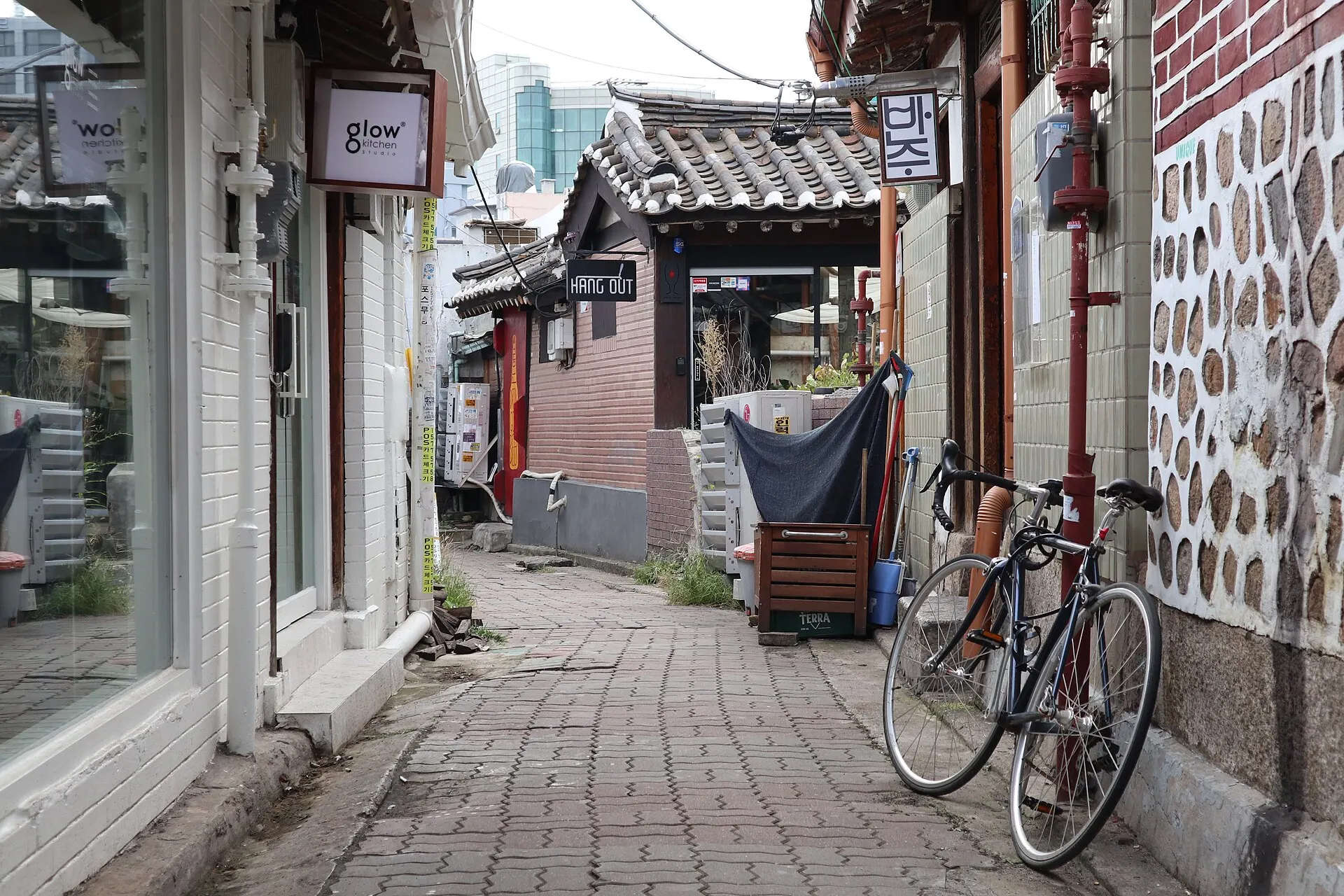
Go for: a lap of the Ikseon-dong lane before the crowds arrive, and janggi players in the park on a weekday afternoon.
| Area | Known for | How the night runs |
|---|---|---|
| Euljiro | Print shops, lighting and small manufacturing, plus the hidden bars above them | Workshops by day, the bars wake after six |
| Jongno 3-ga | Standing bars, bindaetteok shops, three subway lines and 16 exits | Cheap and unhurried, with a crowd that skews older |
| Nakwon-dong | Nagwon Arcade, built in 1970, with over 200 instrument shops, and makgeolli and pajeon restaurants | Evening tables in the alleys behind the arcade |
| Ikseon-dong | An 800 metre hanok lane, kept out of the redevelopment zone in 2018 | Outdoor tables and street food, busiest on weekends |
| Daehangno | More than 120 theatres, most under 300 seats, and about 400 troupes | Fills at nine or ten when the shows end, then quietens early |
Yeongdeungpo and the Southwest: Where the Factories Drank
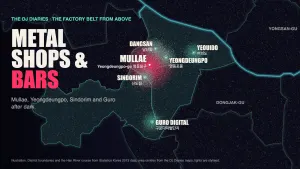
Across the river and west, the drinking economy was built by industry rather than by offices or students. Yeongdeungpo (영등포) has been Seoul’s industrial district since the colonial period. The Guro (구로) export complex south of it employed over a hundred thousand people at its peak in the late seventies.
Workers drank where they worked, because getting into central Seoul after a shift was an hour each way. The result is a dense, cheap, food first, early starting night that still runs today, now serving the IT workforce of G Valley on the same streets that served machinists. I’ve written about that belt in detail separately, including Mullae (문래), the steel district slowly turning into an arts district.
Go for: the cheapest night on this list, jokbal (족발) and gukbap and hof at volume, and a Seoul most visitors never see.
Sinchon: The Ghost of Student Seoul
Sinchon (신촌) was the student capital of Korea in the eighties and early nineties, serving Yonsei, Ewha and Sogang. If you talk to Koreans now in their fifties this is the district of their youth.
It has had a hard couple of decades, and the reason is instructive: student districts run on cheap rent, and popularity destroys cheap rent. Seoul Institute researchers have published work asking why people left Sinchon. It’s still busy, still young, still full of chains and cheap pocha (포차) and karaoke, but the energy moved to Hongdae (홍대) and then past it.
Go for: a clear look at how a Korean district ages, and very cheap student prices in the back streets.
Sinchon is one of several student streets. Our full look at who is emptying and who is still busy is in Seoul’s university drinking streets, and the bar by bar map is in where Seoul students drink.
The Neighbourhood Alley Is the Real Korean Drinking District
The thing I most want a newer resident to take from this article is that the most typical Korean night out doesn’t happen in a named district at all. It happens in the golmok (골목), the alley, within four hundred metres of a residential subway station, in a street of small businesses that exist entirely to serve the people who live upstairs.
Every station in this city has one. Yours does. It has a chicken place, a grill place, a hof, two pyeonuijeom (편의점), a noraebang and a 24 hour gukbap room. The customers are locals, the owner recognises regulars within three visits. The prices are what people who live there can pay every week rather than what a visitor pays once.
If you’ve lived here for two years and never drunk within walking distance of your own flat, you’ve been commuting to Korean culture while standing on top of it.
How to Not Feel Like an Intruder in a Korean Drinking District
Practical rules for all of the above, most of which come down to reading the room correctly.
Order food, always. These are food businesses culturally and, as this site has covered, in terms of how they’re registered. Ordering drinks only creates a real problem for the owner and reads as rude.
Go early and expect to be finished by eleven. This isn’t a warm up before the club, it’s the actual event.
Learn four words: yeogiyo (여기요) to call staff, igeo (이거) for that thing on the next table, hana deo (하나 더) for another, gyesan (계산) for the bill. That vocabulary will carry you through a hundred nights.
Don’t pour your own drink, and use two hands with anyone older. The full etiquette is in our drinking culture guide, but those two rules cover ninety percent of it.
And be relaxed about being the only foreigner in the room, because you very often will be. In more than twenty years of doing this the reaction has almost always been curiosity and an offer of somebody’s side dishes. These districts aren’t closed. They’re just not advertised, which isn’t the same thing.
FAQ
Where do Koreans actually go out in Seoul?
Far more often in ordinary neighbourhood alleys near their own subway station than in the famous districts. Beyond that, the traditional drinking areas of Jongno, the industrial southwest around Yeongdeungpo and Guro, Euljiro’s workshop district, and university areas like Sinchon and Daehangno. Hongdae, Itaewon (이태원) and Gangnam (강남) carry most visitor traffic but represent a small slice of how the city really drinks.
What time do Koreans start drinking?
Typically right after work, around six or seven in the evening, with the first round being a proper sit down meal. The pattern follows the working day rather than a late club schedule. Only the club districts run to the very late hours that visitors tend to assume are the norm.
Is it rude to order only drinks in a Korean bar?
It is unusual and it creates a practical problem for the venue. Korean drinking culture pairs alcohol with anju (안주), food eaten alongside it. Most bars and music venues also operate on a restaurant business registration built around food service. Ordering at least one dish is both the cultural expectation and a courtesy to the owner.
Are traditional Korean drinking districts friendly to foreigners?
They’re welcoming but not adapted. Expect little or no English, no English menus, and often no other foreign customers, but very rarely any hostility. Translation apps, pointing, and a handful of Korean phrases handle almost every situation, and regulars and owners tend to respond to visitors with curiosity rather than suspicion.
Where is Daehangno, and how does it connect to Jongno and Euljiro?
Daehangno runs from the Jongno 5-ga crossroads to the Hyehwa rotary in Jongno District and centres on Hyehwa station on Line 4. Jongno 3-ga, Nakwon-dong and Ikseon-dong sit between it and Euljiro, so the whole strip works as one long walk through the old city.
Did Seoul’s gay community start in Itaewon?
Not only there. Hankyung reported that gay men were already meeting around the cinemas of Nakwon-dong in the late 1970s, and the Jongno scene is still active today. Itaewon’s Homo Hill is more visible, and one account describes Itaewon drawing younger Koreans away from Jongno in the 1990s.
Sources and Archives
Mugyo-dong. Korea JoongAng Daily on Mugyo-dong (2012).
Daehangno, the neighbours and the older gay scene. Korea JoongAng Daily on Daehangno (2009) · Wikipedia on Daehangno · Korea Herald on Jongno 3-ga (2022) · Hankyung Job&Joy on Nakwon-dong (2023) · Korea Expose, Gay Jongno · Wikipedia on Homo Hill.
Jongno and Pimatgol. Financial News on the alley as the original downtown market · Asia Economy on where its taverns went · Seoul Love on the Jongno bossam alley.
The other districts. Euljiro’s industry sits under the Sewoon Map and our piece on the print alleys. Sinchon’s decline is documented in the Seoul Institute study asking why people left, with Seoul Love on the attempt to revive it. For the industrial southwest, our factory belt guide has the full history. For the street food and tent culture that runs through all of these districts, the Korea Tourism Organization and Stripes Korea both keep current guides.
Old photographs of the drinking city. Search 선술집, 대폿집, 포장마차 and 종로 in Seoul History Archive (서울역사아카이브) and Seoul Photo Archive (서울사진아카이브). Seoul Institute, Seoul in Photographs lets you move by decade. That’s the best way to watch the tent bars appear and then thin out under regulation. e영상역사관 national archive photography has the newsreel version.
And the etiquette, in more detail than this article had room for, is in our piece on how Korean nightlife developed its own rules.
Picture Credits
- Jongno during Line 1 subway construction, 1971
공유마당, via Wikimedia Commons. Licence: KOGL Type 1. View the original file and its full licence terms. - Pagoda Park, Jongno, 1985
National Museum of Korean Contemporary History, via Wikimedia Commons. Licence: KOGL Type 1. View the original file and its full licence terms. - Daehangno at night
Gipe0001, via Wikimedia Commons. Licence: CC BY-SA 3.0. View the original file and its full licence terms. - Ikseon-dong hanok lane
S h y numis, via Wikimedia Commons. Licence: CC BY-SA 4.0. View the original file and its full licence terms. - Present day photographs
The DJ Diaries.
Historical images on this site are used under the licence stated for each file. KOGL Type 1 is the Korean public sector open licence permitting commercial use and adaptation with attribution; public domain items carry no restriction. If you hold rights in any image here and believe it has been used in error, get in touch and it will be removed.
Written from Seoul by The DJ Diaries, in Seoul since 2002 and in the booth for thirty years. More on the site, or book a DJ.
Stay in the Loop
New writing on DJ culture, electronic music, and the Seoul underground, delivered when it matters.
More From The DJ Diaries
Play with the history
Four tools built from the same research as this site.