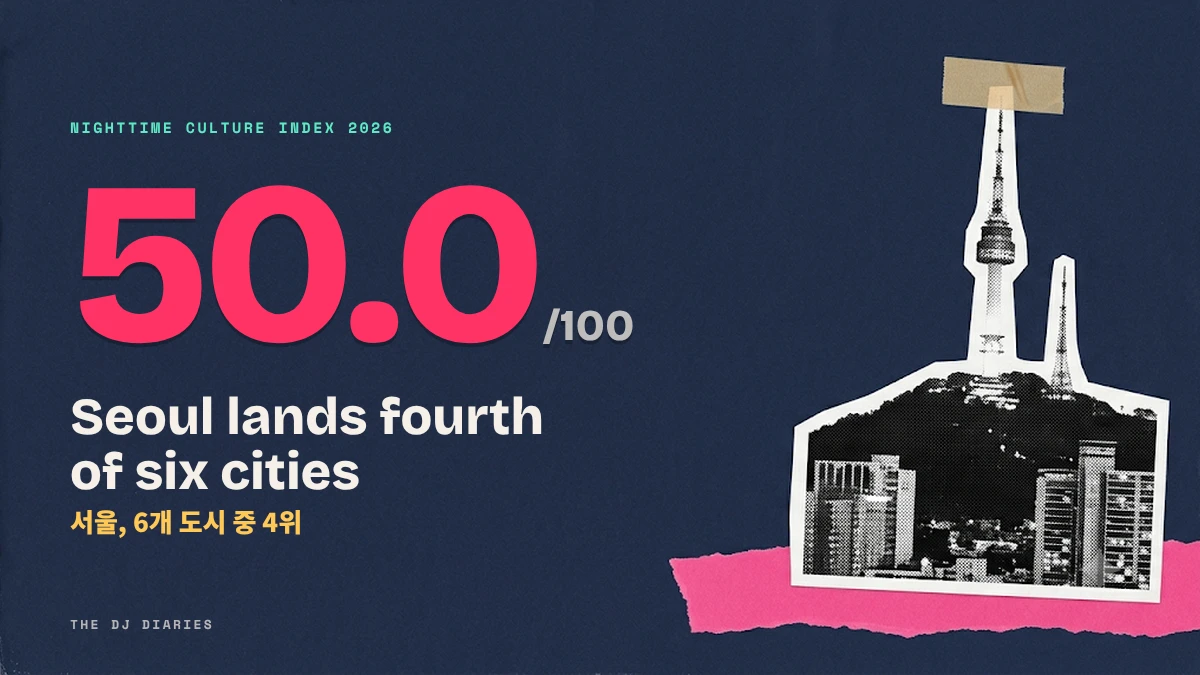
The first Nighttime Culture Index puts Seoul at 50.0 out of 100, fourth among the six cities it measured. Amsterdam leads at 63.0, Sydney follows at 62.9 and New York at 61.2, then comes Seoul, then São Paulo at 47.7 and Lagos at 36.9. Mixmag Asia reported the headline on 27 October, in the week the index launched at Amsterdam Dance Event (ADE).
A single score hides a lot, so this piece goes to the city pages behind it. Every figure below comes from the index’s public pages, the sources listed at the end, or the DJ Diaries’ own survey, and where the index doesn’t say something, the piece says so.
Nighttime Culture Index 2026 · 서울 Seoul
Seoul Six city average 53.6
- 1Amsterdam63.0
- 2Sydney62.9
- 3New York61.2
- 4Seoul50.0
- 5São Paulo47.7
- 6Lagos36.9
Seoul in six readings
Figure 1
Overall score by city
Out of 100. The first edition covers six cities. The dashed line is the six city average.
서울 Seoul viewFourth of six, 13.0 points behind Amsterdam and 3.6 below the average, but 2.3 ahead of São Paulo.
What the Index Is, and What It Isn’t
The Nighttime Culture Index (NCI) is a project of Amsterdam Dance Event and VibeLab, a nighttime research and consulting group. It was announced in August and launched in October as a baseline: six cities, one score each, an interactive public dashboard and an annual report. Most official attention on the night goes to licensing, noise and policing, and most studies count money. The NCI sets out to measure cultural value instead, treating the night as the place where music, art, scenes and belonging get made.
Each city is scored on six dimensions built from 30 indicators. Twenty four of those carry a 0 to 100 score against a fixed target, such as venues per million people or hours of minimum wage, and six are reported as figures or findings only. The research behind the scores used a 767 respondent online survey in English, Dutch, Portuguese and Korean, six focus groups with 67 people, 14 expert interviews, and desk research covering 3,073 venues, 12,664 event lineups and 29,727 cultural events beyond music.
Each city had a local coordinator from inside its scene. For Seoul, ADE’s announcement names Daniela Solano, a researcher and writer whose work has appeared in Mixmag Asia, Le Monde Diplomatique and The Korea Times. Mixmag Asia reports that local coordinators checked the data for each scene.
The index is open about its limits. The survey and focus groups aren’t representative of each city’s population, data coverage is uneven (Lagos most of all), the area measured differs from city to city, and six indicators aren’t scored at all. Venue counts in particular aren’t adjusted for population, so 457 venues in New York and 181 in Seoul can’t be read as density. The 2026 edition is a baseline. More cities arrive in 2027, and 2028 is when scores can start to be tracked over time.
One figure in Mixmag’s coverage belongs to a different project. The US$3 to 4 trillion estimate for the global night economy comes from the Night Time Economy Report 2026, published by the Nighttime Foundation and launched at the World Economic Forum in Davos. It puts the night economy at about 3 percent of global GDP and roughly one in ten jobs, on a 6pm to 6am definition. The report’s public page doesn’t mention Korea.
Six Cities, Six Dimensions
Figure 2
Six cities, six dimensions
Each panel ranks the six cities on one dimension, out of 100. Seoul is in pink.
Read across the panels and Seoul sits fourth on Diversity, Community and Policy, and fifth on Creative Ecology, Space & Infrastructure and Sustainability & Environment. Mixmag’s line that Creative Ecology is Seoul’s highest mark holds inside Seoul’s own scorecard, at 60.0. Set against the other five cities, that same 60.0 is the second lowest in its row, ahead of Lagos only.
Figure 3
How far Seoul sits from the best city
Points behind the leader on each dimension, on the full 0 to 100 scale.
서울 Seoul viewClosest to the top on Creative Ecology (11.2 behind New York). Furthest on Sustainability, 33.0 behind Sydney.
The distance to the leader is smallest on Creative Ecology (11.2 points) and Diversity (11.8), grows to 14.1 on Community and 16.2 on Policy, and opens to 33.0 on Sustainability, where Sydney scores 65.5 against Seoul’s 32.5. Sustainability is a weak row for most of the field: New York scores 42.5, São Paulo 35.0 and Lagos 15.5. Seoul is part of a pattern rather than an outlier, though it still sits below the six city average of 41.8.
Where Seoul Scores Well
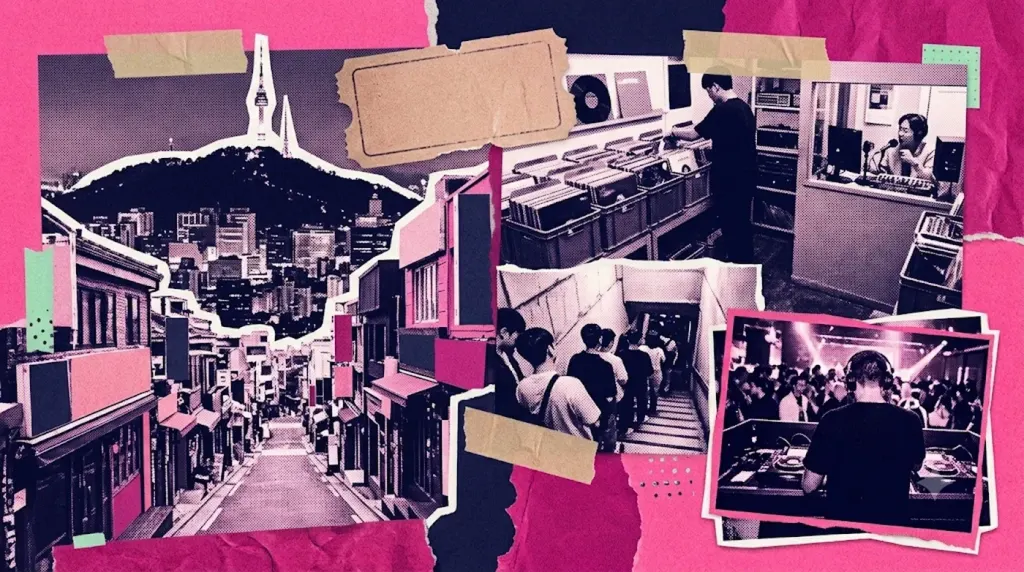
The strengths are real, and they are specific. Seoul’s indicator for cultural events beyond music scores 74.0 out of 100, helped by the 197 events the research team counted, even though its 116 cultural venues open after dark are the second fewest of the six. On raw counts Seoul has 181 dedicated music venues, behind only New York, and 81 large music festivals, behind only Amsterdam, though neither count is adjusted for population. The index’s Seoul page puts the strongest nightlife in street performance, markets and food, and finds the dance scene living mostly in small rooms such as record shops and community radio.
Figure 4
Venues and festivals, raw counts
Counts aren’t adjusted for population, and the area measured differs by city.
Dedicated music venues
Large music festivals
Cultural venues open at night
서울 Seoul viewSecond for music venues and for festivals, but fifth for cultural venues open at night, ahead of Lagos only.
One focus group participant, an A&R, DJ and radio host who moved to Seoul from London, rated the standard of the city’s DJs, producers and artists as very high and pointed to how many parties and collectives it has. That fits what the DJ Diaries survey heard from club goers about local talent, covered further down.
Seoul Against Each City
Each of the other five cities shows Seoul something different. Amsterdam has the funding history, Sydney the sustainability scores, New York the scale, São Paulo the governance headaches and Lagos the case for scenes without fixed venues.
 AI image
Amsterdam
63.0 · 1st 13.0 ahead of Seoul
Nightlife has been recognised and funded here since 2003. That shows in Policy & Civic Health (62.0 to Seoul’s 45.8) and in harm reduction and welfare, which scores 82.3. The price of maturity is rising costs and closing small venues, and promoters say ownership stays concentrated.
 AI image
Sydney
62.9 · 2nd 12.9 ahead of Seoul
Leads on Sustainability (65.5, Seoul 32.5) and scores 68.2 on Creative Ecology. Its page describes new energy since the lockout laws, with DIY collectives in spaces owned by their communities, set against weak late night transport coverage (45.0) and policing that focus group members say has closed LGBTQIA+ venues.
 AI image
New York
61.2 · 3rd 11.2 ahead of Seoul
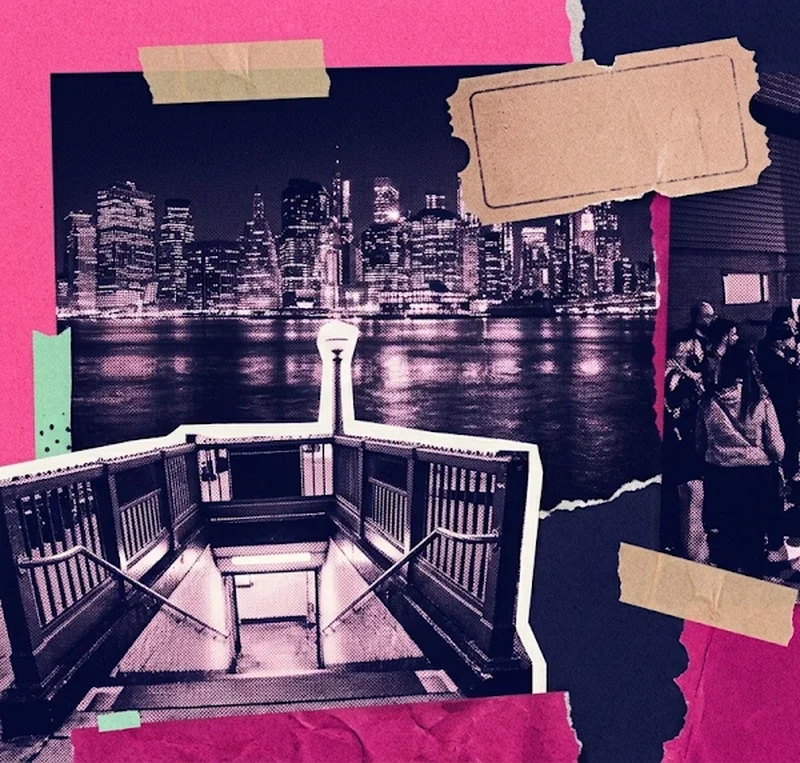
The biggest raw scene, with 457 dedicated venues, and the top marks for Creative Ecology (71.2) and Community (68.6). A club ticket costs 1.76 hours of minimum wage, slightly more than Seoul’s 1.70, and public funding for nighttime culture scores 45.0.
 AI image
São Paulo
47.7 · 5th 2.3 behind Seoul
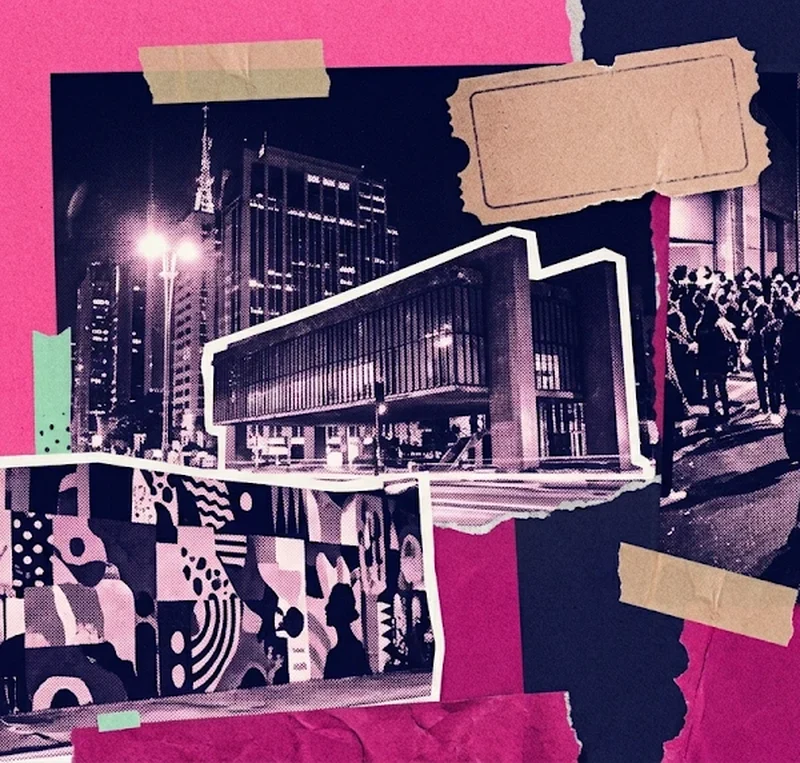
Seoul’s closest rival, 2.3 points back, and ahead on Creative Ecology, Space and Sustainability. Seoul wins Diversity (49.6 to 46.0), Community (54.5 to 43.9) and Policy (45.8 to 39.1). Nighttime governance scores 15.0 in São Paulo against 39.0 in Seoul, and a ticket costs 9.16 hours of minimum wage.
 AI image
Lagos
36.9 · 6th 13.1 behind Seoul
Just 15 dedicated music venues and a club ticket worth 24.76 hours of minimum wage, yet informal and grassroots spaces score 74.0. The scene runs on events more than rooms, a reminder that a low score on infrastructure isn’t a low score on energy.
São Paulo is the most useful comparison because the two cities finish within 2.3 points of each other while winning different rows.
Figure 5
Seoul against São Paulo, dimension by dimension
The two cities are 2.3 points apart overall and split the six dimensions three each.
서울 Seoul viewThree rows each. Seoul’s lead on Community (10.6) is the biggest gap either way, and it’s what keeps Seoul ahead overall.
The Price of a Night
A club ticket in Seoul costs 1.70 hours of minimum wage work. At the 2026 minimum wage of ₩10,320 an hour, that works out to about ₩17,500 (C$17). It sits a touch below New York’s 1.76 hours and above Sydney’s 1.13 and Amsterdam’s 1.33, and a long way from São Paulo at 9.16 hours and Lagos at 24.76.
Figure 6
Hours of minimum wage work for a club ticket
Fewer clocks means a cheaper night out. Seoul’s 2026 minimum wage is ₩10,320 an hour.
서울 Seoul viewA ticket is about ₩17,500 (C$17), cheaper than New York in work hours, dearer than Sydney or Amsterdam. The whole night is the bigger bill: about ₩70,000 in the DJ Diaries survey.
Entry isn’t the whole bill. In the DJ Diaries survey of 343 Seoul club goers, a typical full night cost about ₩70,000 (C$67), close to seven hours of minimum wage. The ticket is the cheap part of the night, which is why the index’s cost indicator and a clubber’s lived budget tell different stories.
Who Gets Booked
Female and gender diverse artists make up 30.0 percent of Seoul lineups. That puts Seoul in a tight cluster with Amsterdam (31.2), New York and São Paulo (both 30.6) and Sydney (29.8), while Lagos sits apart at 20.8. No city in the first edition is close to parity, which is the bigger finding than Seoul’s place within the cluster.
Figure 7
Female and gender diverse artists in lineups
Share of artists on the lineups analysed, on a 0 to 50 percent scale.
3 in 10 artists on Seoul lineups are female or gender diverse. Parity would be 5 in 10.
서울 Seoul viewSeoul is in a tight pack: five cities sit within 1.4 points. Lagos is the outlier at 20.8 percent, and no city is near parity.
Safety, and Two Different Numbers
Mixmag reports that about 75 percent of Seoul respondents feel safe inside nighttime venues, in line with Lagos and São Paulo, while Amsterdam, New York and Sydney sit at 86 to 88 percent. The index’s Seoul page lists a different number, perceived safety at night scored 69.5 out of 100, which is an index score rather than a share of people. The two measure different things, and neither is an official crime figure.
Figure 8
Respondents who feel safe inside nighttime venues
Grouped as Mixmag Asia reports them. Neither number is an official crime figure.
Seoul, Lagos, São Paulo
Amsterdam, New York, Sydney
서울 Seoul viewSeoul’s own page gives a separate measure: perceived safety at night scores 69.5 out of 100, an index score rather than a share of people.
Where Seoul Loses Points: The Governance Score
Seoul’s nighttime governance indicator scores 39.0, and Policy & Civic Health as a whole scores 45.8, fourth of six. Mixmag’s report names a specific rule among Seoul’s problems: many clubs are classified as restaurants, where dancing is technically illegal, and respondents said the setting leaves little room for experimentation and local talent development.
The reporting on this is concrete. According to the Korea Times, bars, cafes and live music rooms are usually registered as general restaurants (일반음식점, ilban eumsikjeom) under the enforcement rules of the Food Sanitation Act, which restrict dancing. The alternative, an entertainment bar (유흥주점, yuheung jujeom), brings a harder licensing process and stricter zoning, tax and business rules that most small venues can’t meet. Live music venues were legalised in late 1999, when a ban on performances by two or more musicians in restaurants was lifted, and Ovantgarde says no follow up rules were ever written for live venues.
The case in the news is Ovantgarde in Busan (부산). As the Korea Times reported, officials visiting over an unrelated complaint saw a band playing to an audience and reported the venue for allowing dancing. The owner disputes that, saying people were standing and responding naturally to the music. A two month suspension followed, and a petition filed on the National Assembly’s site on 19 August asks for the Food Sanitation Act and the Public Performance Act to be revised, with clear criteria separating ordinary audience behaviour from entertainment activity. Mixmag Asia has its own account of the case.
Figure 9
The penalty ladder for dancing at a general restaurant venue
As reported by the Korea Times in August 2026.
Enforcement varies by district. Musician Akhee Ahn told the Korea Times that Mapo District (마포구) has allowed some flexibility since a 2015 ordinance revision, while Busan’s Nam District (남구) has no such ordinance. Park Jung-yong of Cafe Veloso has floated a separate live club category that combines performance and alcohol sales, and Park Ji-hong of Strange Fruit near Hongik University (홍익대학교) says the restrictions come from old attitudes about bars near homes and schools rather than safety.
Elsewhere the proposed fix runs the other way. In May 2026 Germany’s cabinet approved plans, still needing the Bundestag and Bundesrat, to reclassify nightclubs as cultural venues rather than entertainment spaces grouped with betting shops and adult venues, as Mixmag Asia reported from The Guardian. What any one Seoul venue’s category allows is a question for its district office or a lawyer. For the story of how the city’s clubs ended up with kitchens in the first place, see Why Seoul Clubs Have Kitchens.
Set Against the DJ Diaries Survey
The index and the DJ Diaries’ own survey, the Seoul Nightlife Report, ask different questions of different people, and they land in some of the same places.
Figure 10
Two ways of measuring the same night
The index and the DJ Diaries survey side by side.
| NCINighttime Culture Index | DJDDJ Diaries survey | |
|---|---|---|
| Who answered | 767 online respondents across six cities, in English, Dutch, Portuguese and Korean. The public pages don’t split out Seoul’s share. | 343 Seoul club goers, February and March 2025. |
| Other evidence | Six focus groups (67 people), 14 expert interviews, 3,073 venues, 12,664 lineups, 29,727 cultural events beyond music. | A single survey, with the weak spots listed in the write up. |
| The question | How vital is the night as culture: creativity, space, belonging, policy, sustainability. | Where people go, how often, what a night costs and what they would change. |
| Local talent | Respondents saw little room for experimentation and local talent development. | The most requested change was more local DJ bookings, at 47 percent. |
| Where the scene lives | Strongest in street performance, markets and food, with dance in small rooms such as record shops and community radio. | 44 percent named Itaewon (이태원) and 23 percent Haebangchon (해방촌) as their first choice district. |
| What a night costs | A club ticket is 1.70 hours of minimum wage. | A typical full night costs about ₩70,000 (C$67), close to seven hours of minimum wage. |
Put side by side, the two sources agree more than they should for projects this different. Both say Seoul has the talent and the crowd: a focus group DJ rated the city’s artists as really high, and half of the survey’s club goers go out every week. Both say the city underuses that talent: the index heard there’s little room for local development, and the most requested change in the survey, at 47 percent, was more local DJ bookings.
Figure 11
Index and survey: where they agree, where they split
Five questions, two sources. Mint is the Nighttime Culture Index, pink is the DJ Diaries survey.
Two different methods, one finding: Seoul grows good DJs and then doesn’t book them enough.
The talent and the audience are both there. The index and the survey both point at the same loyal core.
The ticket looks cheap. Drinks and the taxi home are what make a Seoul night expensive.
The index sees a whole city at night. Club goers see two neighbourhoods on one hill.
The survey didn’t ask about licences, and the index doesn’t score start times. Each sees a piece the other misses.
Where they split is money. The index prices a club ticket at 1.70 hours of minimum wage, which flatters Seoul next to New York. The survey prices the whole night, and a typical one comes to about ₩70,000 (C$67), with answers running from ₩40,000 to ₩115,000. The ticket is roughly a quarter of that.
Figure 12
The ticket is a quarter of the night
A typical Seoul night out from the DJ Diaries survey, with the index’s ticket price inside it. Bar drawn on a ₩0 to ₩115,000 scale.
서울 Seoul viewThe index measures the cheapest part of the night. In work hours, a full night in Seoul costs about four times the ticket.
The wish list is the sharpest contrast. Club goers asked first for local DJs and second for better sound outside Itaewon, which map onto Creative Ecology and Space & Infrastructure, Seoul’s two highest dimensions at 60.0 and 57.5. Scoring well against five other cities and feeling well served at home are different things.
Figure 13
What Seoul club goers asked for, matched to the index
Share of 343 survey respondents asking for each change, with the index dimension that covers it.
서울 Seoul viewThe top two wishes land on Seoul’s two best scoring dimensions. Even where Seoul scores best, the people inside the scene want more.
The two projects still shouldn’t be merged. The NCI measures how vital the night is as culture, across six cities, with Seoul as one case. The survey measures the habits and wishes of Seoul club goers, mostly in Itaewon and Haebangchon, and the DJ Diaries hopes to run it again.
What the Index Can’t See
A baseline of six cities, scored once, can’t say whether Seoul is improving. The public Seoul page doesn’t list the data sources, the coordinator’s notes or any recommendations, and the indicator behind the Sustainability score isn’t visible in the parts of the site open without the full report. Desk research of this kind also counts what leaves a public trail, which favours venues with listings, lineups and social accounts over the loft nights, record shop sessions and community radio slots that a lot of Seoul’s dance scene runs on. That makes 2027’s second edition the more interesting number, as a comparison of Seoul with itself.
Anyone living or working in these scenes can read the dashboard and the methodology at nighttimecultureindex.org.
Frequently Asked Questions
What is the Nighttime Culture Index?
It’s a project of Amsterdam Dance Event and VibeLab that scores the cultural vitality of nightlife on a 0 to 100 scale across six dimensions and 30 indicators. The first edition covers Amsterdam, Lagos, New York, São Paulo, Seoul and Sydney, with a public dashboard and an annual report.
Where does Seoul rank on the Nighttime Culture Index?
Fourth of six, with 50.0 out of 100. Amsterdam (63.0), Sydney (62.9) and New York (61.2) score higher, and São Paulo (47.7) and Lagos (36.9) score lower.
What is Seoul’s lowest score?
Sustainability & Environment, at 32.5 out of 100, against a six city average of 41.8. The public Seoul page doesn’t show which indicators drive it, so the full report is the place to look.
Is dancing illegal in Seoul clubs?
Mixmag Asia and the Korea Times report that many venues are registered as general restaurants, a category that restricts dancing, while entertainment bars are a separate and stricter category. What a particular venue is allowed to do is a question for its district office or a lawyer.
How much does a club ticket cost in Seoul compared with other cities?
The index puts it at 1.70 hours of minimum wage work, about ₩17,500 (C$17) at the 2026 minimum wage. That compares with 1.13 hours in Sydney, 1.33 in Amsterdam, 1.76 in New York, 9.16 in São Paulo and 24.76 in Lagos.
Can the full Nighttime Culture Index report be downloaded?
The dashboard is public at nighttimecultureindex.org, and the 2026 report is available through a request form on the site.
The Fuller Picture
More on how the scene works and what it costs: what 343 Seoul club goers told the DJ Diaries survey, why clubs close, and how Seoul compares with Tokyo, Shanghai and Bangkok.
Sources and Links
Figures and pages checked on 28 October 2026. Scores and counts are from the index’s public city pages unless another source is named.
The index
Announcement and coverage
The wider night economy
Korea: dancing, licences and the petition
Germany
More from Mixmag Asia
Written from Seoul, by someone who has been in the booth for more than twenty years. More on the site, or book a DJ.
Stay in the Loop
New writing on DJ culture, electronic music, and the Seoul underground, delivered when it matters.
More From The DJ Diaries
Play with the history
Four tools built from the same research as this site.