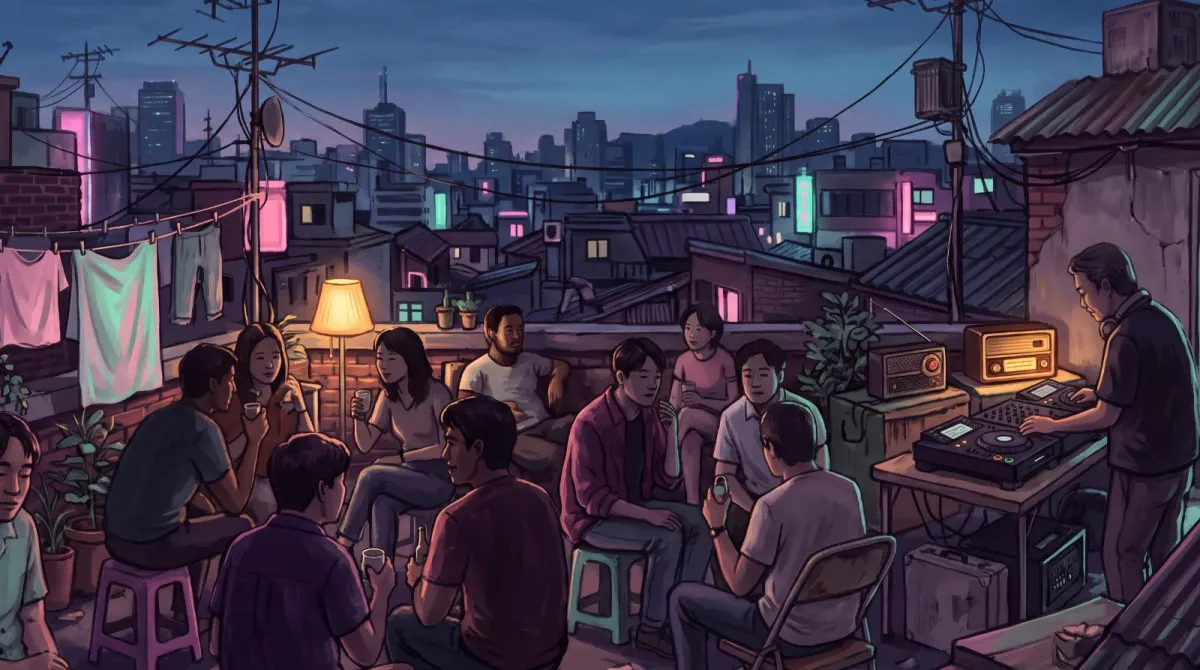
A studio in a flat, a microwave link, and a transmitter bolted to the roof of a council block, because high ground was broadcast gold. On a Saturday the dubplate cut on Friday got its first play, the phone lines lit up with shout outs, and everyone tuned in across those few postcodes heard the same record at the same moment.
That was the British pirate station, and it was the scene’s nervous system: faster, more honest and closer to the dancefloor than any licensed broadcaster could be. Acid house, jungle, UK garage, grime and dubstep all grew up on pirate radio, and modern British music is hard to imagine without the tower block aerial.
Kiss Proved The Audience Was There
Kiss FM broadcast illegally from South London from 1985, playing house music at a time when BBC Radio 1 wouldn’t. By the time it won a legal licence, it had already shaped the sound of a city’s nightlife, launched the DJs who would define the next decade, and proven a mass audience existed for music the mainstream had decided not to serve.
That’s the whole pirate story in miniature: the licence system treated demand as something to be granted, and the pirates treated it as something to be discovered. Kiss made the point itself. The licence came in December 1989, legal broadcasts began on 1 September 1990, and the first record of the legal launch day was Cocoa Tea and Shabba Ranks’ Pirates Anthem, followed by Norman Jay hosting the opening show.
The Machine Was A Flat, A Link And A Roof
The mechanics were simple and legally fraught. The DTI’s inspectors played whack a mole, confiscating rigs that were rebuilt by the weekend, and stations like Rinse FM ran for over a decade this way before legalisation.
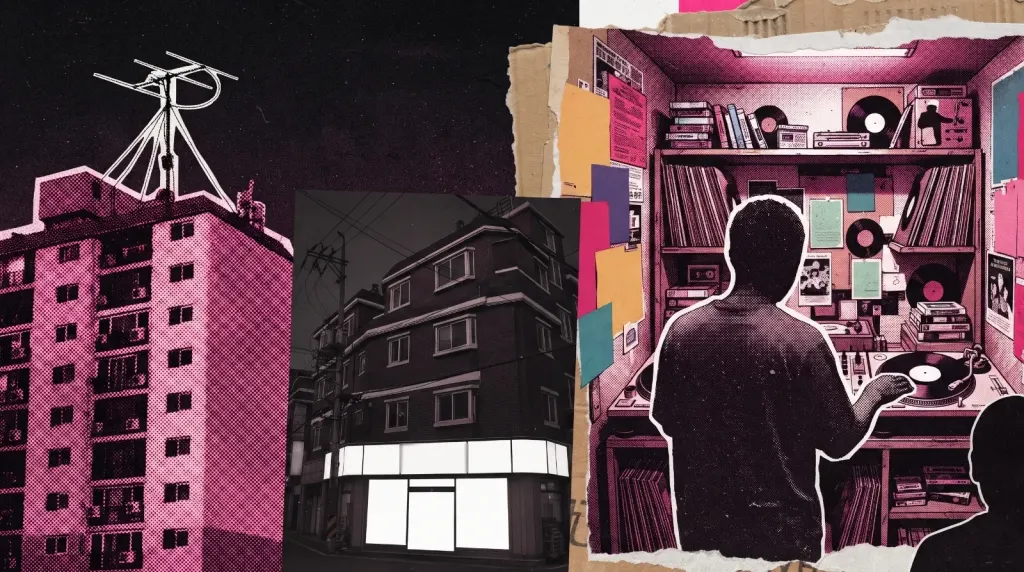
Advertising came from record shops, raves and local businesses. The phone shout out, the studio hotline and later the text message made the audience audible to itself. A pirate station was proof of a community, in real time, on a frequency the state didn’t control. It’s the same discovery job that Seoul’s messaging app underground does today.
Five Genres Were Born On Air
The lineage is direct. Acid house and hardcore spread through the pirates when radio ignored the rave explosion. Jungle was effectively invented on air, with dubplates cut on Friday and tested on Saturday’s show.
Five Genres, One Frequency
What each sound took from the pirates
해적 라디오가 키운 다섯 장르
| Genre | What happened on air |
|---|---|
| Acid house and hardcore | Spread by the pirates while legal radio ignored the raves |
| Jungle | Effectively invented on air; dubplates cut Friday, played Saturday |
| UK garage | Built its champagne economy off pirate playlists |
| Grime | Turned the pirate set into competitive sport |
| Dubstep | Its South London rise ran through Rinse FM |
How to read itFive genres in a row, none of which the legal spectrum would have made room for.
UK garage built its whole champagne economy off pirate playlists. Grime turned the pirate set into competitive sport, and dubstep’s South London rise ran through Rinse. That’s five genres in a row, and the legal spectrum would have permitted none of them.
The BBC eventually built 1Xtra in 2002 as, more or less, an official pirate station, the establishment’s admission that the pirates had been right about what Britain wanted to hear.
Online Radio Gained The World And Lost The Postcode
The aerials came down slowly. Legalisation absorbed some stations, prosecution wore down others, and the internet made transmitters unnecessary. They haven’t all come down. Ofcom recorded 60 enforcement actions against illegal broadcasters in 2024/25, 23 of them in London, still the country’s pirate capital.
Pirate Radio Enforcement, 2024/25
Ofcom enforcement actions against illegal broadcasters
영국 해적 라디오 단속 건수, 2024/25
How to read itMore than a third of all the actions were in one city.
Rinse went legal in 2010, and NTS and its peers moved the format online, global, archived and safe. Something real was gained and something real was lost. An online show reaches the world, but a pirate signal reached a postcode, and the postcode is where scenes are made. Even the most famous pirate to go legit has left the London dial: on 23 September 2024 Kiss handed its 100FM frequency to Hits Radio, and in the capital it’s now heard only on DAB and online.
The lesson survives every technology shift, and it’s the one I come back to when writing about the streaming economy. Infrastructure follows culture eventually, but culture can’t wait for permission. Somebody has to climb the roof first. In Seoul the closest thing is Seoul Community Radio, a community station built online rather than on a roof.
Frequently Asked Questions
How did pirate radio shape UK club culture?
Pirate radio was the nervous system of UK club culture, moving faster and responding more honestly to the dancefloor than any licensed broadcaster. Acid house and hardcore spread through the pirates, jungle was effectively invented on air, and UK garage, grime and dubstep all grew up on pirate stations. That’s five genres in a row the legal spectrum wouldn’t have made room for.
How did pirate radio stations work?
A typical setup was a studio in a flat, a microwave link and a transmitter bolted to the roof of a council block, since high ground was broadcast gold. DTI inspectors confiscated rigs, and the stations rebuilt them by the weekend. Ofcom still carries out dozens of seizures and other actions a year. Money came from advertising by record shops, raves and local businesses, while phone shout outs and later text messages made the audience audible to itself.
Was Kiss FM a pirate radio station?
Yes. Kiss FM broadcast illegally from South London from 1985, playing house music at a time when BBC Radio 1 wouldn’t. It won its legal licence in December 1989 and began legal broadcasts on 1 September 1990, by which point it had already shaped London’s nightlife and launched the DJs who defined the next decade.
What replaced pirate radio in the UK?
Legalisation absorbed some stations, prosecution wore down others, and the internet made transmitters unnecessary. Rinse went legal in 2010, and NTS and its peers moved the format online. The BBC had already built 1Xtra in 2002 as more or less an official pirate station. The community station model still echoes in online stations like Seoul Community Radio.
Further Reading
- Wikipedia: the history of pirate radio in the United Kingdom
- Wikipedia: Kiss, from pirate station to licensed broadcaster
- Wikipedia: Rinse FM, the pirate station that went legal in 2010
- Wikipedia: BBC Radio 1Xtra, launched in 2002 for UK urban and dance music
- NTS Radio: the online station that carries the community radio format worldwide
- Seoul Community Radio, on The DJ Diaries
Sources
Kiss, Music Walk of Fame: Gordon Mac
Red Bull Music Academy Daily, Gordon Mac on Kiss FM
Soundings, issue 77, 2021, on pirate radio
International Journal of Communication, on pirate radio and enforcement
Dazed, Rinse FM at 30: an oral history
Red Bull Music Academy Daily, the Dreem Teem interview
Red Bull Music Academy Daily, voices of pirate radio and grime
Ofcom, pirate radio seizures since 2015, freedom of information release, June 2025
Time Out, Rinse FM cover interview
Written from Seoul, by someone who has been in the booth for more than twenty years. More on the site, or book a DJ.
Stay in the Loop
New writing on DJ culture, electronic music, and the Seoul underground, delivered when it matters.
More From The DJ Diaries
Play with the history
Four tools built from the same research as this site.