Korean nightlife history usually gets served in disconnected slices. There is a nostalgia piece about coffee house DJs, a nineties retro piece about rock cafes. Club journalism that starts around 2000 as if the scene fell out of the sky. Nobody joins them up.
한국어 요약
음악다방의 유리 부스에서 클럽 DJ 부스까지, 한 줄로 이어진 역사
저는 이 계보의 마지막 구간을 직접 살아온 사람으로서, 따로따로 이야기되던 한국 밤문화의 조각들을 하나로 이어 보고 싶었습니다.
- 음악다방: 1960년대부터 1980년대까지 유리 부스의 DJ가 손님의 신청곡 쪽지를 받아 음반을 틀었고, 여기서 대중적 존재로서의 DJ가 탄생했습니다.
- 라디오와 음악 산업으로: 다방과 음악감상실 DJ 가운데 여럿이 라디오로 옮겨 갔고, DJ 출신인 이수만은 SM엔터테인먼트를 세웠습니다.
- 록카페: 1990년대 신촌, 압구정, 초기 홍대에서 카페 간판을 단 채 사람들이 일어나 춤을 추기 시작한, 다방과 클럽 사이의 잃어버린 고리입니다.
- 홍대 지하: 작은 공간, 싼 입장료, 음반을 든 레지던트 DJ라는 지금 서울 클럽의 틀이 여기서 만들어졌습니다.
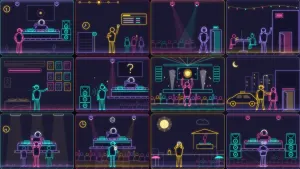
예전 DJ는 종이 쪽지로 신청곡을 받았고, 저는 부스 난간 너머로 내민 휴대폰 화면으로 받습니다. 60년, 다섯 개의 공간, 하나의 직업입니다. 한국은 2000년에 클럽 문화를 수입한 것이 아니라 스스로 길러 냈다고 저는 생각합니다.
잘못된 정보나 바뀐 날짜를 발견하셨나요? 연락 주시면 확인 후 바로 고치겠습니다. 현장에서 보고 들은 이야기도 언제나 환영합니다.
I want to join them up, because they are the same story. It is the story of a specific job, the Korean DJ, moving through five rooms over sixty years. I can tell it with some authority on the final stretch because the final stretch is my career. What follows is research plus opinion, with the sourcing linked as we go, and where the record is thin I say so.
Korean Nightlife History Begins With a City Not Allowed to Dance
The prehistory matters. In 1937, a group of Seoul women connected to the record industry petitioned the colonial government with a demand that has become famous in Korean cultural history, roughly, permit Seoul a dance hall. The petition was refused, as Kyunghyang’s history of Korean dance venues recounts. Dancing in this city started out as something you had to ask permission for. That fact has never entirely stopped being true, as anyone who has read my piece on the no dancing signs knows.
After the war came the cabaret era, and by the sixties the words nightclub and go-go had entered the Korean press. Turntables and the people who worked them arrived with the go-go boom. But for ordinary young Koreans, the room that mattered was not a dance hall at all.
The go-go years have their own Korean history, and it is a good one. Chapter three of Shin Hyunjoon and Choi Ji-sun’s Archaeology of Korean Pop 1970 (한국 팝의 고고학 1970, revised 2022) is titled 고고 클럽, 한밤의 혁명 혹은 하룻밤의 꿈 (gogo keulleop, hanbamui hyeongmyeong hogeun harutbamui kkum), roughly go-go club, a midnight revolution or a one-night dream. Its sections run from the clubs’ own subculture to the song purification campaign (가요 정화 운동, gayo jeonghwa undong) and the crackdown on what the state called decadence.
Chapter One: The Music Dabang, Where the Korean DJ Was Invented
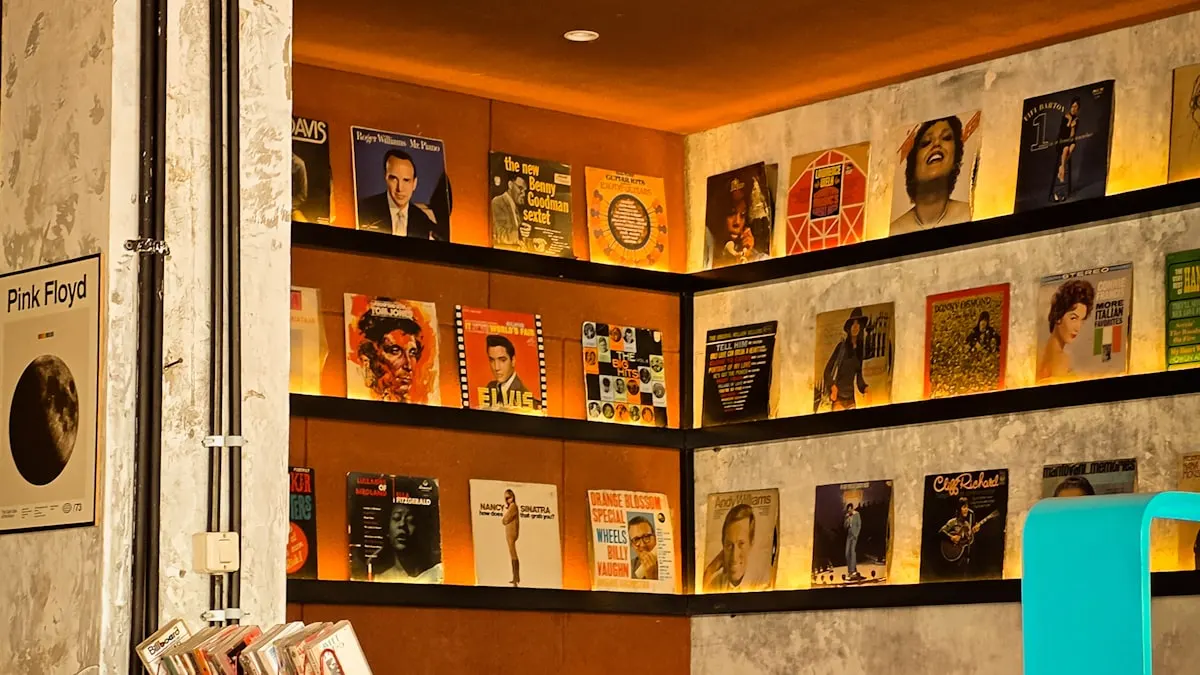
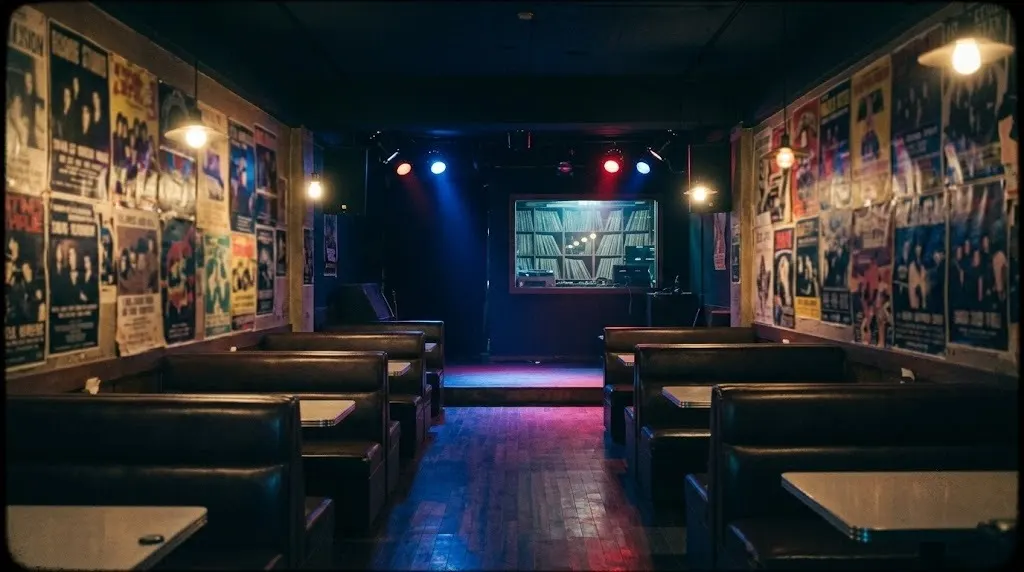
From the sixties into the eighties, the centre of Korean youth culture was the 음악다방, the music coffee house, with its raised glass booth, its wall of vinyl. Its DJ playing written requests from the tables. I have written a whole piece about how the request slips worked as a messaging system. So here I will just make the structural point.
The dabang is where Korea invented the DJ as a public figure. The top booth men were followed like radio hosts, musicians dropped into the rooms to check what was moving. Several dabang and music hall DJs graduated into legendary radio careers. One veteran of that circuit, in a Kyunghyang profile, listed the generations the booths produced. The names run from the founding radio DJs of Korean pop broadcasting through to people like Lee Soo-man, who went from DJ work to building SM Entertainment. Follow that thread and the entire K-pop industry has a coffee house DJ booth somewhere in its family tree.
The dabang also established the deal that still defines Korean nightlife: the music room that is officially something else. It sold coffee. The law saw a tea house. The customers came for a DJ. Swap coffee for fried chicken and you have the exact arrangement I described in the kitchens article, fifty years early.
Colour television weakened the format through the eighties, and the noraebang finished it. The booths came down, and the DJs scattered, some to radio, some to the discos and 나이트 of the eighties, which is its own gaudy chapter. But the interesting handoff, for our purposes, is the next one.
Chapter Two: The Rock Cafe, the Missing Link Nobody Documents
Ask Koreans in their fifties about the early nineties and you will hear the word 록카페, rock cafe, usually with a grin. Ask English language club journalism about it and you will hear nothing at all. It is the least documented era of this lineage and, I would argue, the most important. That is because it is where the dabang turned into the club.
The rock cafe took the dabang’s format, a cafe with a DJ and no stage, and did the one thing the dabang never dared. People stood up. In the boom years around Sinchon, Apgujeong and the early Hongdae strip, rock cafes were cafes in name, drinking rooms in practice, with DJs playing rock and dance records to a floor that was absolutely, illegally, dancing. The no dancing sign, the one still hanging in Seoul venues today, is a rock cafe artifact as much as anything. Same legal logic as the dabang, same energy as the club that had not been born yet.
I call it the missing link because it explains the thing outsiders never understand about Korean clubbing. That is why the scene has always lived inside food and beverage businesses instead of purpose built venues. The answer is that Korean dance culture did not descend from the licensed dance hall. It descended from the coffee house, through the rock cafe, carrying the sign on the wall the whole way.
Chapter Three: Hongdae, and the Room I Walked Into
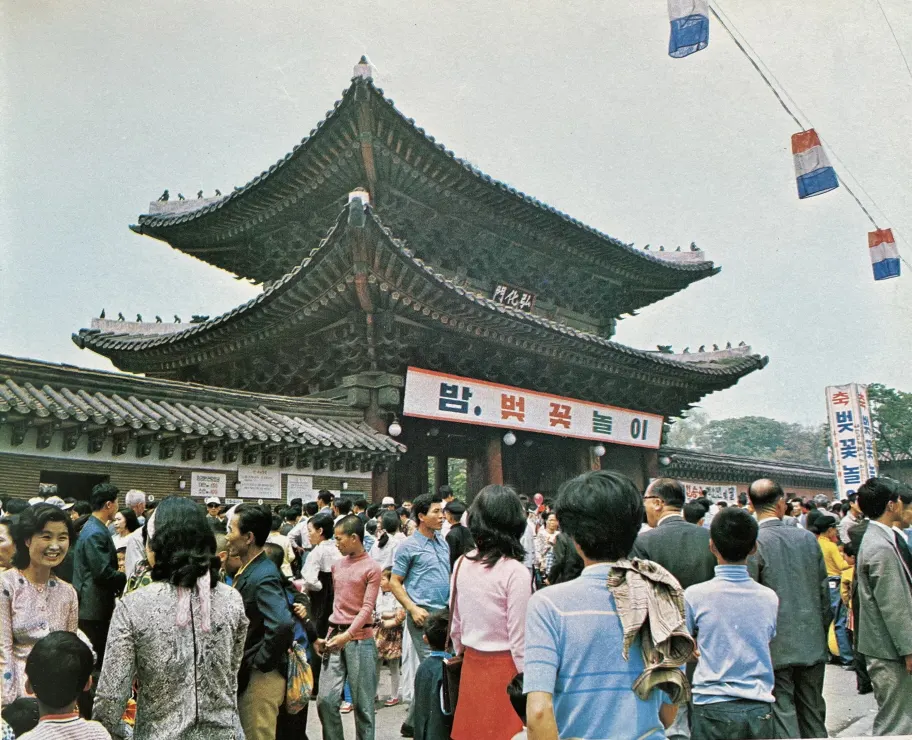
In the mid nineties the lineage split in two directions. One branch went big and commercial, into the Gangnam nightclub industry whose rise and fall I have covered separately. The other branch went underground, into Hongdae basements, and that branch is mine.
The early Hongdae club generation, the live rooms and the first dance basements with names like Drug and Baljeonso passing into scene legend, built the template the current city still runs on: small rooms, cheap doors, resident DJs with record collections instead of light shows. The scene lost one of its founding figures this August. The DJ known to everyone as Uncle, whose death was covered by the national press as the passing of the man who led Hongdae club culture’s golden age. The obituaries for a club DJ in papers of record tell you what that generation ended up meaning to this country.
The Korean record on that decade is catching up. The last chapter of Archaeology of Korean Pop 1990 (한국 팝의 고고학 1990, 2022) by Shin Hyunjoon, Kim Hak-seon and Choi Ji-sun follows the indie years, with a section on the rivalry between 발전소 (Baljeonso) and 드럭 (Deureok, Drug) and another titled, roughly, more creators, more clubs, more labels.
That was the room I walked into when I arrived here two and a half decades ago. I did not know it then, but the booth I stepped behind was already the fourth room of a sixty year relay: dabang to rock cafe to basement. Each one handing forward the same job description. Read the room, carry the records, work inside whatever the paperwork allows.
What Korean Nightlife History Tells You: the Job Never Changed
Put the eras side by side and the continuity is almost eerie.
The dabang DJ took requests on paper and answered them over the mic. I take them off phone screens shoved over the booth rail. The dabang operated as a tea house because that was the available license,. The venues I play operate as restaurants for the same reason. The dabang DJ’s value was access to records the audience could not get. For my whole early career that was exactly the value I sold, crates of imports this city had not heard. Streaming ate that particular moat, which is a subject I have strong feelings about and a separate article for.
Sixty years, five rooms, one job. Korea did not import club culture in 2000. It grew its own, out of a coffee house, and I consider it a privilege to be somewhere far down its family tree.
Musicologist Kim Min-oh makes a related argument in a 2020 paper in the journal 트랜스- (Trans-): that the Hongdae sound should be read as a place-based music movement, set beside the Eighth US Army stage sound of the 1950s and 1960s, when Korean musicians auditioned to play for American troops and picked up the newest Western pop in the process.
The current chapter of this story is playing out in basements across the river and rooms up eleven flights of stairs. The map of it is in Going Out in Seoul.
FAQ
What came before nightclubs in Korea?
A chain of formats, each one legally something other than a dance venue. Music coffee houses, the 음악다방, dominated youth culture from the 1960s to the 1980s with professional DJs playing requests. Rock cafes, 록카페, took over in the late 1980s and 1990s as cafes where people danced anyway. The modern club scene grew out of Hongdae basements and the Gangnam nightclub industry in the 1990s and 2000s.
What was a Korean rock cafe?
A 1990s format, biggest around Sinchon, Apgujeong and early Hongdae. That was licensed like a cafe but ran DJs and a de facto dancefloor. It sits between the music dabang and the modern club in Korea’s nightlife lineage. It is where the famous no dancing sign became a fixture, since dancing in a cafe licensed business sat outside the rules. English language coverage of the era is close to nonexistent.
How did Korean DJ culture start?
In the music dabang booth. From the 1960s, coffee house DJs curated Western and Korean records for audiences with no other access to them, took written requests, and became local celebrities. That generation fed Korean radio DJing and parts of the music industry itself. The club DJs of the 1990s onward inherited the same basic job in a louder room.
Is Hongdae still important to Korean club culture?
Historically it is the underground’s birthplace, and it still carries live music, vinyl bars and a handful of serious rooms. Though the centre of gravity for electronic music has shifted toward Itaewon, Mapo proper and newer districts like Seongsu. The death of first generation Hongdae figures is being marked in the national press. That says a lot about what that scene came to mean.
Hearing the Format, Not Just Reading About It
The music dabang is not entirely gone, it just moved to places nobody thought to look. 동작FM, a community station in Seoul, runs a weekly show built on the old format: a DJ, request slips read out on air, and records chosen because a person asked. It is the clearest surviving demonstration of what the booth actually sounded like.
On screen. Go Go 70s (2008) dramatises the go-go club era and the Devils, and it is the only widely available piece of film that puts a camera inside that stage of the lineage. For the era around it, the Korean Film Archive channel streams more than a hundred classic Korean films free and legally, and the 1970s titles carry more incidental footage of tea rooms, cabarets and record shops than any documentary does.
Sources, Archives and Listening
- The timeline. Kyunghyang on the history of Korean dance venues, from the 1937 dance hall petition onward
- Newspim on forty years of Korean club formats
- Korean live club history
- Belocal on how Hongdae formed as an alternative culture district
- Street H on Hongdae club culture
- Seoul Shinmun on the death of DJ Uncle, who led the Hongdae golden age
The regional picture, which almost never gets told in English: how Gwangbok-dong’s dabang DJs built Busan’s pop culture and the 1960s and 70s pop boom in Gwangju. Seoul was not the only city with booths.
Old photographs. For the dabang era, search 다방 and 음악감상실 in Seoul History Archive (서울역사아카이브). For the rock cafe and early club years, Seoul Photo Archive (서울사진아카이브) holds street photography of Sinchon, Apgujeong and Hongdae through the eighties and nineties. e영상역사관 national archive photography carries the national newsreel footage of the same period.
Books and papers. For the go-go club era, chapter three of Archaeology of Korean Pop 1970; for the Hongdae club decade, the final chapter of Archaeology of Korean Pop 1990; and Kim Min-oh on the Hongdae sound and the Eighth US Army sound, in 트랜스- (2020).
Picture Credits
- Night cherry blossom crowds at Changgyeongwon, 1971
공유마당, via Wikimedia Commons. Licence: KOGL Type 1. View the original file and its full licence terms. - Present day photographs
Matthew Clement, for The DJ Diaries.
Historical images on this site are used under the licence stated for each file. KOGL Type 1 is the Korean public sector open licence permitting commercial use and adaptation with attribution; public domain items carry no restriction. If you hold rights in any image here and believe it has been used in error, get in touch and it will be removed.
Written from Seoul, by someone who has been in the booth for more than 25 years. More on the site, or book a DJ.
Stay in the Loop
New writing on DJ culture, electronic music, and the Seoul underground, delivered when it matters.
More From The DJ Diaries


Play with the history
Four tools built from the same research as this site.