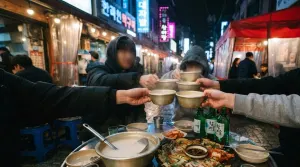
If you have spent an evening in Euljiro, up an unmarked staircase, in one of those bars everybody now photographs, you have been drinking on top of an industry. The Euljiro print alleys run underneath the whole district. You may not have noticed them, because you arrived at nine at night and the industry closes at six.
The blocks around Inhyeon-dong, between Euljiro 3-ga and Chungmuro, hold the largest concentration of printing businesses in Korea. Seoul’s own Sewoon Map catalogues roughly eleven hundred of them, by name, address, speciality and photograph. Eleven hundred, in a few blocks, in the middle of a global city. Most people who drink there couldn’t tell you a single one is there.
They’re on a clock. I want to write about why that matters to anyone who cares about Seoul’s night, because the two things are connected far more directly than they look.
What’s Down in the Euljiro Print Alleys
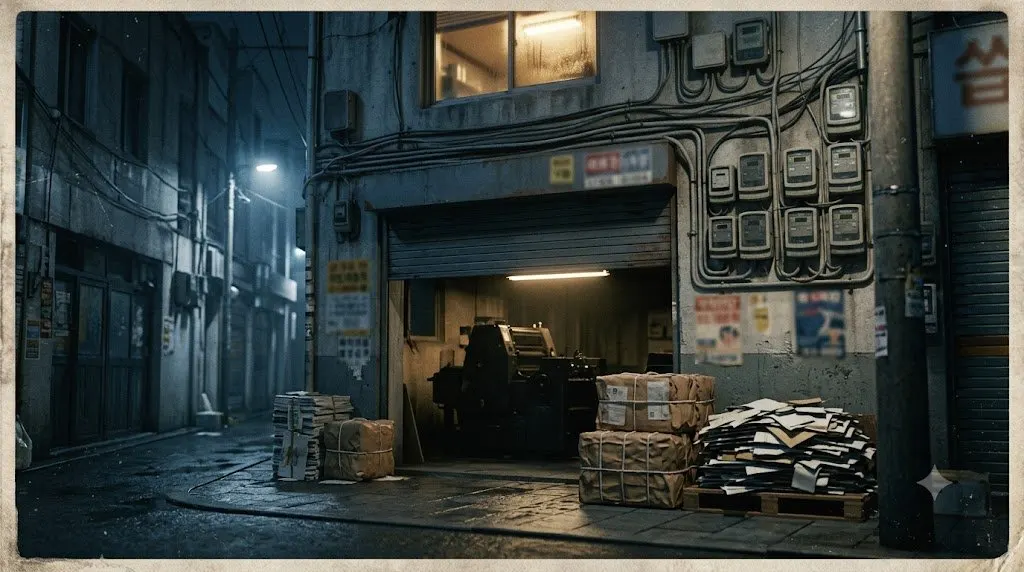
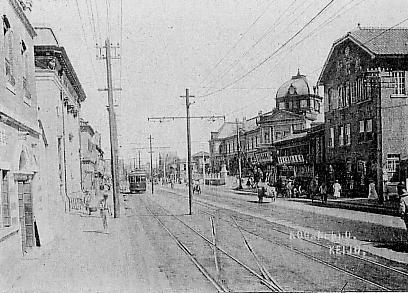
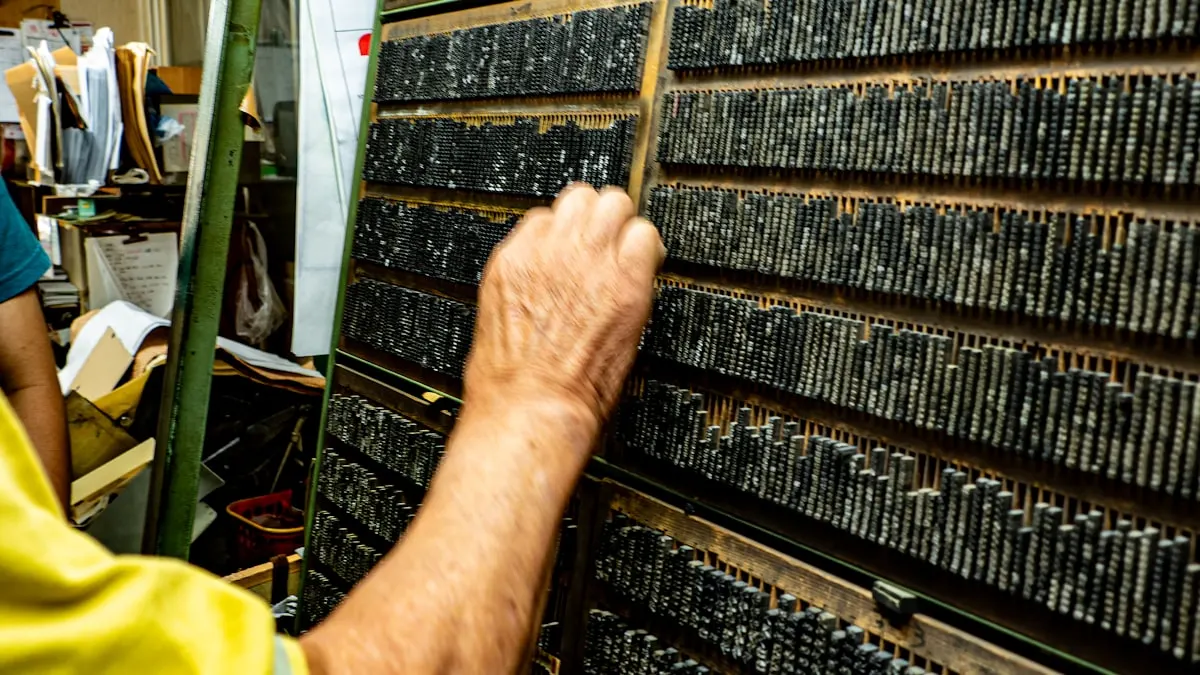
The trade is old and it’s dense. Paper wholesalers, offset presses, plate makers, foil and embossing specialists, die cutters, binders, finishers. The division of labour is extreme: a single job walks from shop to shop on a handcart. Each shop does one thing well and nothing else. It’s a distributed factory that happens to be laid out as streets.
What the City Says About It
The city treats it, correctly, as heritage. The Seoul Museum of History runs an Inhyeon-dong archive, the city has exhibited the alleys under the title of a place that prints the world. sewoon.org carries a district history alongside a glossary of over two hundred trade terms. Architecture writers have covered the alleys seriously, including a long VMSpace essay on how the district works.
And What the Trade Press Says
At the same time, the small business press has been reporting for years that the country’s largest print district is facing disappearance under the long-running redevelopment of the wider Sewoon area. I’m not going to put a demolition date in print, because nobody will confirm one and I’m not qualified to read a redevelopment plan. The clock is running and nobody will say what time it shows.
Euljiro and Sindang Nightlife Map: Venues, Streets and What’s On
Here is Euljiro and Sindang as it stands now: the venues, the streets worth knowing and what’s on in the next two weeks. Tap a pin for the sound, the address and directions on Naver or Kakao Map.
Euljiro and Sindang nightlife map
Euljiro is the old print and tool quarter where Hipjiro bars opened upstairs. As redevelopment moves in, the bar scene has drifted east to Sindang-dong.
Venues on this map: The Edge Seoul (디 엣지), 8 Eulji-ro 12-gil; Jushindang (주신당), 399 Toegye-ro; Sewoon Sangga (세운상가); Inhyeon Market (인현시장); Eulji OB Bear (을지OB베어), 49-2 Chungmu-ro; Gu Seoul (구 서울), 2F, 82 Majang-ro, Jung-gu (Sindang).
Streets and corners: Nogari Alley (노가리골목), Sewoon Sangga (세운상가), Printing alleys (인쇄골목), Euljiro 3-ga Station (을지로3가역), Sindang-dong (신당동).
This week in Euljiro · 을지로
Who is playing in Euljiro this week
Sake Party (Tokyo) at The Edge
The Edge Seoul, Euljiro 을지로
Nature Remix
Kunst Kabinett Seoul, Euljiro 을지로
Green Tang 01 with Shuto & weaver
The Edge Seoul, Euljiro 을지로
The Alley Is Younger Than It Looks
Everything about those blocks says old. Worn stairwells, hand-painted shop names, machines that have obviously sat in the same spot for decades. So it surprised me to learn that the print alley in its current form is younger than I am, and that it was created by exactly the kind of thing that now threatens it.
Where the Printers Were Before
Until the 1970s the densest concentration of printers in Seoul wasn’t Inhyeon-dong at all. It was Janggyo-dong, up around Euljiro 1-ga and 2-ga. Then in 1983 the Janggyo-dong redevelopment broke ground, the printers were pushed out, and the ones who couldn’t afford to leave the downtown core moved a short distance and packed themselves into the houses and shopfronts of Inhyeon-dong. That migration is what built the alley people photograph today. The Seoul Museum of History survey of the district lays it out in detail across some three hundred records, and it’s the part of the story that changed how I see the place. This district already got moved once.
What happened next is the part I find moving. Printing is loud and it throws dust, and Inhyeon-dong was full of homes and shops. The complaints started almost immediately and the pressure to move the industry somewhere else never stopped. It grew anyway, because the demand was sitting right on top of it: offices and government buildings across the middle of the city needing work printed, and needing it today.
To serve that at speed, the small shops did the thing that still defines the alley. They split the job. One shop makes the plates, the next runs the press, another cuts, another folds and binds, another does the foil and the finishing. Almost nobody does the whole thing under one roof. A job walks the street in somebody’s arms, stage by stage, all day long. That division of labour is why the district looks the way it does, and it’s also why it can’t simply be relocated to a cheaper industrial park out past the river. The network only functions because every stage sits within carrying distance of every other stage.
Euljiro at night, on foot
What Technology Undid
Technology has been quietly dismantling that logic for years. Newer machines fold several stages into one, so the division of labour is collapsing and the shape of the place is changing with it. The small firms in Inhyeon-dong still run on the old system. Know that before you order your second drink upstairs.
The Part That Concerns Nightlife
Here’s the argument, and it’s mine rather than anyone else’s.
Euljiro’s bar scene, the one every guide now calls Hipjiro, exists because of the print shops, not merely next to them.
The workshops kept the rents low for decades, because industrial tenants in ageing buildings don’t bid up commercial space the way retail does. They kept the buildings unrenovated, which is exactly the raw look the bars later traded on. They emptied the district at six in the evening, leaving a stock of cheap, unwatched, structurally interesting rooms in the geographic centre of Seoul with nobody living upstairs to complain about noise. And they gave the area the aesthetic vocabulary the bars borrowed wholesale: the steel, the signage, the fluorescent light, the sense of a place that’s for making things.
That’s the whole recipe for a nightlife district. I’ve written elsewhere on this site about how Korean venues are structured and why they end up in exactly this kind of building. Euljiro is the clearest case in Seoul of a night that was subsidised, without anyone intending it, by a daytime industry.
So when the print shops go, the thing that made Euljiro cheap goes with them. What replaces industrial buildings isn’t cheaper. Anyone who has watched a warehouse district turn over in Toronto or Montreal knows precisely how this sequence ends. It doesn’t end with more small bars.
How to Walk the Euljiro Print Alleys
This is the practical half, and I’d encourage anyone who has enjoyed a night in Euljiro to spend one weekday afternoon doing it.
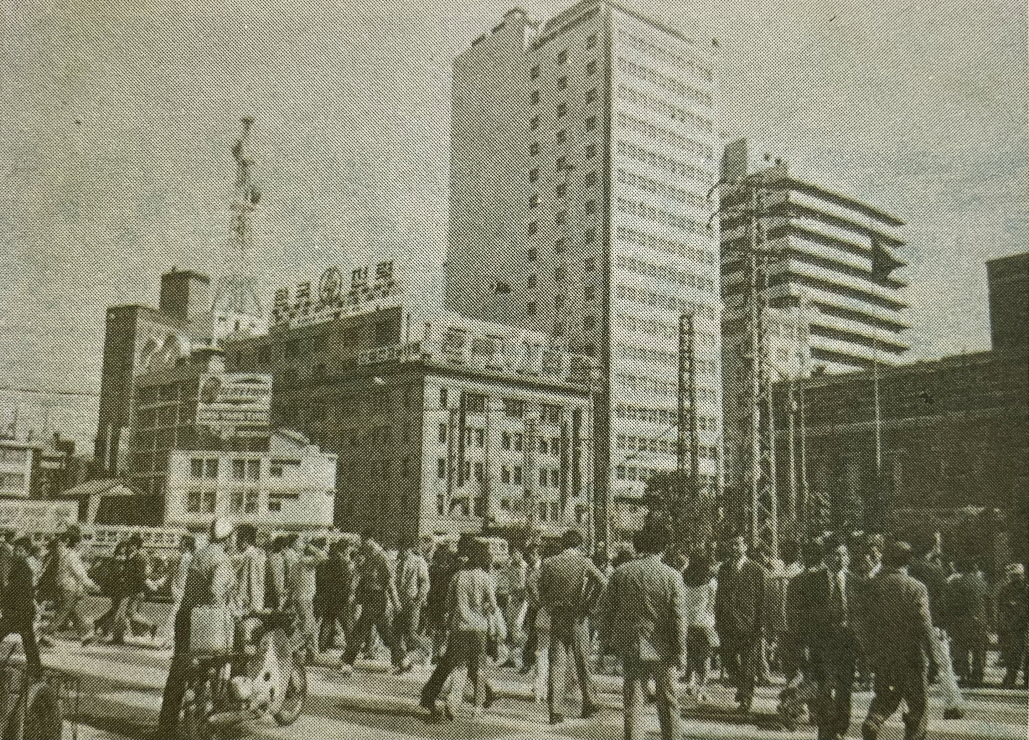
Go on a weekday, late morning to mid afternoon. The alleys are shuttered on weekends, and the district is its work traffic: the handcarts stacked with paper, the doors open onto machines, the ink. Start at Euljiro 3-ga and walk south toward Chungmuro, and let yourself get lost, because the interesting part isn’t on the main road.
Before you go, open the Sewoon Map and pick a few shops. It lists them by speciality, which means you can decide in advance to see an offset press, a foil shop and a cutting room rather than wandering past a hundred identical shutters. It’s an excellent piece of civic work and almost nobody outside the trade uses it.
Manners, because these are workplaces and not a set. Ask before photographing anyone or any interior. Don’t walk into an active press room. If someone gives you five minutes, buy something small or come back with a job. The district survives on jobs, not visitors. And if you need something printed, business cards, a flyer, a poster, a record sleeve, this is where you should be having it made anyway. It will be cheaper, faster and better than anything you order online, and you can stand there while it happens.
Why I Care
Music promotion in this country ran on paper for decades. Posters, flyers, tickets, sleeves, inserts. Somebody printed all of it, and for a long stretch of that history, a meaningful share of the somebodies were in these alleys. I don’t have that documented shop by shop. I’m not going to claim it as fact until I’ve asked the shops themselves. That’s a piece of reporting I intend to do.
But the general point stands without it. There’s a straight line from a print shop in Inhyeon-dong to a flyer on a Hongdae wall to a room full of people on a Friday. That line has been running for fifty years. It’s the least glamorous part of the music economy and one of the load-bearing ones.
I’m going to go and walk it with a recorder and a camera, and talk to five shops properly, and write that. If you know one of these businesses, or you’re second generation in one, get in touch. I’d rather write it with you than about you.
Until then: go on a weekday, look up, and notice what’s holding your favourite bar district in place.
FAQ
What’s the Euljiro print alley?
It’s the dense cluster of printing and paper businesses around Inhyeon-dong, between Euljiro 3-ga and Chungmuro stations in central Seoul, the largest concentration of print trade in Korea. Seoul’s official Sewoon Map documents roughly eleven hundred businesses in the area, each typically specialising in one stage of the printing process.
Is the Euljiro print district being demolished?
The area sits inside the long-running Sewoon district redevelopment. Korean business press has reported for several years that the country’s largest print cluster is under threat as a result. No public demolition date covers the district as a whole. The situation varies block by block, so the practical answer is that it’s changing now and worth seeing now.
How do I visit the Euljiro print alleys?
Go on a weekday between late morning and mid afternoon, when the shops are open and working. Start from Euljiro 3-ga station walking toward Chungmuro. The city’s Sewoon Map lets you find specific businesses by speciality before you go. Weekends are closed. These are workplaces, so ask before photographing and don’t enter active press rooms.
What does the print district have to do with Euljiro’s bars?
The industrial tenancy kept rents low and buildings unrenovated for decades. The district emptied out each evening, which left cheap, characterful, centrally located rooms with no residential neighbours. That combination is what allowed the Euljiro bar scene to form, and it’s why changes to the print trade matter to the area’s nightlife.
Sources, Archives and Planning Your Walk
Plan the walk with the city’s own tools. Sewoon Map lists roughly eleven hundred print businesses by name, address, speciality and photograph, with no login. Seoul’s announcement of the map explains what’s on it. the Sewoon district history page plus its glossary of over two hundred trade terms will teach you enough vocabulary to ask a sensible question in a print shop.
Read before you go. VMSpace on the bones and flesh of the Inhyeon-dong alleys is the best long piece on how the district works · Seoul’s exhibition on the print alley · Korea Small Business News on the threat to the country’s largest print cluster.
What the Alleys Print
Old photographs of the district. Seoul History Archive, Inhyeon-dong collection is a dedicated collection for these blocks and the obvious first stop. Beyond it, search 을지로, 인쇄 and 세운상가 in Seoul Photo Archive (서울사진아카이브) and Seoul Institute, Seoul in Photographs to see the same streets in the sixties and seventies, when this was the industrial heart of the city rather than a bar district with an industrial aesthetic.
And the nightlife on top of it: our piece on Euljiro after dark covers the bars. why Seoul venues are shaped the way they are explains the licensing logic that puts them in buildings like these.
Picture Credits
- Euljiro under colonial rule, then called Kogane-cho
Japanese book “Cities in Korea: Keijo(Seoul) and Jinsen(Incheon)” publ, via Wikimedia Commons. Licence: Public domain. View the original file and its full licence terms. - Euljiro crossing, Seoul, 1971
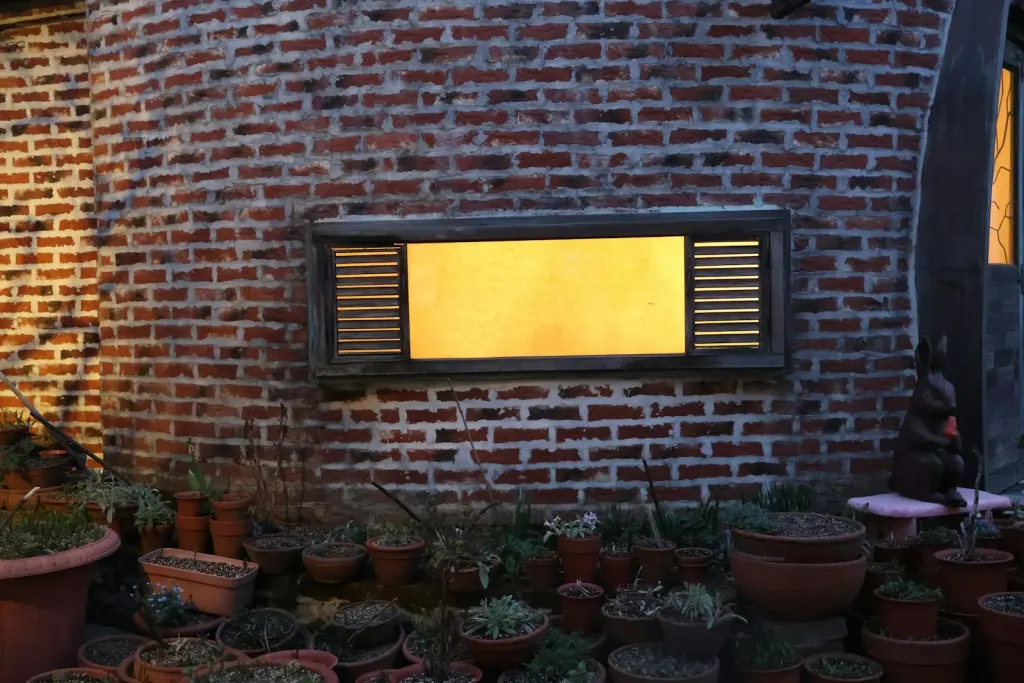
공유마당, via Wikimedia Commons. Licence: KOGL Type 1. View the original file and its full licence terms. - Present day photographs
The DJ Diaries.
Historical images on this site are used under the licence stated for each file. KOGL Type 1 is the Korean public sector open licence permitting commercial use and adaptation with attribution; public domain items carry no restriction. If you hold rights in any image here and believe it has been used in error, get in touch and it will be removed.
Written from Seoul, by someone who has been in the booth for more than twenty years. More on the site, or book a DJ.
Stay in the Loop
New writing on DJ culture, electronic music, and the Seoul underground, delivered when it matters.
More From The DJ Diaries
Play with the history
Four tools built from the same research as this site.