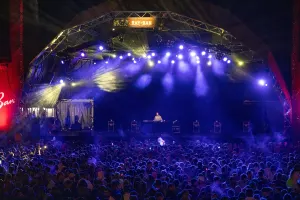
The emails from international agents all arrive in the same shape. They go to anybody and everybody, in the hope that someone writes back, and they come from people who have never heard what a room in Seoul sounds like. In more than twenty years behind the decks I’ve never had a manager or an agent. I’ve always looked after it myself, with a press kit back in the day and SoundCloud and YouTube later.
That isn’t a rule for everyone. The right manager speeds up a career. The wrong manager, or the right one at the wrong time, does more damage than having none at all. Electronic music makes that call harder than pop does, because half of the music industry’s management wisdom doesn’t transfer to DJs, and most DJs don’t need a manager until the admin starts costing them the work that creates the opportunities.
Electronic Music Built Its Biggest Careers Without Managers
Management in electronic music is thinly documented next to pop or rock, partly because the genre’s defining careers were largely built by the artists themselves. The architecture of Richie Hawtin’s career, from the Plus 8 label he cofounded in 1990 to the residencies, the Minus positioning and the live formats, was put together by Hawtin and a tiny team over two decades. Peggy Gou managed herself until she was already an international booking.
The genre’s own infrastructure did the career building that a pop manager would charge twenty percent for. Residencies gave DJs a room and a crowd to grow with. Label communities put records in the right hands. Promoter networks passed names along. None of it needed a contract.
A Manager Does Six Jobs, and Saying No Is the Most Valuable
Strip away the mystique and the role comes down to six functions. A manager keeps the agent and promoter relationships that keep bookings flowing. They negotiate the label, publishing, sync and brand deals that artists tend to sign in a hurry, and they run the release calendar so the music, the touring and the press push in the same direction.
Six Jobs, and Who Covers Them in 2026
What a manager does, and where else that work can come from
매니저가 하는 여섯 가지 일
| The job | What it covers | Who else does it now |
|---|---|---|
| Relationships | Agents and promoters | Agencies book directly |
| Releases | The calendar for music, touring, press | Distributors and label service companies |
| Money | Invoicing, chasing, budgeting | An accountant |
| Deals | Label, publishing, sync, brand | Needs judgement |
| Saying no | Filtering offers | Needs judgement |
| Strategy | Where the career is going | Needs judgement |
The feeJudgement is the part nobody else sells. The standard fee is 15 to 20 percent of gross, which only works once there is real gross to take a percentage of.
Then there’s the money hygiene: invoicing, chasing late payments and budgeting, the unglamorous layer where careers quietly die. And there’s the filtering. Saying no is the most valuable thing a manager does, followed closely by strategy, the plain conversation about where all of this is going.
The standard fee is 15 to 20 percent of gross. That’s why the arithmetic only works once there’s meaningful gross to take a percentage of.
Sign When the Emails Start Costing You Studio Time
The threshold is capacity. A DJ playing local rooms with one release channel needs a spreadsheet, not a manager. The tipping point arrives when answering emails costs you the studio hours that generate the opportunities. It also arrives when offers come in from territories whose promoters you can’t vet, or when an international festival offer has to be negotiated against a tour routing.
Signing before that point buys you a senior partner in a junior business, and the 20 percent becomes the least of the cost. Managers with big rosters tend to park small artists in the long tail, and momentum, the only real asset a rising DJ owns, doesn’t survive being parked.
The role is also being unbundled. Agencies handle bookings directly, distributors and label service companies run releases, and accountants exist. What stays scarce is judgement: someone senior whose incentives line up with the artist’s next ten years rather than this quarter’s fees. In a market flooded with AI music and more DJs than ever, that judgement is worth every point of its percentage.
The test I give younger DJs in Seoul is simple. A manager should bring rooms, deals or clarity you can’t reach on your own. If the pitch is enthusiasm and a logo, keep the spreadsheet, keep the twenty percent and keep moving. It works the other way too. Confidence is good, but a manager worth having is looking for DJs with real skill behind it.
Seoul Runs Both Extremes of the Management Model
Seoul (서울) makes the self management argument in both directions at once. At one end sits the idol system, which is management run as an industry. HYBE posted record second quarter revenue of 1.45 trillion won (about CAD $1.39 billion) in 2026, with concert revenue up 243 percent on the BTS ARIRANG tour, per Music Business Worldwide. Every part of those careers is planned by a company. At the other end is an underground where few DJs I know have a manager at all.
The underground has built its own substitute, and it starts young. Mixmag Asia’s report on university DJ clubs, known as dongari (동아리), describes groups such as SNAP at Korea University and Nuit at HUFS. Some have more than 100 members and run peer mentoring, and alumni now hold residencies. That’s the career building a manager provides, done by seniors for juniors, and nobody takes twenty percent.
The Korean careers that crossed borders show where outside help earns its fee. Producer 250, known for his work with NewJeans, won at Music Awards Japan in June 2026 for producing Fujii Kaze’s album Prema. Work at that level means contracts across languages, labels and territories. For a DJ in Seoul, the real threshold often arrives the first time a promoter in Tokyo or Bangkok sends an offer you can’t vet. My piece on building a DJ career in Asia covers that network.
What I’d add to the test is language. A manager who can move between Korean and English contracts, and who knows which regional promoters pay on time, brings something a spreadsheet can’t. A manager who only reposts your flyers doesn’t. Most of the people on my list of Korean DJs to know in 2026 got there largely on their own.
Most Agents in Your Inbox Are Selling Themselves
These days many international agents feel like spam. They email anybody and everybody, and many are out of touch with local sounds. They don’t understand the market, or how markets differ from one continent to the next, and anyone who has worked here knows Asia is different again.
I’ve seen and met plenty of DJs who had agents, and for about 95 percent of them it led to very little. Sometimes signing a DJ is a way for the agency to market itself: we work with this DJ. So ask the plain questions before you sign anything.
How to Manage Yourself Now
My old press kit was always the same: a story about who you are, where you came from, your mixes and your sound. Read enough DJ bios and they all start to sound alike. A bio is still worth having, but what bookers use is closer to a résumé. If you’re managing yourself, keep four things ready.
On that last point, always be nice and friendly to the venue or event photographer. With any luck they’ll share their photos with you. The rest of it, the SoundCloud, YouTube and social channels, is your shop window, and for the step before any of this I wrote about how to get DJ bookings without help.
Frequently Asked Questions
Does a DJ need a manager?
Most DJs don’t need a manager until the admin costs more than the fee. A DJ playing local rooms with one release channel needs a spreadsheet. The tipping point comes when answering emails eats the studio hours that create the opportunities, or when offers arrive from territories whose promoters you can’t vet.
What does an artist manager do in electronic music?
An electronic music manager covers six jobs: agent and promoter relationships, deal negotiation, the release calendar, invoicing and budgeting, filtering offers, and long term strategy. In 2026 agencies, distributors and accountants cover several of these, so what a good manager adds is judgement.
How much does a DJ manager charge?
The standard artist management fee is 15 to 20 percent of gross. Signing too early can cost more than the fee, because managers with big rosters tend to park small artists in the long tail.
Do DJs in Seoul have managers?
Few underground DJs in Seoul have a manager. University DJ clubs (동아리, dongari) do much of the mentoring, and outside help earns its fee mainly when offers start arriving from other countries and contracts cross languages.
Further Reading
- Featured Artists Coalition: the UK body that represents artists themselves, with guidance on contracts and rights.
- Mixmag Asia: Zach Kim on nine years of Blackout Agency: a Singapore agent on how name driven Asian bookings are.
- Mixmag Asia: 7 industry tips for new artists: PR people and managers on when outside help is worth paying for.
- Association for Electronic Music: the electronic music trade body, with projects on royalties and artist welfare.
- Red Bull Music Academy lectures: long interviews where producers explain who ran their careers.
- Beatportal: artists and labels in Asia to watch: includes Seoul’s Closet Yi, a useful example of a self built Korean career.
- Music Managers Forum: the trade body for artist managers.
- Wikipedia: what a talent manager does and how they’re paid
- Wikipedia: Richie Hawtin
- Wikipedia: Plus 8, the label Hawtin cofounded in 1990
- Wikipedia: Peggy Gou
- Peggy Gou’s career, from Seoul outward
Sources
Exclaim, on Richie Hawtin, Plus 8 and Minus
Billboard, What artists’ managers really earn
Asia Economy, HYBE second quarter 2026 results
Music Business Worldwide, BTS ARIRANG powers HYBE to record Q2
Korea Citation Index, journal article on how idol careers are managed
Mixmag Asia, University DJ dongari: the hidden incubator of Seoul’s dance music scene
Star News, 250 at Music Awards Japan, June 2026
The Hankyoreh, on 250’s Music Awards Japan win
Written from Seoul, by someone who has been in the booth for more than twenty years. More on the site, or book a DJ.
Stay in the Loop
New writing on DJ culture, electronic music, and the Seoul underground, delivered when it matters.
More From The DJ Diaries

Play with the history
Four tools built from the same research as this site.