Seoul hosted the third most international conferences of any city in the world in 2025, and every one of them ends the day with a reception where three hundred people who don’t know each other stand in a room holding a drink. The music in that room has one job: make it easier for strangers to start a conversation. Here’s why a conference networking DJ is worth hiring, how it’s done, what to ask, and what you get. The ranking comes from the Union of International Associations count released in June 2026, which put Seoul behind only Vienna and Brussels and first in Asia, with Korea second in the world as a country (SBS Biz, Korean).
Why a networking reception needs a person, not a playlist
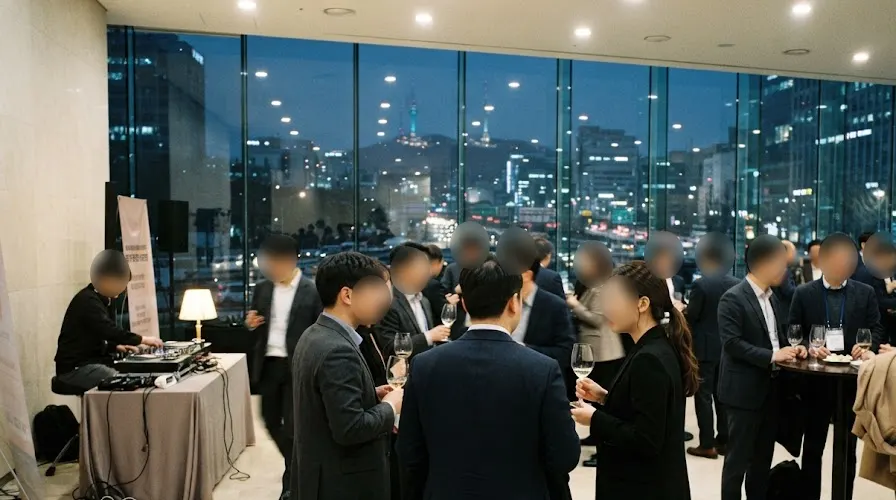
Too quiet and the room feels like a waiting area. People cluster with colleagues they already know and leave early. Too loud and nobody can hear the person in front of them, so they stop trying. The right level is the one where a conversation between two people is easy and the room still has a hum, and it changes every ten minutes as the room fills and empties. A playlist through the house system can’t listen to the room. That ninety minutes is the most valuable part of the conference for the people who paid to be there. The music should be briefed like it matters.
How it’s actually done
A reception has an arrival, a peak and a fade like any event, and the sponsor thank-yous need the same microphone care as a wedding speech. I set up early, usually two CDJs and a mixer on a small table at the edge of the room, with the venue’s system if it’s any good and a discreet pair of speakers if it’s not (how a room’s sound system shapes a night), and I keep the monitor almost off so I’m listening to the room rather than the booth. The set moves from conversation level to a warm rise as the drinks land, drops to nothing for the remarks, and comes back without anyone noticing. If the reception rolls into an after-party at a second venue, that changes how the reception is played, so it’s in the brief from day one. Conference crowds in Seoul are the most mixed of all. Half the room flew in yesterday. The music should feel like Seoul without being a tourist soundtrack, and it never depends on anyone recognising a lyric. If the after-party runs past midnight, tell delegates the subway stops around then. Seoul’s N-numbered owl buses (Korean) run 14 routes from 23:10 to 06:00, but most visitors will want a booked taxi.
What you actually get
- A reception that’s easy to talk in, adjusted live as the room changes.
- Sponsor remarks and thank-yous handled cleanly: microphone, walk-up, silence.
- One named person owning the volume, agreed before doors.
- A reception, a dinner and an after-party treated as three briefs, with the right sound for each.
- Music that reads as Seoul to visitors and doesn’t embarrass the locals.
What to ask any DJ before you book
- Have you played a reception where conversation was the point, not dancing?
- How do you decide volume, and who can change it on the night?
- What happens for the sponsor remarks?
- Can you handle the reception and the after-party, and are they priced as one?
- Will the foyer sound cope, and if not, what do you bring?
The full list, with the answers that should worry you, is in what to ask before you book a DJ in Seoul.
What to send
The dates and rooms, the schedule as it stands, the guest numbers and where they’re flying in from, and whether there’s an after-party. Conference season here is dense from September to November, so book the DJ when you book the venue.
How we work
A small team, led by me. For most events it’s me in the booth. For larger or multi-room nights I bring in DJs I’ve worked with for years, and I stay responsible for the whole night. You’re never handed to an account manager. Rooms in Seoul are usually mixed Korean and international, and we plan for that in the first email.
There’s no price list, on purpose. Every room, night and brief is different, and a number given blind is either padded or wrong. What moves the quote is explained here, and a same-day quote comes from telling us about your event.
If you’re planning more than one event, my piece on corporate event DJs in Seoul covers the formal side of the same work. The hotel and lounge piece explains how music stays present at conversation volume. For product nights, brand activations have their own logic.
Frequently Asked Questions
Do I need a DJ for a conference networking reception in Seoul?
Yes, if you want strangers to actually talk to each other. A playlist through the house system can’t listen to the room, and the right volume changes every ten minutes as people arrive and leave. Too quiet and guests cluster with colleagues and leave early; too loud and nobody can hear the person in front of them.
How loud should music be at a networking event?
Music at a networking event should sit at the level where a conversation between two people is easy and the room still has a hum. That level moves as the room fills and empties, so someone has to adjust it live. One named person should own the volume, agreed before doors open.
What does a conference reception DJ set up?
A conference reception DJ usually sets up early with two CDJs and a mixer on a small table at the edge of the room. The venue system is used if it’s any good, with a discreet pair of speakers brought in if it’s not. The monitor stays almost off so the DJ is listening to the room rather than the booth, and a microphone is ready for sponsor remarks and thank yous.
When should I book a DJ for a conference in Seoul?
Book the DJ when you book the venue. Conference season in Seoul is dense from September to November. Send the dates and rooms, the schedule, guest numbers and whether there’s an after party, since a reception, a dinner and an after party are three different briefs. The full checklist is in what to ask before you book a DJ in Seoul.
Further Reading
- Seoul Tourism Organization: the official MICE Seoul portal for conference and event planners
- Wikipedia: COEX, the Gangnam convention and exhibition centre at the heart of Seoul conference season
- Wikipedia: how background music is used to shape the mood of shared spaces
- Wikipedia: how sound reinforcement systems deliver music and speech to a room
- Seoul Metropolitan Government: the official English guide to the city for visiting delegates
Written from Seoul, by someone who has been in the booth for more than twenty years. More on the site, or book a DJ.
Stay in the Loop
New writing on DJ culture, electronic music, and the Seoul underground, delivered when it matters.
More From The DJ Diaries
Play with the history
Four tools built from the same research as this site.