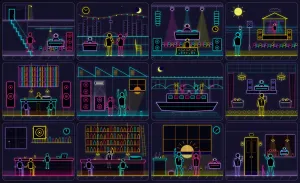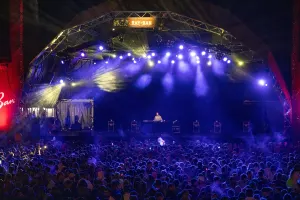
Stereo, in an old theatre on Sainte-Catherine in Montreal, is the best sound system I’ve ever stood in front of. I first went around 1999 or 2000, not long after it opened, and I vaguely remember David Morales playing that night. When I go back now it still sounds the same: warm, physical, and clear at a volume that should hurt and doesn’t. Frankie Knuckles called it “Mecca.” I’ve never heard a reason to argue.
A sound system is a decision about which frequencies matter and how the body should feel them, and everything worthwhile in club culture comes from rooms that took that decision seriously. After more than twenty years in booths, I hold one view with total confidence: the system outranks the lineup. In Seoul there’s one more rule on top of that, because here the neighbours outrank the system.
Kingston Wrote the Rules
The family tree runs back to 1950s Kingston, where operators like Duke Reid and Coxsone Dodd ran competing mobile systems that carried ska and early reggae across whole districts. The rig was the identity, the selector was the star, and exclusive dubplates were the ammunition. The rules they set still hold: sustained high volume playback, bass you feel in the chest before you hear it, and the system itself as the main attraction.
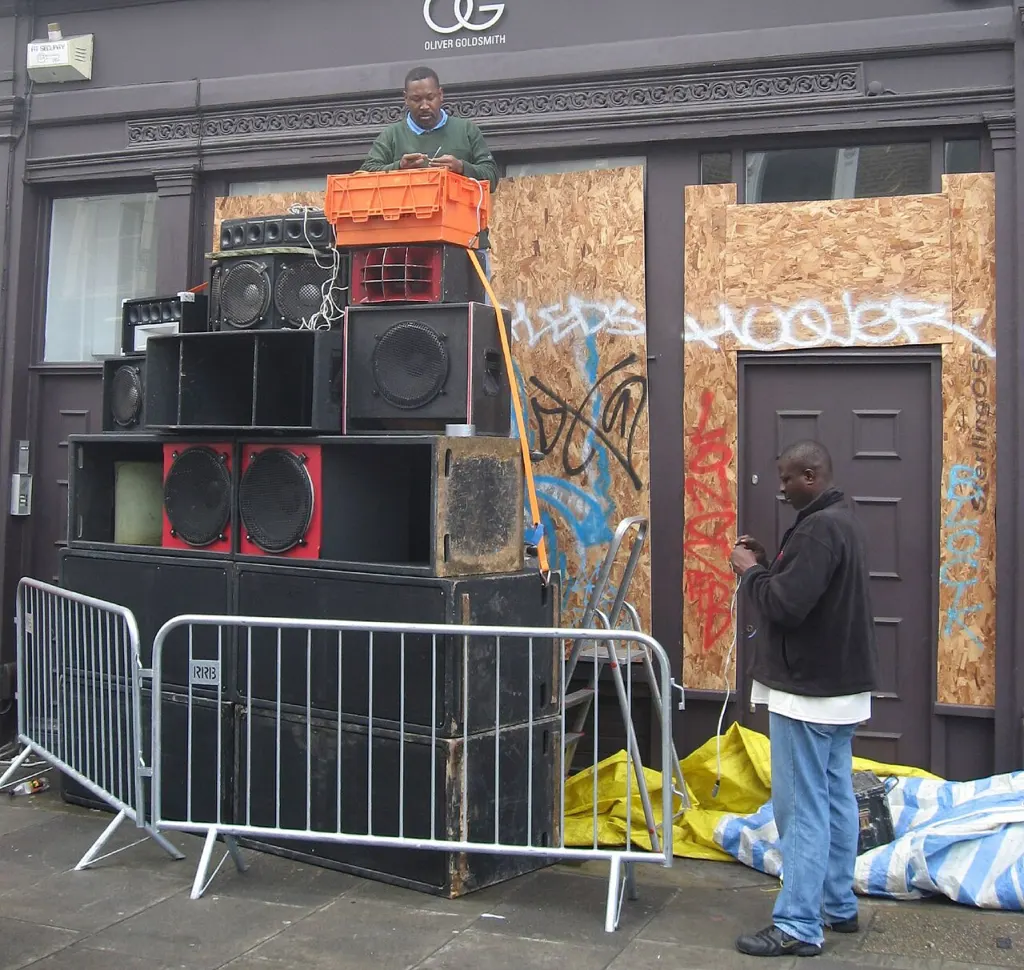
Caribbean emigration carried those rules to Britain, where 1970s sound system culture, Jah Shaka’s single turntable sessions above all, turned bass weight into something close to a spiritual practice. Those sessions trained the ears that later built dubstep, jungle and the whole UK bass lineage.
The Club Learned to Listen
Dance music’s great rooms were acoustic projects before they were social ones. Richard Long’s systems at the Paradise Garage set the template: horn loaded stacks, custom sub bins, and a room tuned as one instrument. His designs’ descendants defined an era of club building.
The line continues through purpose built rigs: Funktion-One’s horn loaded designs, d&b’s precision arrays, and the boutique builders reviving Long’s ideas for audiophile dancefloors. It runs all the way to Tokyo’s listening bars, where a forty seat room is built around what comes out of the speakers. In all of them the system is specified before the bar, because the room’s whole social contract, stay eight hours and trust the selector, is written in frequency response.
The System Outranks the Lineup
Sub bass is the one part of music that’s physical before it’s aesthetic. Below roughly 60Hz you feel sound in the body: pressure in the chest, movement in the floor. That shared physical sensation is what turns a crowd into one body. So every serious scene, from Kingston lawn dances to Seoul’s rented basements, measures a room by weight rather than wattage, and festival main stages that chase loudness miss the point. A great system is more articulate at the frequencies that bypass judgement, not louder.
That’s why the system beats the booking. A great selector on a mediocre rig fights the room all night. A decent selector on a great system, in a room built around it, delivers on schedule. The Jamaican operators knew this seventy years ago.
The worst case is the big room that clearly has money. I’ve seen several large places decide they want music and dancing, spend on the interior, the lights and the bar, and then refuse to make the same investment in sound. As a DJ, that’s painful, and I think the customers feel it too, even if they can’t name it. They just leave earlier. If you’re the one at the mixer, my notes on avoiding the red cover the booth side.
Seoul Points the Subs at the People
Seoul in 2026 runs the whole idea at small scale. The rooms getting it right sit in Itaewon, a district that the Korea Times reported had drawn 1.3 million domestic visitors by November 2025, and in smaller rooms like vurt. in Hapjeong (합정), a tuned basement, or Seoul’s LP bars, which brought over the reverence of the Japanese listening café. Venue builders now advertise a rig’s pedigree the way they once advertised guest DJs.
When Volnost reopened in November 2023, Resident Advisor reported a two floor building with a bar downstairs and a no photo dancefloor upstairs, running Martin Audio. That split is the Paradise Garage idea in a narrow Seoul lot. Talking happens on one floor, listening happens on the other, and the system never competes with conversation.
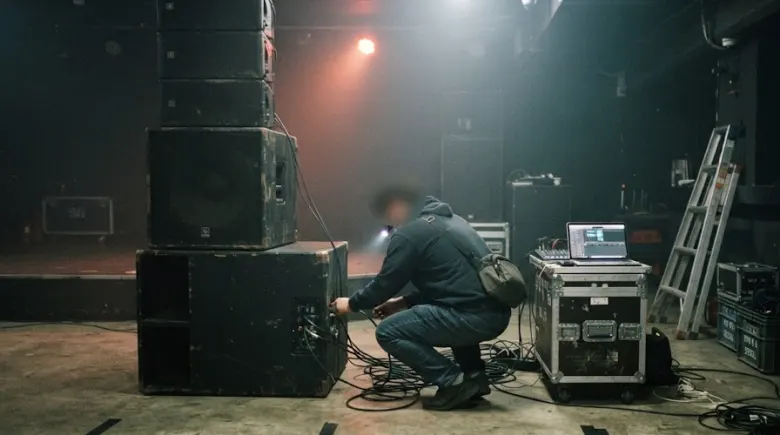
Faust is the other case study. In a July 2025 interview, founder Marcus L said, “I wanted to keep it as studio-like as possible.” He described the crew shifting the subwoofers back and forth until they faced the people rather than the walls. Bass pointed at bodies is felt as pressure in the chest; bass pointed at concrete comes back as mud.
Most Seoul club nights, though, happen in basements that were never built for any of this: a low ceiling, bare concrete, a column in the wrong place and a landlord upstairs. A good crew works by subtraction there. They turn the top end down before they turn the subs up, place the booth monitor so the DJ isn’t chasing volume, and tune the room at 11pm with nobody in it, then again at 1am when a hundred bodies have soaked up the highs. The rooms that sound best in this city are rarely the loudest. They’re the ones where someone spent a Tuesday afternoon with a measurement mic and a roll of acoustic foam.
In Seoul, the Neighbours Outrank the System
Sub bass travels through structure, and Seoul buildings stack everything together. A club can sit under a goshiwon (고시원), a building of small rented study rooms, or under a family restaurant that opens at 7am. Noise complaints go to the district office (구청, gucheong) and the police, and the rules on levels and hours are a field I’m not qualified to explain. The government’s Easy Law guide to everyday noise rules (in Korean) is a starting point. For a specific venue, ask the district office or a lawyer who works with venues.
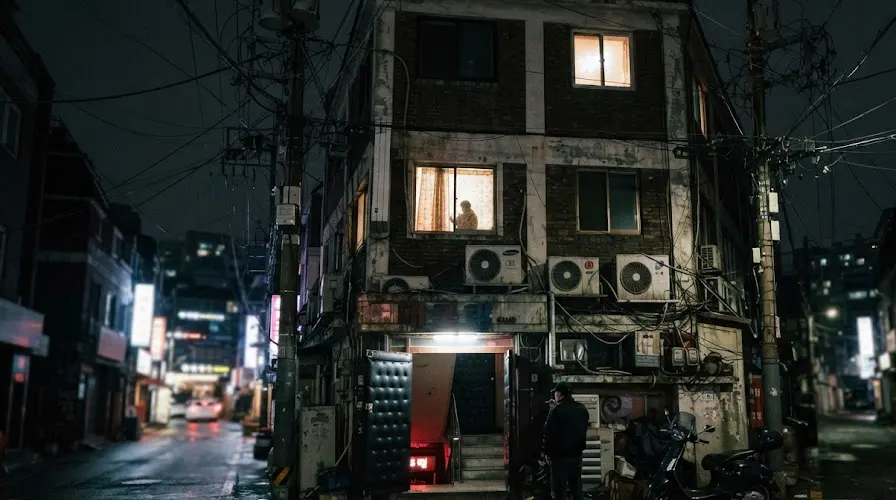
What I can describe is the effect on sound design. Seoul operators think about isolation before wattage: floating the floor where they can, decoupling the subs from the slab, and keeping the low end tight rather than boomy so it stays in the room. In the six years I owned and ran Dojo Lounge in Itaewon, sound was the biggest single job we took on. We had to soundproof the entire back of the room so nothing bled through to the neighbours, and a specialist company worked for days until we nailed it. We were a small to midsize room, but we ended up with a warm sound and great bass, and people could still talk to each other with the volume up. A room where you can feel the kick and still hear your friend is a room people stay in.
That constraint has quietly shaped the local sound. A Montreal loft party or a Toronto warehouse can lean on sheer volume because the next wall is far away. A Hongdae (홍대) or Itaewon basement can’t. So the best rooms here chase articulation instead: clean mids, controlled subs, and a system that sounds full at a level the upstairs neighbours can sleep through. For where those rooms are, see the Seoul club map.
What a Venue Needs, and What It Costs
Owners always ask the same question: how much do we have to spend? There’s no single number, because the room matters as much as the speakers, but there are clear tiers. The figures here are rough ranges from my own experience to start a conversation with an installer, converted at about ₩1,380 to the US dollar. They aren’t quotes.
What a Room Needs to Sound Right
The lineage of the club sound system, and the three budget tiers today
| Tier | Room size | Budget | What it needs |
|---|---|---|---|
| Bare minimum | Under 100 | About $5,000 to $15,000 | Good powered tops, one or two subs, a clean mixer, a limiter set by a professional |
| A real club | 150 to 400 | Tens of thousands to six figures | A system designed for the room, placed by measurement, DSP tuning, monitors, treatment |
| The flagship | Rooms people travel for | Ministry spent £1 million in 1991 | A name that becomes shorthand for its sound |
Two lines that are not optionalSoundproofing, because one neighbour complaint can close you. A limiter, because one careless DJ can blow your drivers on a Tuesday.
750 to 1,400 people at the Paradise Garage, 84 King Street, after its 1978 expansion. It ran from January 1978 to October 1987.
2004 Funktion-One goes into Berghain, its first Berlin install. The company was founded in 1992 and its first official install was the Millennium Dome in 2000.
Sources: Wikipedia, Wall of Sound · Wikipedia, Paradise Garage · Wikipedia, Funktion-One
For a bar or lounge under 100 people, the bare minimum is a pair of good powered tops, one or two proper subwoofers, a DJ mixer with a clean master output, and a hardware limiter or a DSP with limiting set by a professional, not by the bar manager. Think in the region of $5,000 to $15,000 (about ₩7 million to ₩20 million) for gear you won’t regret. A real club of roughly 150 to 400 people needs an installed system designed for the room, with tops, subs and fills placed by measurement, DSP tuning, booth monitors and acoustic treatment. Budgets there commonly run from tens of thousands of dollars into six figures, and installers note that installation often makes up 30 to 50 percent of a permanent system’s cost.
Then there are the flagships, the rooms people travel for. When Ministry of Sound opened in 1991 it spent £500,000 on the sound system and the same again on soundproofing. Whatever the tier, two lines on the budget aren’t optional: soundproofing, because one neighbour complaint can close you, and a limiter, because one careless DJ can blow your drivers on a Tuesday.
The brands you’ll see in serious club installs include Funktion-One, the purple cabinets in many of the world’s best known clubs, along with Void Acoustics, L-Acoustics, d&b audiotechnik, Martin Audio, Meyer Sound and Pioneer Pro Audio. Plenty of great rooms run custom builds, as Stereo always has. The design, the tuning and the room matter more than the badge on the cabinet.
Montreal was an easy call for me. Seoul is harder, and I’d rather hear from you. Which club or bar in Seoul has the best sound right now, and what makes it work? Tell me in the comments or on Instagram, and I’ll put the best answers into a follow up post.
Frequently Asked Questions
Which Seoul clubs have the best sound systems?
Faust in Itaewon is the room most often named for serious sound: it was built around a studio like philosophy, with the subs aimed at the dancefloor. Volnost reopened in November 2023 with Martin Audio on a dedicated upstairs floor. Plenty of smaller basements punch above their size, so ask a regular before you go.
Why do some clubs point subwoofers at the crowd?
Low frequencies are felt as much as heard, so aiming the subs at the dancefloor puts the pressure where the bodies are. Facing them at walls or corners can build up uneven bass that sounds loud in one spot and thin in another, which is why crews move subs around until it feels right.
Is a louder club sound system better?
No. A well tuned system sounds full at a lower level because every frequency arrives clean. Loud, badly tuned rooms tire your ears fast, which matters if you plan to stay six hours. Our guide to protecting your hearing covers the other half of that question.
How do Seoul basement clubs deal with noise complaints?
Mostly through isolation and tuning rather than volume: floating floors where possible, decoupling the subs and keeping the low end tight so it stays in the room. The rules on noise are handled by the district office (구청) and the police, so ask the district office about a specific venue.
Further Reading
- Red Bull Music Academy: Tony Andrews lecture: the Funktion-One cofounder on what a clean signal chain means.
- Resident Advisor: Industry Standards, Funktion-One: how the purple cabinets ended up in so many of the world’s best clubs.
- Maestro (2003), Criterion Channel: the documentary on Larry Levan and the Paradise Garage, where Richard Long’s sound set the template.
- Mixmag Asia: Volnost finds a new two storey home: the Seoul case study from this piece, reported from Itaewon.
- WHO: Global Standard for Safe Listening Venues and Events: the six features a venue can adopt so a great system doesn’t cost the crowd its hearing.
- Wikipedia: Stereo, Montreal
- Sound advice: protecting your hearing in nightlife
Sources
Seven Berlin: Building FAUST, Marcus L on Seoul’s most loved techno club (22 July 2025)
Resident Advisor: Volnost reopens in a two floor Itaewon building
Korea Times: Itaewon sees visitors surge as local brand revival takes hold
Montreal Mirror: an interview with Frankie Knuckles about the sound at Stereo
Written from Seoul, by someone who has been in the booth for more than twenty years. More on the site, or book a DJ.
Watch and listen: Behind Faust, Seoul, Faust’s own short film on how the room and the sound were built.
Stay in the Loop
New writing on DJ culture, electronic music, and the Seoul underground, delivered when it matters.
More From The DJ Diaries
Play with the history
Four tools built from the same research as this site.