Korea Has Been Running a Serious Festival Circuit for Over a Decade
This tends to surprise people who think of Korea as a market that imported Ultra in 2012 and stopped there. In fact the underground was moving well before the big brands arrived. And it’s still moving now, in converted warehouses outside Busan that hold 400 people and sound better than most main stages, on rooftops in Mapo, in parks that shouldn’t work as festival sites but somehow do.
I’ve played enough of these events to have an opinion on what has changed. Productions got bigger. Crowds got younger. Some festivals got good. Others got expensive in ways that had nothing to do with the music. What follows is an account of what’s running in 2026 (with the changes the calendar has thrown up since last year), who each event is built for, and whether it’s worth your weekend.
The short version: Korea’s DJ festivals are worth travelling for.
Quick answers
When is World DJ Festival?
World DJ Festival runs in June at Seoul Land in Gwacheon, just south of Seoul on subway Line 4. The 2026 edition, its 20th, ran June 13 and 14 with Armin van Buuren, Zedd, Marshmello and Loud Luxury, with tickets from 159,000 won.
Is World DJ Festival a Korean festival?
Yes. It started in 2007 as a home-grown Korean event rather than a licensed import, which is why it has fans who have been showing up for well over a decade.
What changed on Korea's festival calendar in 2026?
Ultra Korea announced no 2026 edition after its one-day 2025 event at Oil Tank Culture Park, World DJ Festival marked its 20th anniversary, and EDC Korea moved from spring to October.
Are Korean DJ festivals worth travelling for?
Yes. The big brands are here, but so is a serious underground circuit in converted warehouses outside Busan, rooftops in Mapo and parks that shouldn't work as festival sites but do.
Updated September 2026, with the summer season now behind us. Highlights this year included a quiet year for Ultra Korea, which had announced no 2026 edition by September, the 20th edition of World DJ Festival, S2O Korea’s fifth edition, and, notably, EDC Korea moving from spring to October, where it runs on 3 and 4 October 2026 at INSPIRE. 2027 dates will be added as each festival confirms them.
Korea’s Festival Calendar, May to October
Every festival in this guide on one line, drawn to scale by date
2026 한국 페스티벌 달력
How to read itThe weekend in mid June is the clash: DMZ Peace Train and World DJ Festival overlap. July is water season, and summer days run above 30°C, so plan water and shade.
Pentaport drew over 150,000 across three days in Songdo. World DJ Festival has grown by about 30,000 since its 2017 edition at Jamsil.
Sources: Incheon City · Sports Kyunghyang
World DJ Festival, Seoul
Dates: June 13 to 14, 2026 (20th edition)
Location: Seoul Land, Gwacheon
Tickets: From ₩159,000
Lineup: Armin van Buuren, Zedd, Marshmello, Loud Luxury, plus a strong supporting cast
Website: wdjfest.com
World DJ Festival is the one that started it all. Born in 2007 and proudly Korean, not a licensed import from an international brand but something that originated here, WDJF is the blueprint for large-scale DJ culture in this country. It has fans who have been showing up for over a decade. And there’s something in the atmosphere that you can only get from an event with that kind of institutional memory.
Hosted at Seoul Land in Gwacheon, just south of the city on Line 4. The site has enough open space to run multiple stages without the headliner crowd completely overwhelming the secondary rooms. This year’s lineup brings Armin van Buuren, Zedd, Marshmello, and Loud Luxury alongside a strong supporting cast, marking the festival’s 20th edition. WDJF works for mainstage regulars and for people who prefer the darker rooms.
From a DJ perspective, this event is worth studying purely for the programming decisions. How they sequence the evening, how they manage the transition between headliners, how they handle the secondary stage. It’s a masterclass in festival logistics, even when it doesn’t go perfectly.
If you’re in Seoul that weekend and haven’t been, go. If you have been before, you already know why.
A personal note: I was honoured to play two World DJ Festival events. Both were well organised, and it’s great to see a local brand doing the best work in South Korea.
For scale, the Korea JoongAng Daily (코리아중앙데일리) reported in May that last year’s edition drew 100,000 people, and that the 2026 bill ran to 86 artists from 17 countries, from trance and techno to hard techno, dubstep and big room.
The Air House Festival, Nami Island
Dates: May 23 to 25, 2026
Location: Nami Island, Chuncheon
Tickets: 1-day from ₩109,000 / 3-day pass ₩199,000
Lineup: Afrodite, Armen Miran, Bambounou, Daox, Dudu, Nomtii
Website: the-airhouse.com
This is the one I keep recommending to people who ask me where to go in Korea if they care about the music more than the spectacle.
The Air House is held on Nami Island, the pine-covered island in the Bukhan River in Chuncheon, about 90 minutes from Seoul by rail via the ITX-Cheongchun service. The same island famous for its walking paths and the K-drama Winter Sonata becomes, for one long weekend each May, home to a boutique festival that serves up house, disco and techno from both global and local selectors in a setting that no urban venue can replicate.
This year’s lineup includes Sébastien Léger, Nicolas Lutz, Shonky and Marco Shuttle alongside Bambounou and Armen Miran. That’s the level of curation. No VIP lines, no table minimums and no bottle service imperative. Just deep sounds, forest paths, sunrise sets, and the specific kind of human connection that only happens when music is taken seriously in a beautiful place.
If you care about the house and techno traditions I’ve been writing about across this site, the lineage that runs from Larry Levan through the Fabric compilations through what’s currently happening in Berlin and London’s underground rooms, then this event is the Korean expression of that tradition. It’s also the most musically credible festival in the country.
Bring camping gear, comfortable shoes, and nothing that you don’t want to get dirty.
This is my favourite kind of festival. It’s close enough to Seoul, near the far end of the Gyeongchun Line, but still out in the countryside where people can camp. I recommend everyone go and check it out. Korea needs more events like this.
Electric Daisy Carnival (EDC) Korea, Incheon
Dates: October 3 to 4, 2026 (third Korean edition, moved from spring to the National Foundation Day long weekend)
Location: INSPIRE Entertainment Resort, Incheon
Tickets: See the official site for current tiers
Lineup: Alok, DJ Snake, Fisher, ILLENIUM b2b Dabin, Sara Landry, Subtronics, SVDDEN DEATH and Tiësto, with Argy, 999999999 and Lilly Palmer further down the bill (full lineup via DJ Mag)
Website: korea.electricdaisycarnival.com
EDC Korea returns to the INSPIRE Entertainment Resort near Incheon Airport for its third edition, and for the first time it runs in autumn rather than spring. The previous edition was held at the same site in April 2025. INSPIRE is purpose-built for large events in a way that most Korean festival venues aren’t: covered stages, permanent infrastructure and hotel rooms on site.
The lineup leans mainstage and bass, with Fisher and Tiësto near the top. The techno end is real, though. Sara Landry, Argy, 999999999 and Lilly Palmer give harder listeners a reason to stay late. The same weekend also brings a free street festival to Itaewon, so Seoul itself will be busy.
For international visitors this one makes practical sense. The resort is close to the airport, so you can fly in, go to the festival and fly out without spending much time crossing Seoul. Whether that appeals depends on what you’re in Korea for.
Ultra Korea, Seoul
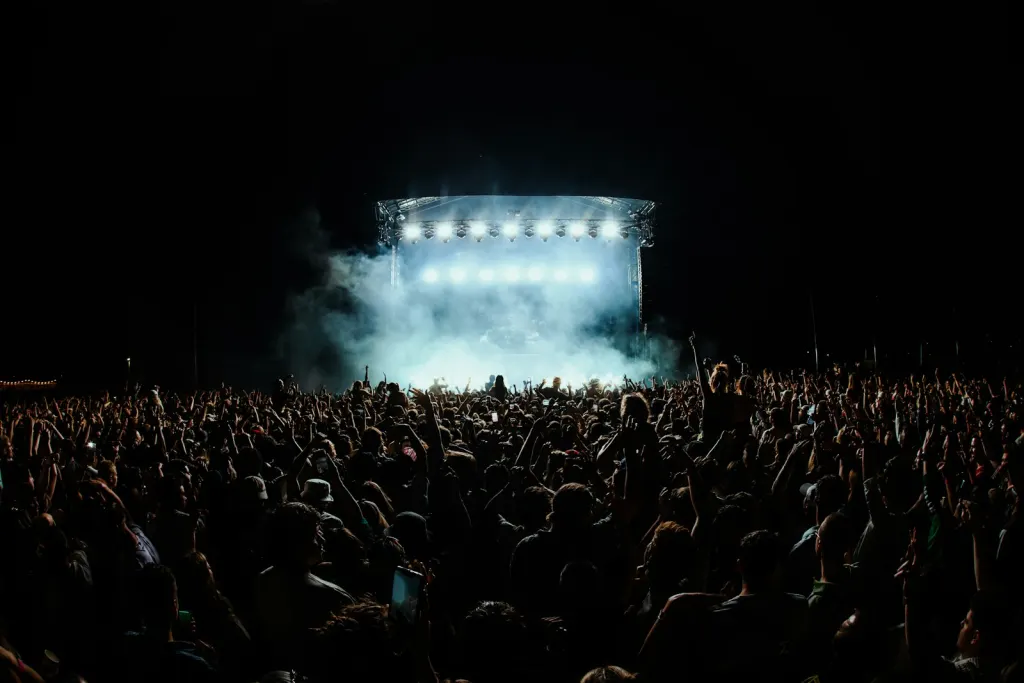
Herald Economy (헤럴드경제) reported in June that EDC Korea drew about 50,000 people over two days in 2025, that its move to the Gaecheonjeol (개천절, National Foundation Day) weekend was deliberate, and that ATEEZ member Hongjoong plays a solo EDC set under his DJ name, NO1.
Dates: No 2026 edition announced as of September 2026. The most recent edition was a single day on September 20, 2025
Location (2025): Oil Tank Culture Park (문화비축기지), Mapo, Seoul
Website: ultrakorea.com
Ultra Korea was for years the biggest name on the Korean calendar, launching at Seoul’s Olympic Stadium in 2012. The 2025 edition was a compressed one day event at the Oil Tank Culture Park, a converted oil depot near the World Cup Stadium. Hardwell returned to Korea for the first time in eight years, alongside Steve Angello, Adam Beyer and Gryffin across three stages, including a RESISTANCE stage for the techno crowd. Sports Kyunghyang reported it sold out.
As of this update, no 2026 date or venue has been announced, and the official site still shows the 2025 event. An earlier version of this guide listed a June 2026 stadium edition with a phased lineup. That was wrong, and it has been removed. If a new date appears, it will be added here.
For the history: Ultra’s inaugural edition was held in Miami in 1999. And the brand’s arrival in Korea was part of a broader internationalisation that brought both visibility and economic pressure to the local club scene. I write about the wider context of that pressure in my piece on Seoul’s club culture at a crossroads.
S2O Korea Songkran Music Festival, Seoul
Dates: July 11 to 12, 2026 (fifth Korean edition). 2027 dates TBA
Location: Seoul Land, Gwacheon
Tickets: 1-day from ₩129,000 / 2-day ₩209,000 (2026 pricing)
Lineup: Yellow Claw, Galantis, Andrew Rayel, Matisse & Sadko, DubVision, Third Party, Mike Williams, Mike Perry, Black Tiger Sex Machine, Hedex, plus a Korean welcome stage
Website: s2okoreafest.com
S2O Korea is Thailand’s water rave transposed to Seoul, and it’s exactly as chaotic and entertaining as that sounds. Water cannons blast the crowd. DJs drop thunderous sets. The Korean summer heat, which in July is fierce and unforgiving, becomes part of the event’s logic. You’re meant to get soaked. That’s the point.
The 2026 lineup was solidly mainstage EDM, Yellow Claw, Galantis, Andrew Rayel, Matisse & Sadko, DubVision, over two stages and two days, which delivered exactly what that audience expects. If you’re coming to Seoul specifically for this event, combine it with a night at one of the underground clubs in Hongdae beforehand. The contrast will be instructive about the range of what Korean electronic music culture currently offers.
For practical notes: waterproof your phone, accept that your shoes won’t survive, and drink more water than you think you need. Korean summer dehydration is a real risk at outdoor events.
DMZ Peace Train Music Festival, Cheorwon
Dates: June 12 to 14, 2026 (Friday pre-festival party, then Saturday and Sunday). 2027 dates TBA
Location: Goseokjeong, Cheorwon, Gangwon-do (near the DMZ)
Tickets: Two-day pass ₩154,000 (2026), day tickets available, round-trip shuttle passes from Seoul Station
Lineup: Thurston Moore Group, Deadletter, Mildlife, Tricot, Lewis OfMan, Nourished by Time, Galaxy Express, Insooni, Peppertones, with a Fountain Stage presented by Seoul Community Radio and a Permit-curated midnight stage
Website: dmzpeacetrain.com
Nowhere else in the world do music and geopolitics collide quite like this. DMZ Peace Train is held in Cheorwon, in Gangwon Province, near the Demilitarized Zone that separates North and South Korea. The history of that ground, the ruins, the restricted zones, the presence of wildlife that has thrived in the absence of human development, gives the festival a quality that no purpose-built festival site can manufacture.
The programming leans toward indie, experimental, and electronic, rather than mainstream EDM. Past editions have featured artists like Japanese Breakfast and Minami Deutsch. The atmosphere is more reflective than celebratory, though it’s both. If you’re in Korea for music but also want to understand something real about this country’s history and present situation, this is the event that provides both at once.
Getting there requires some planning. Cheorwon is accessible from Seoul but not in the casual way that Gwacheon or Incheon are. Allow a full travel day and consider staying locally rather than commuting.
Waterbomb Festival, Nationwide
Dates: July 24 to 26, 2026 for the Seoul edition at KINTEX, with additional city dates across the summer
Locations: Seoul, Busan, Daegu, and others
Website: waterbombfestival.com
Waterbomb is a cultural phenomenon that defies the usual festival categories. Part concert, part water fight, part fashion show, it travels across multiple Korean cities each summer with a lineup that typically includes hip-hop, K-pop, and EDM acts. Past editions have featured Jay Park, Zico, and DJ Soda. The crowd comes as much for the spectacle as for the music, and the spectacle delivers.
Skip it if you want serious music discovery. Come for maximum summer energy, social media moments and the particular joy of dancing in wet clothes with 20,000 other people who have completely abandoned their dignity. There’s a place for that in any festival season.
Boryeong Mud Festival, Boryeong
Dates: July 24 to August 9, 2026 (29th edition, 17 days)
Location: Daecheon Beach, Boryeong
Website: mudfestival.or.kr
Boryeong Mud Festival began as a regional tourism campaign and became one of Korea’s most anticipated summer events. What it is now: two weeks of organised chaos on Daecheon Beach, with EDM stages, mud wrestling pits, foam zones and a general atmosphere of abandon that draws both Korean domestic crowds and international visitors in large numbers.
The music is secondary to the experience here. Come for the mud, the beach, the heat, the madness. Go in with no expectations about musical curation and you’ll have a wonderful time. Go in expecting The Air House and you’ll be confused.
Practical Notes for Festival Season in Korea
Korean summers are hot and humid in a way that most northern European or North American visitors underestimate. July and August temperatures regularly sit above 30°C with high humidity. Hydration, sunscreen, cooling towels, and portable fans are survival equipment, not optional accessories.
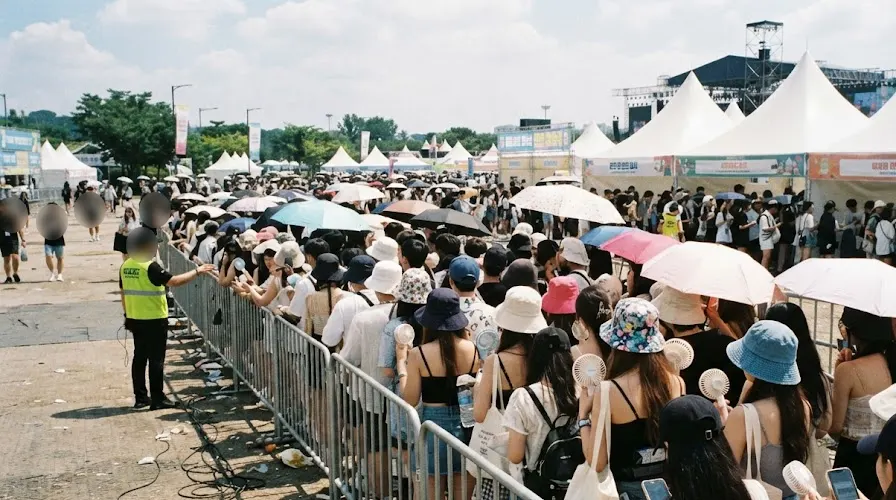
Most Korean festivals operate a cashless payment system via wristband or app. Load your wristband balance at the festival entrance and avoid queuing at recharge points mid-set. Kakao T is the most reliable taxi app for getting to and from venues, and is worth downloading before you arrive in Korea. For festival venues outside Seoul, check train schedules on Korail in advance, as some routes fill up on festival weekends.
If you’re visiting Seoul around any of these events, my guide to going out in Seoul covers the club circuit you can explore on the nights when you’re not at a festival. The city’s underground scene operates year-round and is one of the best in Asia.
Watch and listen: Pentaport 2025 after movie · Ultra Korea 2024 official aftermovie
If you want to know what a well run site is supposed to look like, the government’s safety manual for performances, events and local festivals (공연·행사·지역축제장 안전매뉴얼, gongyeon haengsa jiyeokchukjejang anjeon maenyueol) is still online. It dates from 2009 and the former National Emergency Management Agency (소방방재청), and it walks through each stage from planning and audience entry to closing and incident response, with a separate section on late-night events.
One more from experience: plan your ride home before you plan your outfit. The minute a festival isn’t near a subway it’s hard to get to and harder to get home from. The established festivals run plenty of shuttle buses, so book them early.
한국어 요약
People often ask me which festival is the best. I don’t have a favourite brand. What I’ve learned is that the right weather and the right location mean everything to these events. A great lineup in thirty-six-degree heat, or on a site you can’t get home from, is a hard day out. A smaller festival with a cool evening, shade and an easy way home can be the best night of your summer.
2026 한국 DJ 페스티벌 가이드, 어디로 가야 할까
제가 직접 무대에 서 본 한국 페스티벌들을 두고, 2026년 각 행사가 누구를 위한 자리이고 주말을 쓸 만한지 솔직하게 정리했습니다.
- 월드 디제이 페스티벌: 2007년에 시작된 한국 토종 페스티벌로, 2026년 6월 13일과 14일 과천 서울랜드에서 20회를 맞았습니다.
- The Air House: 남이섬에서 열리는 부티크 페스티벌로, 음악을 가장 진지하게 대하는 행사라 제가 가장 자주 추천합니다.
- EDC Korea: 10월 3일과 4일 인천 INSPIRE 엔터테인먼트 리조트에서 처음으로 가을에 열리며, 공항과 가까워 여행객에게 편합니다.
- DMZ Peace Train: 철원 고석정에서 열리며, 음악과 이 땅의 역사를 함께 느낄 수 있는 유일한 행사입니다.
- 물과 진흙: S2O Korea, 워터밤, 보령머드축제는 음악보다 여름의 에너지를 즐기는 자리입니다.
Ultra Korea는 2026년 9월까지 새 일정을 발표하지 않았습니다. 한여름 페스티벌은 30도가 넘는 습한 날씨라 물과 자외선 차단제는 필수이고, 대부분 19세 이상만 입장할 수 있으니 행사별 연령 기준을 미리 확인하시기 바랍니다.
잘못된 정보나 바뀐 날짜를 발견하셨나요? 연락 주시면 확인 후 바로 고치겠습니다. 현장에서 보고 들은 이야기도 언제나 환영합니다.
Follow the rooms: Ultra Korea on Instagram
Go Deeper: Plan, Watch, Read
Official calendars, safety advice and a few honest previews, for anyone building a trip around Korea’s festival season.
- VISITKOREA festivals portal: the Korea Tourism Organization’s official listings, useful for pairing a festival with a regional trip.
- Korea Meteorological Administration heatwave guide (Korean): the official symptoms and steps for heat illness, worth reading before any July or August event.
- Seoul Metropolitan Government on owl buses: how the late night N routes work, for festivals that finish after the last subway.
- Mixmag Asia: festivals to look forward to in 2026: the regional picture, including The Air House’s six stages on Nami Island.
- Dailian on Korea’s festival boom (Korean): KOPIS data on how fast new festivals multiplied in 2026 and how often their lineups overlap.
- Resident Advisor: Seoul events: the club nights to fill the weekends between festivals.
FAQ
What are the best music festivals in Korea?
For pure music quality, The Air House on Nami Island is the most credible festival in Korea. For scale and production, World DJ Festival and EDC Korea deliver. For a unique experience tied to Korean culture and history, DMZ Peace Train is unlike anything else.
Is Ultra Korea worth attending?
It depends on what you’re looking for. Ultra’s production values are consistently high, but no 2026 edition had been announced as of September 2026, so check the official site before planning a trip around it. If you enjoy mainstage festival DJ sets and want a world-class production, yes. If you’re primarily interested in underground electronic music, The Air House is a better fit.
When is World DJ Festival held each year?
World DJ Festival typically runs in June at Seoul Land in Gwacheon. The 2026 edition ran June 13 to 14 (the festival’s 20th edition). Tickets usually go on sale several months in advance and the early bird pricing is significantly cheaper than the door rate.
Are Korean music festivals family-friendly?
Most Korean DJ festivals are restricted to ages 19 and over, the legal drinking age in Korea, although rock festivals such as Pentaport run a dedicated kids zone. Boryeong Mud Festival is the most family-accessible of the events listed here, with day hours suitable for mixed-age groups. Always check individual event age policies before purchasing tickets.
Test Yourself
Written from Seoul, by someone who has been in the booth for more than twenty years. More on the site, or book a DJ.
The History Nobody Writes Down: How Korea Got a Festival Circuit
Every guide to Korean festivals, including the earlier version of this one, starts in the present. That skips the interesting part, which is that this circuit was built twice, and the first attempt was a catastrophe.
1999: The Disaster That Started Everything
The Incheon Tryport Rock Festival in 1999 was Korea’s first serious attempt at a Western-style outdoor festival, and it booked accordingly: Deep Purple, Dream Theater, Rage Against the Machine and Prodigy, alongside Korean acts including Sinawe and Crash.
Then it rained. Heavily. The first day barely finished, the rest was cancelled outright, the site turned to mud, and campers ended up evacuated to nearby elementary schools. A 2000 revival was abandoned when tickets didn’t sell.
That failure is the founding story of the Korean festival circuit, and every Korean of a certain age knows it. It’s also why the mud at Korean festivals is a running joke rather than a complaint.
2000 to 2005: The Gap Years
Busan International Rock Festival launched in 2000 as a free event and quietly became the most durable thing on the calendar, running for well over a decade and a half. Seo Taiji’s ETP Fest arrived a year later, in 2001, but only ran a handful of editions. Everything else in this period was one-off: a metal festival at Dongdaemun Stadium, a large event at Jamsil in 2002.
Six years passed between the Tryport disaster and anyone attempting a proper annual rock festival again.
2006: Pentaport, the Second Attempt
The Incheon Pentaport Rock Festival picked up the Tryport site and idea and made it stick. It’s the direct descendant of the 1999 failure, on the same ground, and it’s the reason there’s a circuit at all. I wrote up a full first-hand review of the 2026 edition if you want to know what it’s like now.
2009 to 2013: The Split, the Peak, and the Glut
In 2009 a fallout between organisers produced two competing festivals on the same weekend. The newly launched Jisan Valley Rock Festival won that fight on lineup strength and became the dominant event for several years, peaking in 2012 with a cumulative 110,000 attendance and Radiohead at the top of the bill.
Then the market broke itself. By summer 2013 there were five festivals competing in the Seoul metropolitan area alone, including Pentaport, Supersonic, Citybreak and the relocated Ansan Valley Rock Festival, which is the answer to a question people still ask: the Valley festival moved from Jisan to Ansan for a couple of years, then moved back.
That glut fragmented the audience and most of those festivals are gone. In 2016 the Valley festival returned to Jisan and rebranded as Jisan Valley Rock Music & Arts Festival, widening from rock into pop, hip hop, R&B and electronic music, which is the shape it holds now.
The Electronic Circuit, Which Ran on a Separate Clock
The dance side has its own timeline and it didn’t grow out of the rock festivals.
World DJ Festival started in 2007 as part of Seoul’s Hi-Seoul Festival programme and drew more than 90,000 people across three days in its first edition, a remarkable number for a first attempt. Its history since is a story of constant relocation: Nanji Hangang Park, then Yangpyeong, then Chuncheon, then the Olympic Stadium, then Seoul Land, and in recent years multiple venues including editions in Japan. It’s the longest-running dance music festival in the country, despite pandemic gaps that included a cancelled 2022 edition, and it has never had a settled home.
Ultra Korea arrived in 2012 at Seoul Olympic Stadium with around 60,000 people over two days. And became the biggest thing on the circuit fast: 110,000 by 2015, over 150,000 in 2016 when it moved to three days. It also shows the fragility of the model. The 2019 edition lost headline acts and partially refunded tickets, and the festival’s recent scheduling has been intermittent.
That contrast is the whole lesson of the Korean festival circuit. The event that survived isn’t the biggest one. It’s the one that kept going through relocations and bad years.
What the History Actually Tells You
Three things, and they’re useful if you’re deciding what to buy a ticket for.
Survival here is about organisers, not lineups. The festivals that lasted are the ones with an operator who kept showing up. Spectacular one-offs are a Korean tradition going back to 1999.
Weather is a structural risk, not bad luck. A Korean summer festival is a monsoon-season event. It has ended one festival already and it will affect any you attend.
The market saturates fast and corrects hard. 2013 is the cautionary example, and a crowded season is usually the sign that several of those events are about to disappear.
When did festivals start in Korea?
The first major attempt was the Incheon Tryport Rock Festival in 1999, which booked Deep Purple, Rage Against the Machine and Prodigy but was largely destroyed by heavy rain and cancelled after the first day. Busan International Rock Festival began in 2000, and the modern circuit properly starts with Incheon Pentaport Rock Festival in 2006, which revived the Tryport site and concept.
What happened to Ansan Valley Rock Festival?
It was the same festival as Jisan Valley Rock, temporarily relocated. Jisan Valley Rock Festival launched in 2009 and became the dominant Korean festival, peaking in 2012 with around 110,000 attendance and Radiohead headlining. It moved to Ansan for a period during the crowded 2013 era, then returned to Jisan and rebranded in 2016 as Jisan Valley Rock Music & Arts Festival, broadening beyond rock.
What’s the oldest dance music festival in Korea?
World DJ Festival, which began in 2007 as part of Seoul’s Hi-Seoul Festival programme and attracted more than 90,000 attendees over three days in its first year. It has moved venue repeatedly across its history, from Nanji Hangang Park through Yangpyeong, Chuncheon, the Olympic Stadium and Seoul Land. It remains the longest-running electronic music festival in the country.
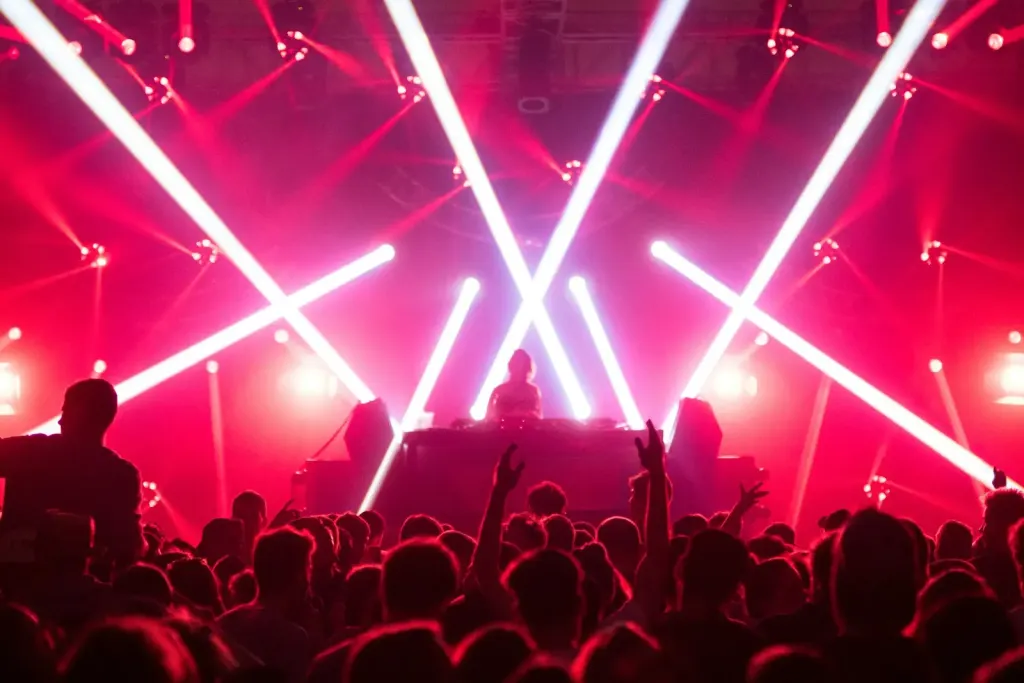
What a Korean Festival Crowd Actually Looks Like
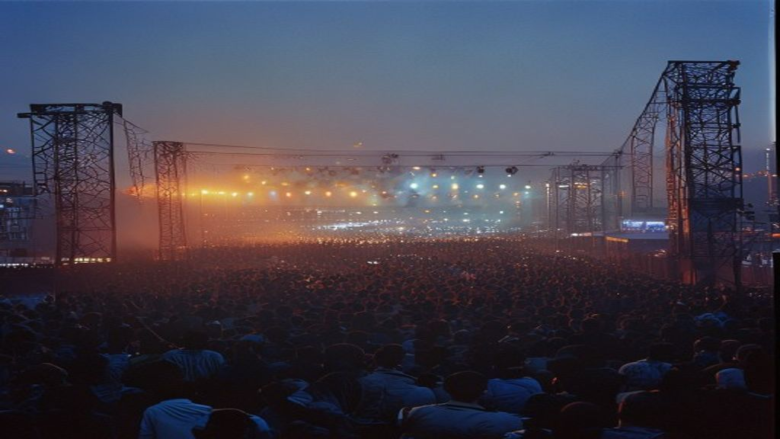
Line-up posters tell you nothing about how a field behaves. This is Q-dance’s own aftermovie from their stage at World DJ Festival, and it’s the clearest footage in circulation of the Korean festival crowd at full tilt: young, extremely well organised, and considerably more committed than the reputation suggests.
Sources and Further Reading
On the festivals themselves. Seoul World DJ Festival and Jisan Valley Rock Festival carry the clearest English-language edition-by-edition records, including the venue moves and the 2013 split that reshaped the whole summer.
On the end of Ansan. The Korea Herald’s review of the final Ansan Valley Rock Festival, which is worth reading as a document of what the circuit lost when that one went.
Everything else is my own festival seasons here, and the promoters and crew who have told me over the years what the numbers actually looked like. If you worked one of these and remember it differently, I’d like to hear it.
On the 2026 festival facts. Korea JoongAng Daily on World DJ Festival’s 20th edition at Seoul Land (21 May 2026), and Herald Economy on EDC Korea’s move to October at Inspire (18 June 2026).
On safety. The 2009 government safety manual for performances, events and local festivals, via Korea Policy Briefing.
Stay in the Loop
New writing on DJ culture, electronic music, and the Seoul underground, delivered when it matters.
More From The DJ Diaries
Play with the history
Four tools built from the same research as this site.