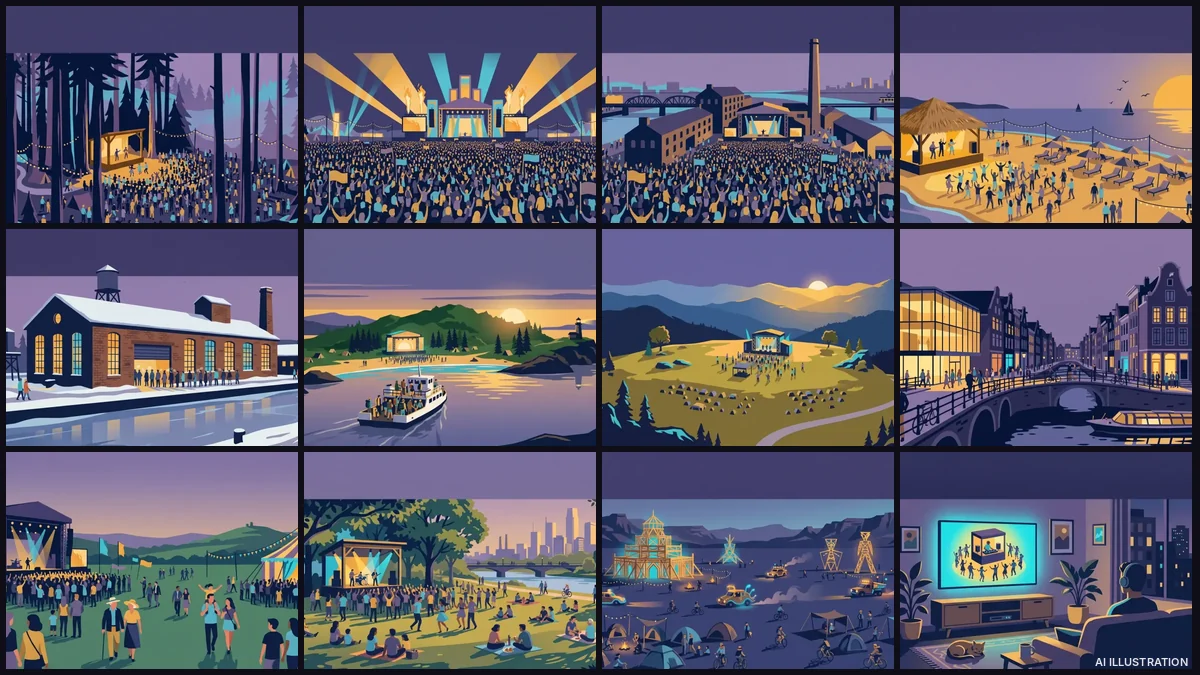
It’s twenty past four on the second morning and the tent is forty minutes uphill on wet grass. Your phone died before midnight. Your shoes haven’t been dry since Friday and your hearing has gone soft at the top end, the way it does on a second day. Somewhere behind the trees a smaller stage is still running. The set that justified the whole weekend finished ninety minutes ago. The only question left is whether you walk toward the trees or toward the tent, and most people know the answer before they have finished asking it. Twelve formats follow.
Take the quiz first
Which festival is really yours?
Thirty six quick questions, most of them not even about music. You get one of twelve festival types, the weekends that suit it, and a card to send your festival crew.
10 minutesNo sign upEnglish or 한국어A card to share
Already know your result? Scroll on and find it below.
The Festival Type quiz sorts people into twelve festival formats by how they behave rather than what they listen to. Most people pick a festival off the poster. Then they spend three days working out that they hate the site, the walk, the weather or the group they came with. This asks how you pack, how you queue, how you conduct yourself at four in the morning and what a field has to absorb from you.
Six hidden axes carry the scoring: Control from Improvised to Planned, Allegiance from Reads Room to Holds Line, Depth from Canonical to Dug, Patience from Slow Build to Wants Peaks, Social from Solitary to Communal, and Time from Reverent to Futurist. A forty thousand capacity main stage and a two thousand capacity forest sit at opposite ends of several of those at once.
The twelve are formats, not tiers. A stadium event in Jamsil, a jazz festival on a river island in Gapyeong, an indoor February weekender, a Sunday afternoon series in a park and a livestream with no site at all are all here, and none is set up as the real one. Korean and Canadian examples come before European ones throughout. Each type carries a criticism, and the criticism is the half worth reading. Below are the twelve.
The Boutique Forest
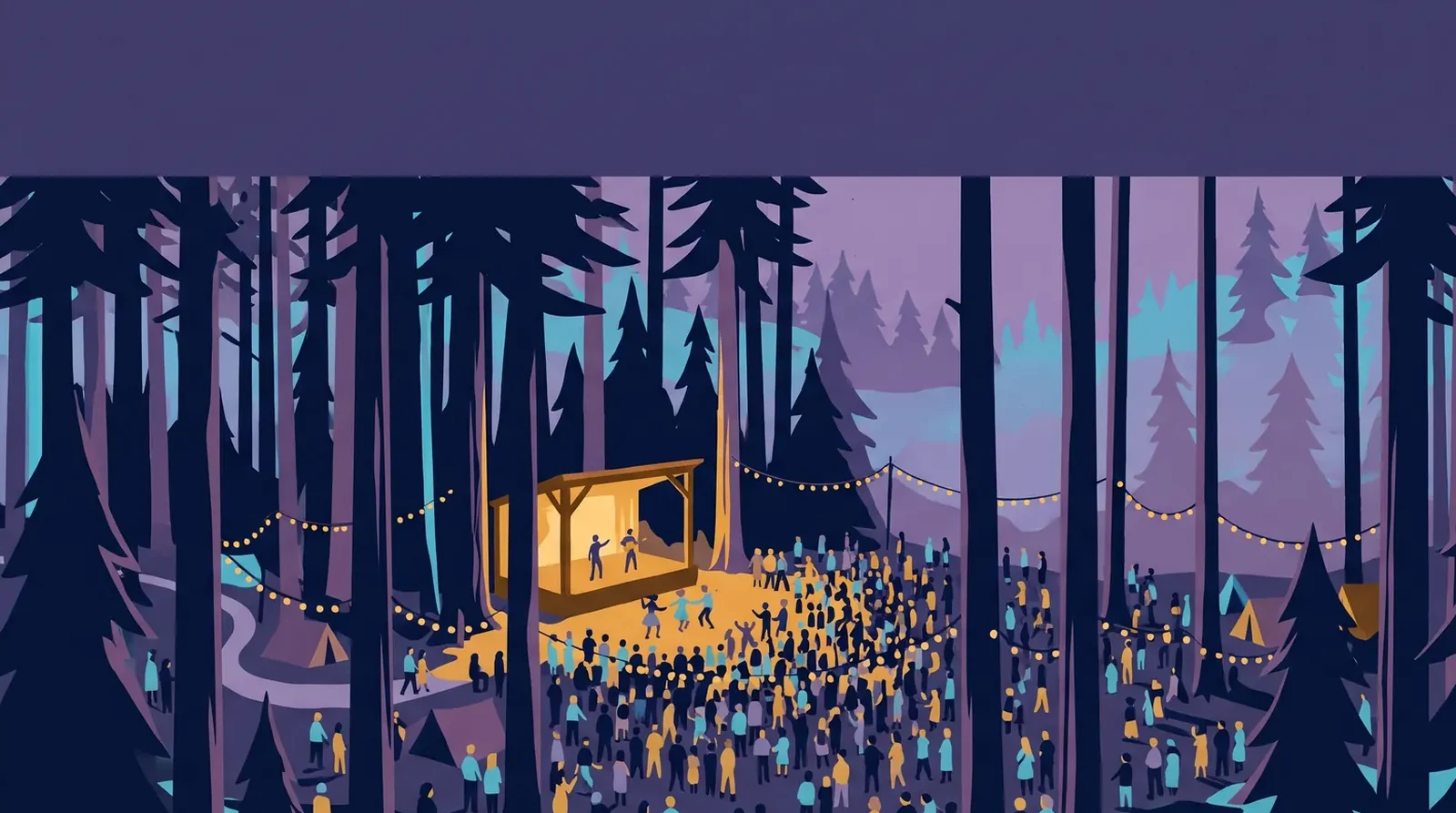
Festivals sort into twelve formats on six measures: how much you plan, whether you follow the crowd or hold a line, how deep you listen, how fast you want the payoff, how social you are, and whether you look backwards or forwards. The Boutique Forest is the small, dug, patient corner. Two thousand people, one stage, trees everywhere. The twenty minute walk in from the car park does real work, because by the time you arrive you have stopped being a person with a job. One bar, one row of food, and nobody on a phone because nobody can be. The site does the sorting.
The cost is fragility. A festival this size runs on about forty people caring, and one wet year or one landowner who sells ends it. This type is also quietly snobbish about scale and has written off events that were good on the grounds that eight thousand people went. Small isn’t a standard.
Is A Boutique Festival Worth It?
Yes, if you’re willing to camp. Most Korean festivals don’t camp at all, so the small river sites are a different proposition from a day ticket in a city park, and the tent is the entry fee rather than an optional extra. Two thousand people also means the same faces by the second night, which is the product.
The Gapyeong camping festivals sit ninety minutes from Seoul with a river and a capacity small enough that faces repeat by the second night. Jarasum out of season has one bridge and a tree line. Bass Coast in Merritt has a no filming rule the crowd keeps, and Shambhala in Salmo has no phone signal.
The Main Stage
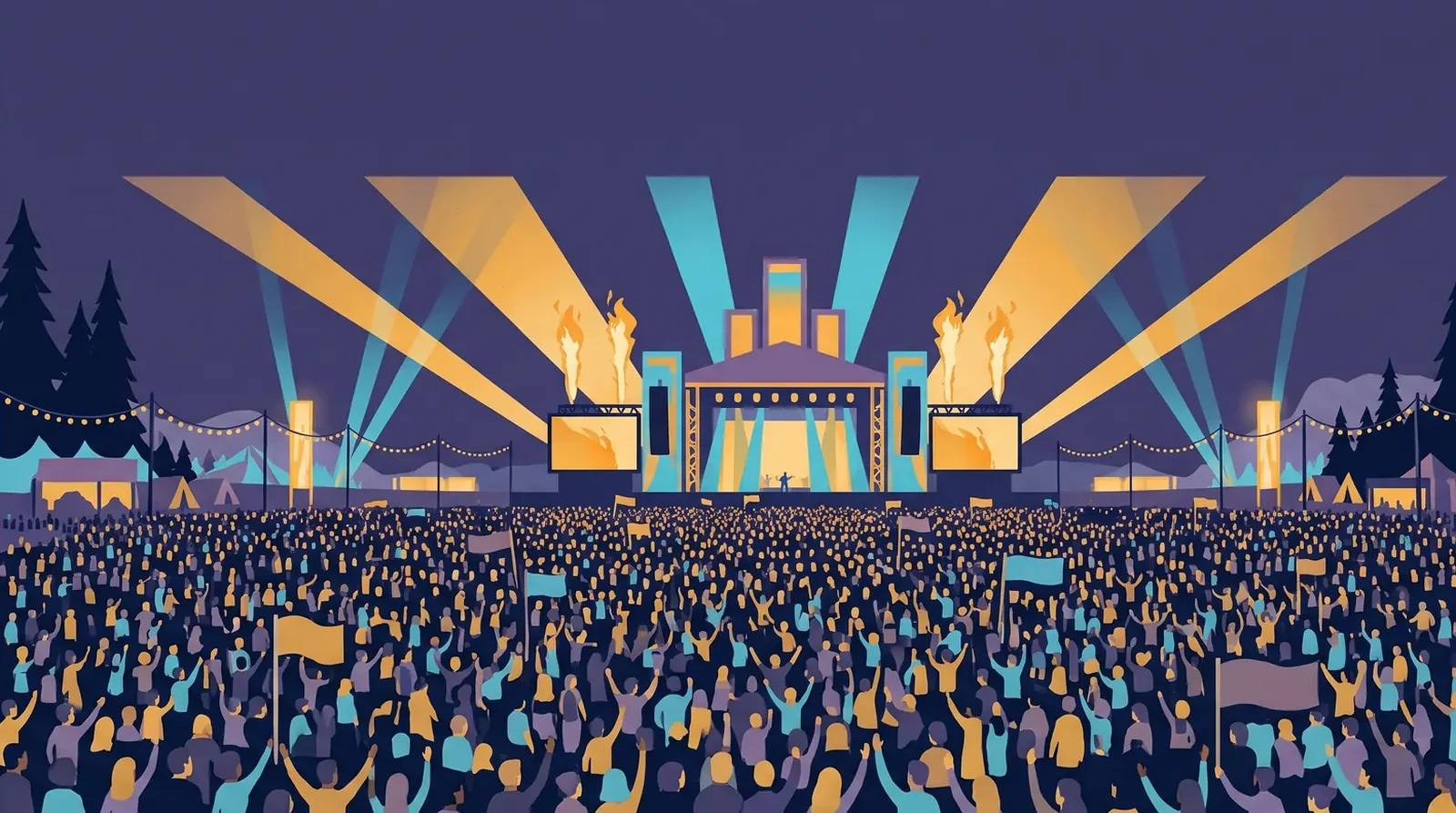
Forty thousand people, screens, fireworks timed to the drop and a headliner your cousin has heard of. Everything is legible: where the bars are, where the toilets are, when the pyro goes off. Nothing is hidden. Nobody is there to find a secret. They’re there for the moment when a huge number of people do the same thing at once. It’s rare, and people with better taste pretend not to want it. That moment is real.
What it costs is discrimination. Sets built for this scale work at two hundred metres, which means they’re built out of the things everybody in the field already knows, and after four summers the nights stop being separable from one another. The queueing is heavy: an hour for a drink, forty minutes to get out, a shuttle system designed by somebody who has never used it, and a slow drift toward the exit that starts during the last twenty minutes of the headline set, because half the field knows the trains stop before the encore does and would rather hear less than sleep in a car park. A lot of the time this type went for the fact of having been there. Large isn’t great.
What Should I Expect At A Main Stage Festival?
Crowds, queues, and a subway home the same night. Korean main stage events are built around a crowd that leaves when the music finishes rather than sleeping on site, so the last hour of the bill runs directly against the last trains and the shuttle queue. Plan the exit before the headliner, or accept the extra hour standing in it.
Ultra Korea did stadium scale in the middle of the city at its Jamsil peak, the only version of the format where you’re home on the subway. The 2025 edition was a single day at Oil Tank Culture Park in Mapo, as Sports Kyunghyang reported. World DJ Festival taught a generation here what a drop is for. Waterbomb is enormous, wet and unashamed, and EDC in Las Vegas is the purest built version of the format.
The City Festival
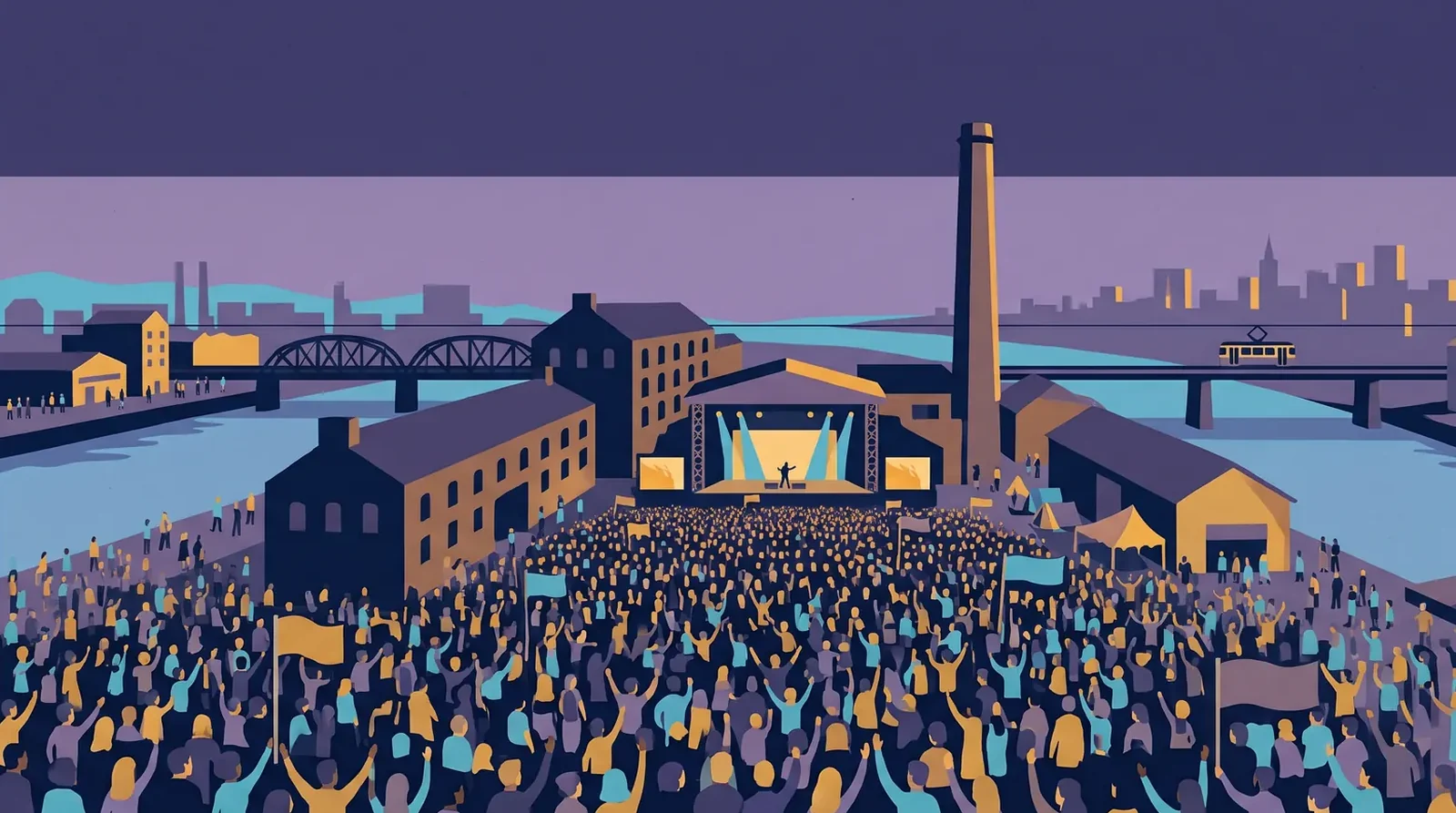
A park or a plaza inside the city, a day ticket rather than a weekend, and the subway thirty metres from the fence. If the weather turns you go home and come back tomorrow. Seoul does this better than almost anywhere, because the transport runs and the parks are large enough. You get a festival without the parts that are really just camping badly. This type is correct that most people defending camping are defending the money already spent on a tent. Nobody sleeps in a field.
The criticism is that a festival you can leave is a festival you leave. Nothing at two in the afternoon on a city site carries the weight of the same set in a field nobody can get out of. You keep one foot outside it and check work messages at the bar. You go home first when it rains. The exit is always open.
Is A Day Festival Better Than A Weekender?
Usually yes, and in August it’s not close. Humidity in Seoul turns a three day site into an endurance question rather than a music one, and a city festival gives you shade, a station with air conditioning and a shower at the end of it. The trade is that nothing on a city site ever feels final.
Seoul Jazz Festival in Olympic Park is a day ticket on a bill broad enough that you’re never stuck. Pentaport in Songdo sits at the end of a train line. Movement in Detroit is three days you can walk home from, and Igloofest in Montreal runs outdoors in January with the metro going.
The Beach Stage
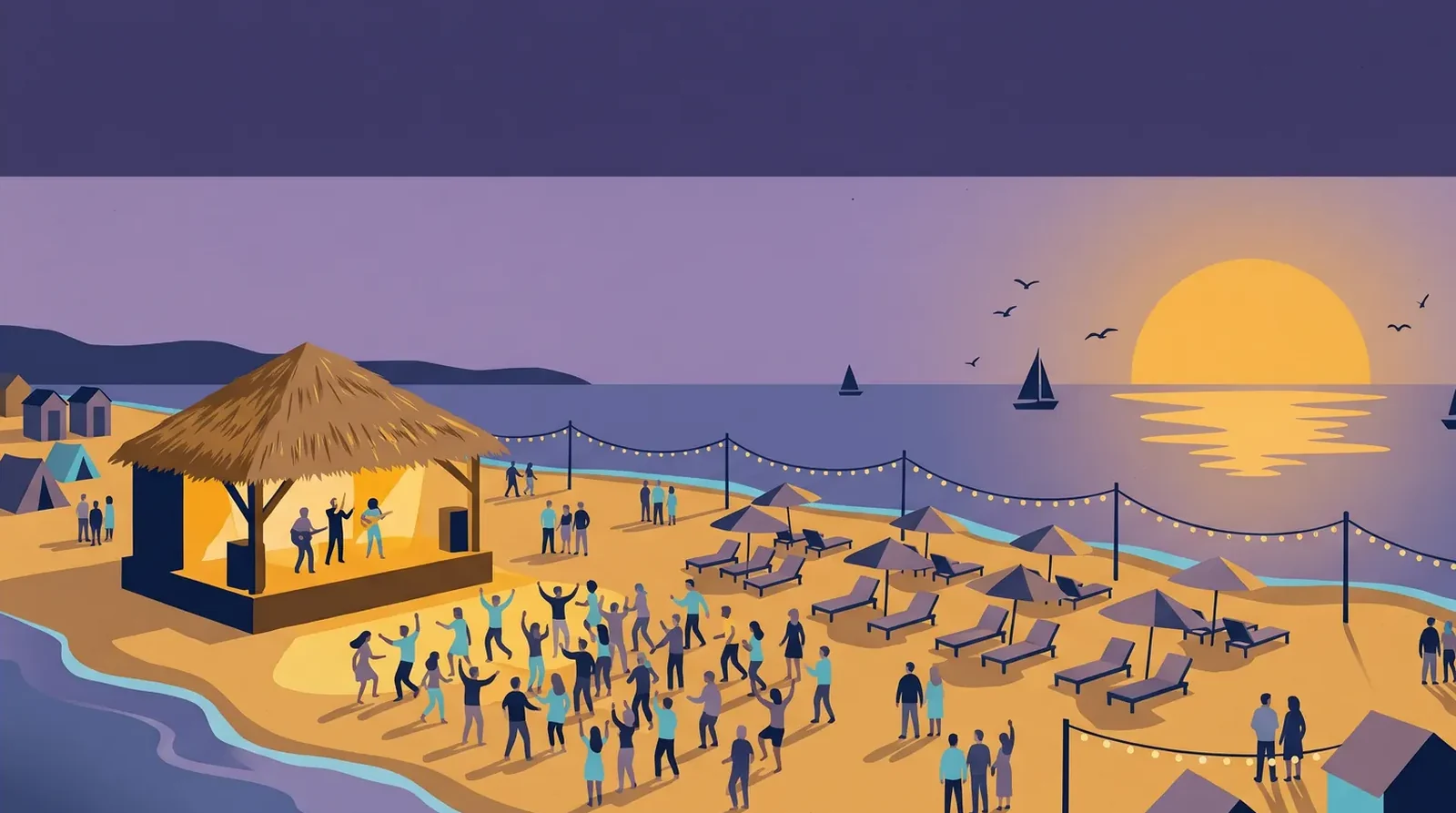
Sand underfoot, a horizon, and one set that matters more than the rest because it’s the one at half seven when the light goes. Everyone knows which set that is, including the person playing it. It works because the horizon does most of the emotional labour and the music only has to avoid getting in the way. The view is the headliner.
The problem is that this is the easiest kind of good night to have, and this type has started to need it. Sand and open air kill sound, so the audio is nearly always worse than a small indoor room. You have talked yourself into not minding. One grey afternoon and there’s nothing left, because the site was the point. Beach events also draw the most casual crowd of any format, which you complain about while being a substantial part of why it happens. You’re the crowd.
When Should I Go To A Beach Festival?
Late August or early September, after the rain. The other thing to check is the shuttle bus back to Seoul, because the west coast beaches are two hours out and the last one leaves before the music finishes. Missing it turns a day ticket into a night on the sand.
Boryeong Mud Festival at Daecheon is two hours from Seoul, enormous, filthy and unbothered about being taken seriously. The Haeundae and Gwangalli season in Busan puts a skyline behind the stage. The Jeju summer events need a flight and a bus, which is enough friction to keep the crowd to people who wanted to be there. Beachclub in Pointe Calumet, an hour from Montreal, is Canada solving this by brute force.
The Warehouse Weekender
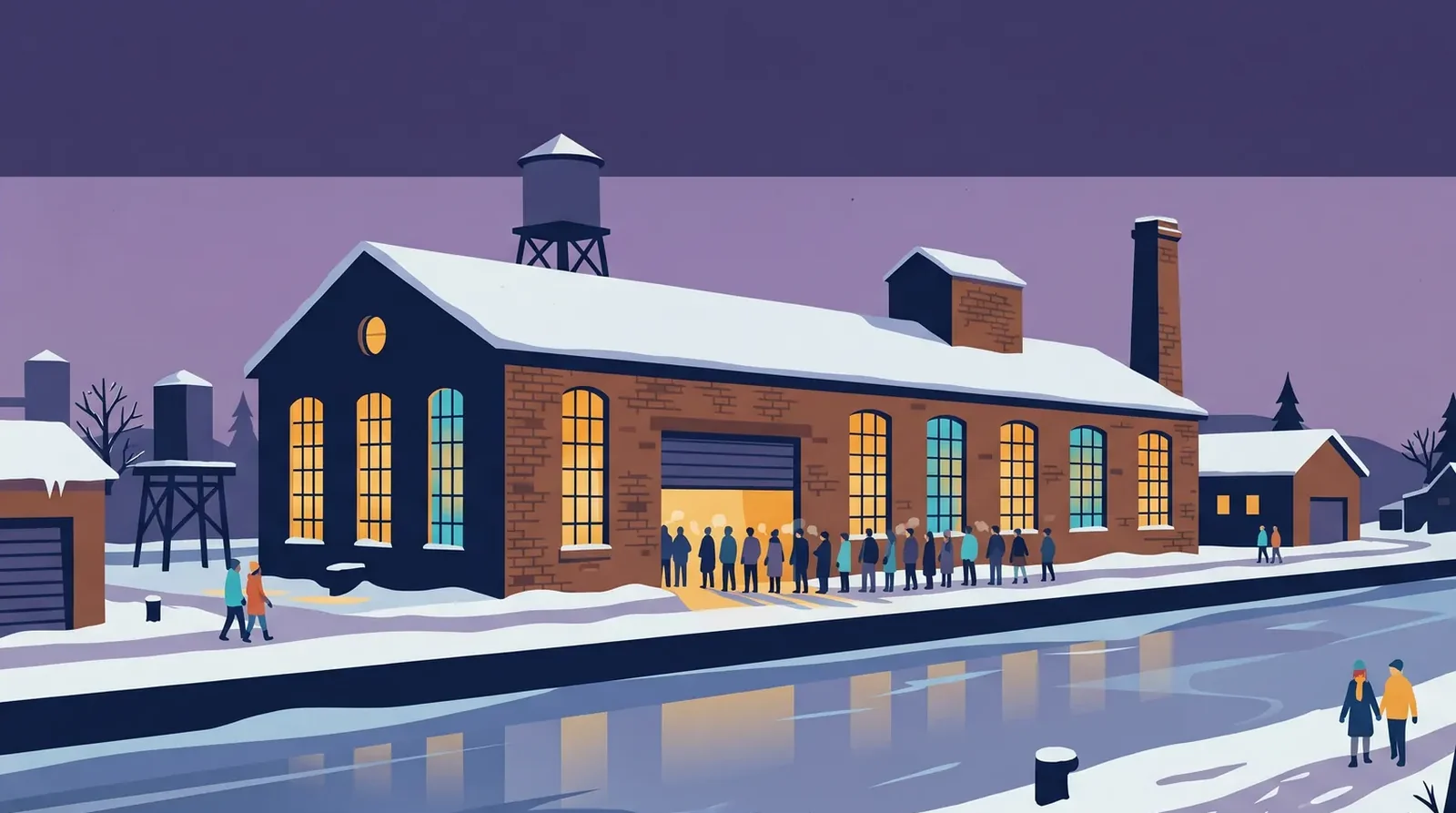
Indoors, in February, in a windowless building. It starts on the Friday night and doesn’t properly stop until Sunday afternoon, and daylight only happens by accident on a smoke break. This is a festival the way a bank holiday is a holiday, defined by duration rather than scenery. Detroit does it around Movement. Seoul does it across two or three rooms in Itaewon and Seongsu with the same four hundred people moving between them. Nobody checks the time.
The cost is your body and your honesty about it. Almost nobody does a full weekender without chemistry of some kind, and the format assumes you won’t stop. This type has also lost the ability to enjoy anything shorter, so a four hour night registers as a warm up. The crowd thins every year as people leave, so you’re increasingly at a party with the specific people who didn’t. Endurance isn’t taste.
How Do You Survive A Weekender?
Sleep before it, not during it. The Korean version is indoors in February for a structural reason rather than a stylistic one, because nothing runs outdoors here in winter and the next outdoor weekend sits on the far side of the monsoon. Eat at the six hour mark, before the point where you stop wanting to.
The winter weekenders in Seongsu and Mullae run in old industrial buildings, and nobody checks the time. Toronto and Montreal have a warehouse season long enough that indoors stops being a compromise.
The Island Crossing
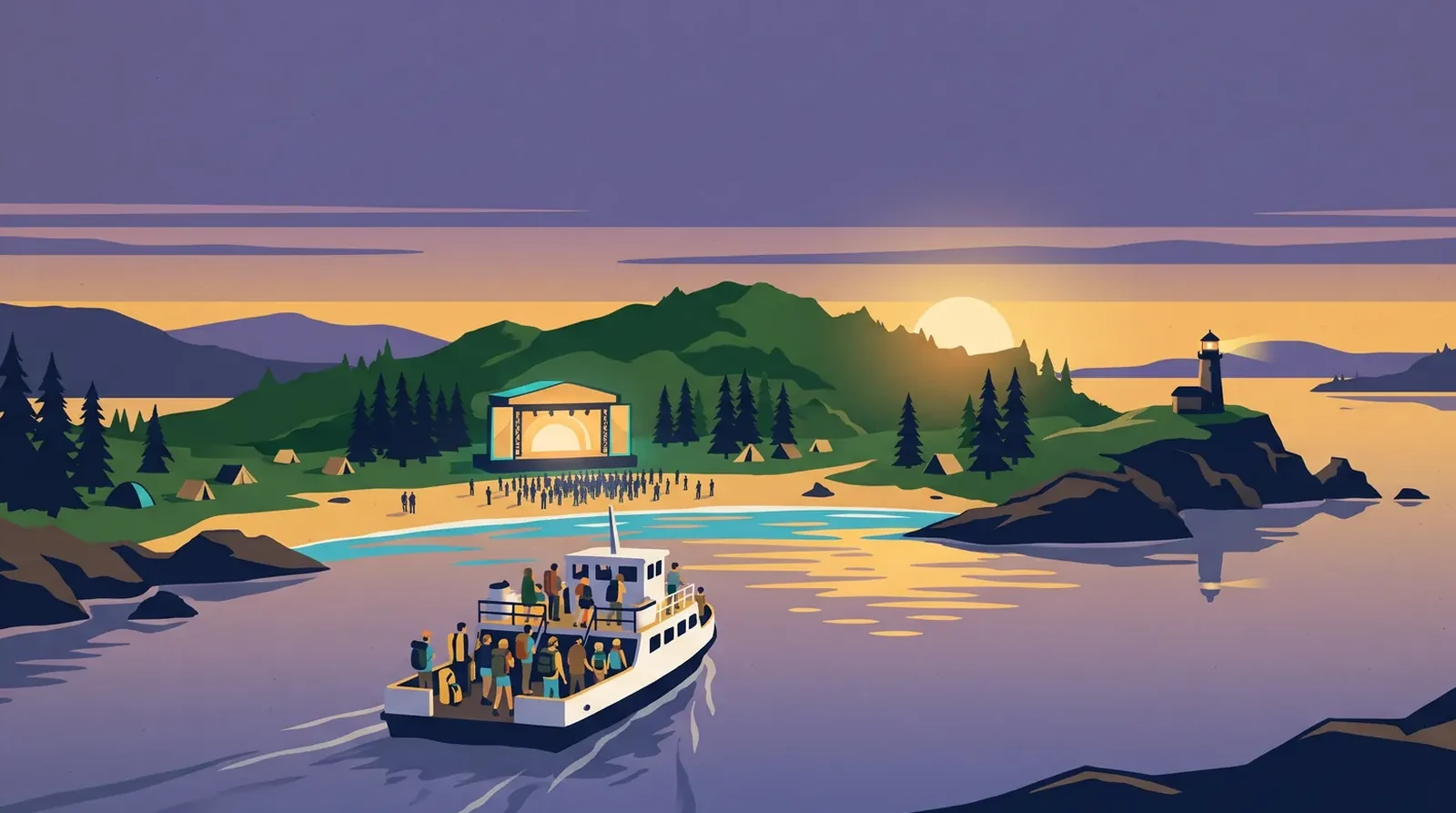
There’s a ferry, or one bridge, or a single lane road with a queue on it, and once you’re across you’re there until it ends. Jarasum is a river island an hour out of Seoul. Montreal put its biggest ones on an island in the river, and Uganda put one on the bank of the Nile. The crossing is the point. It filters out anyone not committed, makes the site feel finite, and gives the last night a real ending instead of a slow leak toward taxis. Getting there is the ticket.
It also means that if the weekend is bad you’re inside it, and you’ll describe it afterwards as fine because leaving would have cost six hours, a boat and an argument with the people you came with. Nobody admits to a bad weekend. Committed sites breed a slightly cultish tone, with everybody congratulating each other for having made the effort. It never makes the poster. The logistics are brutal for anyone who isn’t able bodied and well organised, and the people who write the loudest posts about how the crossing separates the real crowd from the tourists are almost always the ones who arrived in a friend's car with a folding trolley and somebody else carrying the tent, which is a different weekend from arriving alone on the last boat with a rucksack and no plan for where to sleep. Difficulty isn’t depth.
Are Camping Festivals Worth It?
Yes, for two or three days, once a year. Take the train rather than a car, because the island sites have one road on and nowhere to park, and the Gyeongchun line runs out to Gapyeong late enough to arrive after work. The return is a last night that ends properly instead of leaking into taxis.
Jarasum Jazz Festival has one way on and camping on the grass, an hour and a bit from Cheongnyangni. The Muuido and Yeongjong gatherings off Incheon need a boat or a bridge. Jeju needs a flight, a bus and a decision. Osheaga and the Parc Jean Drapeau season in Montreal is the version you can do by metro, and Nyege Nyege in Jinja is the crowd as the entire argument.
The Mountain Sunrise
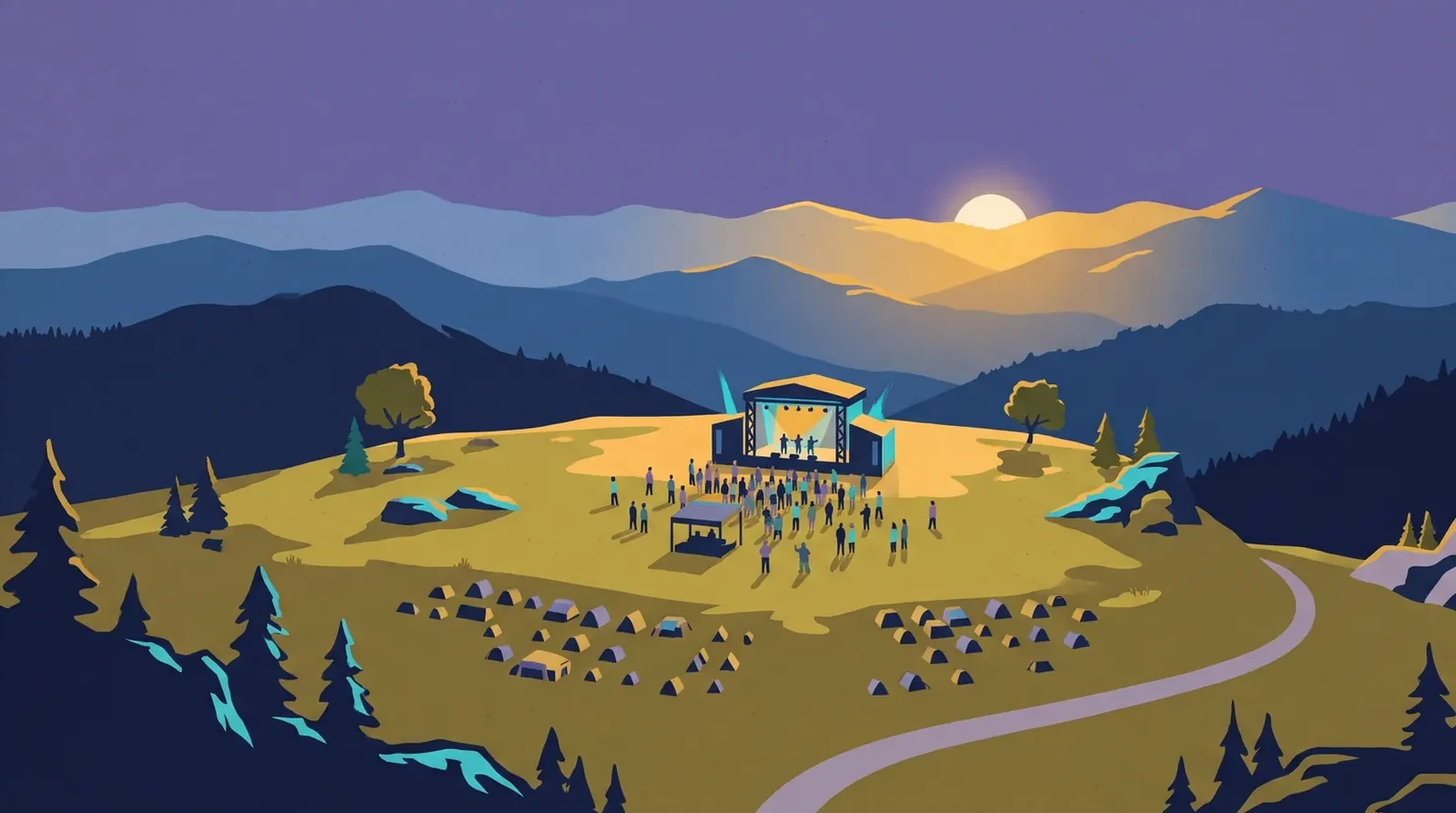
High up, cold at four in the morning, and the set that matters is the one finishing as the light comes over the ridge. This type brought a jacket everyone laughed at on the Friday and had borrowed off them by the Sunday. The jacket was right. It’s patient in a way most festival crowds aren’t, and will stand through ninety minutes of nothing much for the twenty at the end. Waiting is the skill.
The blunt version is that this is chasing a light effect. The ridge does the work. The sunrise doesn’t care what was played, and this type has called a mediocre set transcendent purely because of where the sun was. It’s wrecked by the third day in a way it never plans for and is always the person who hasn’t eaten. The tone gets solemn as well, and from ten metres away it looks like a group of adults watching a sunrise extremely seriously. The weather gets the credit.
What Should I Wear At A Mountain Festival?
More than the forecast suggests, and waterproof boots. Monsoon rain turns a hillside site into standing water and mud inside an hour, and the ground under a tent never dries out for the rest of the weekend, which is why the Gangwon camps sit either side of the wet months. Cold at four in the morning is the other half of the list.
The east coast is where the light arrives over something. The Jeongdongjin Sunrise Festival in Gangneung gathers thousands before dawn on New Year’s Day and predates anybody putting speakers on it. Shambhala in Salmo makes the last Sunday hour the reason anyone drove, and Fuji Rock at Naeba lets the weather decide the weekend.
The Lanyard Festival
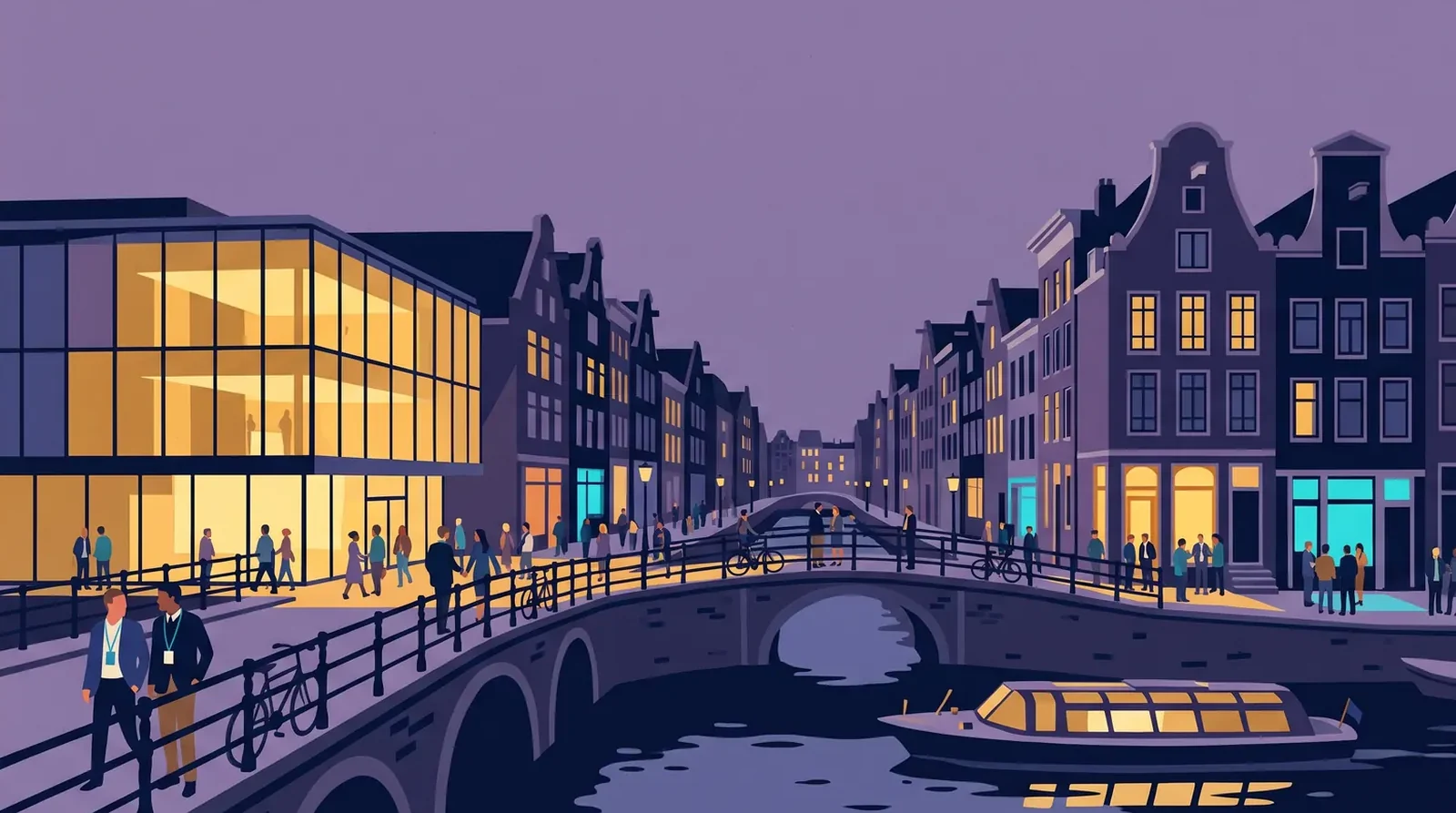
Panels in the daytime, showcases at night, and a plastic card round your neck that gets you into both. Montreal built the best argued one. Seoul runs two. Amsterdam built the largest. This type is there for the six conversations rather than the six sets, and it’s the only format where a queue is a useful place to stand. Everyone here wants something.
The cost is that this is work with a wristband on. Nobody is off duty. You spend the good sets half watching and half checking who came in behind you, and you haven’t properly listened to anything in about two years. Most panels are people describing what they already did, at length. There’s also a whole class of person who attends only these and holds firm opinions about a scene. None of them has been in a room past two in the morning in years. Networking isn’t listening.
Are Music Conferences Worth Attending?
Only if you book the meetings first. The Korean version has no site at all, because the badge covers a dozen Hongdae venues inside a ten minute walk of each other, so the whole event is a street rather than a field. Turning up without a diary gets you six panels and nothing else.
Zandari Festa turns the whole of Hongdae into one badge, and MU:CON is the only Korean event where the panels are the draw. MUTEK in Montreal attaches a forum to a festival that’s about something, and SXSW in Austin shows what the format becomes at scale.
The Legacy Crossover
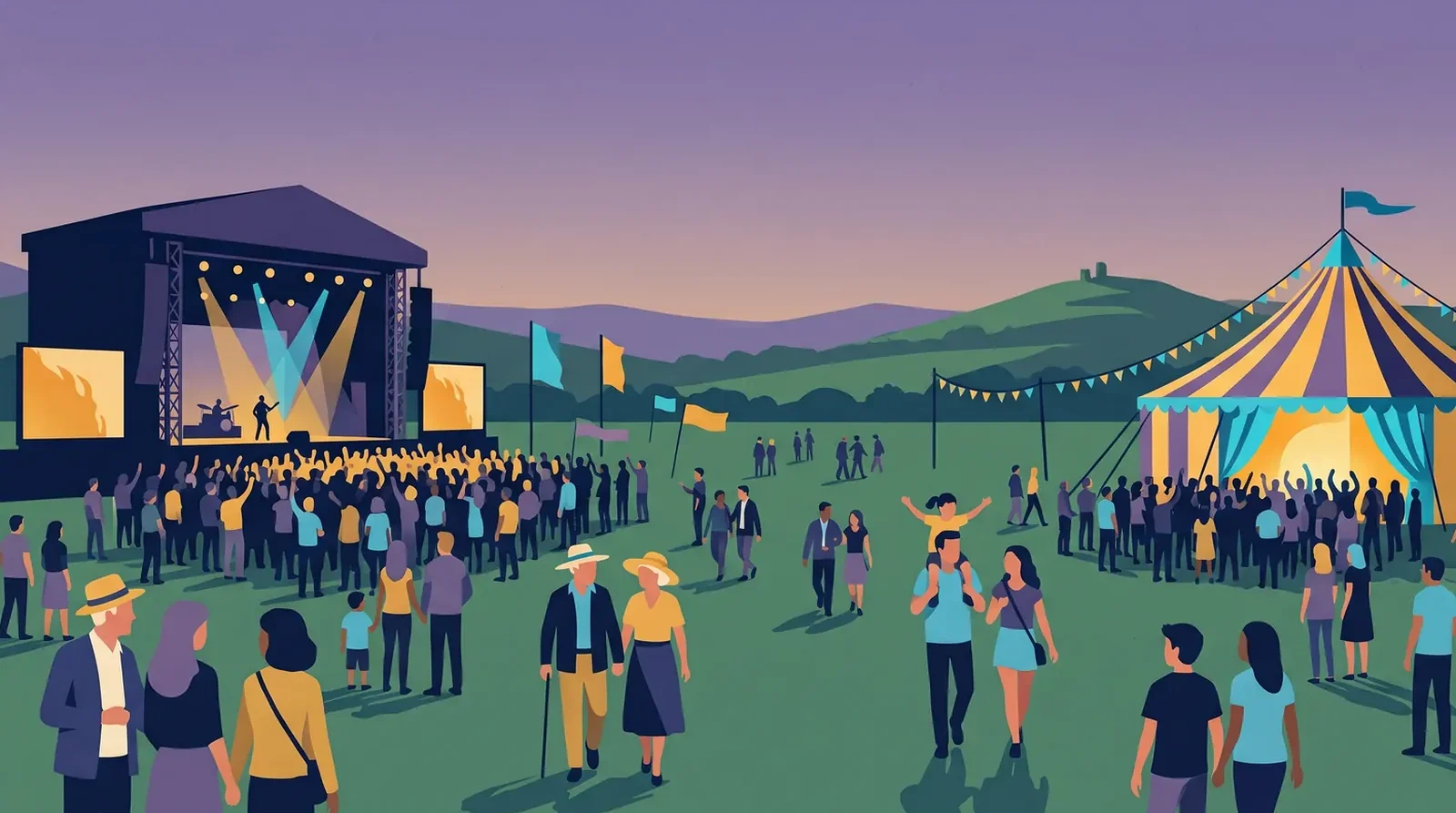
A festival that has been running for twenty five years and grew a dance stage somewhere around its fifth. Pentaport does it in Songdo, Busan has done it at Samnak Park for two decades, and Glastonbury built an entire second festival out of it. This type is there for the mixture. Somebody in their sixties in a folding chair, a fifteen year old on a pair of shoulders, and a tent at the far end going until two. Nobody sorted the crowd.
The trouble is that festivals like this are held together by habit, and habit isn’t quality. It sells out anyway. The dance stage is almost always the worst funded thing on the site, put in a marquee near the generators on a budget that went on the band your father wanted to see, and this type will defend it anyway, on the grounds that it was there first and that the marquee at two in the morning is where the festival is. It’s nostalgic for editions that weren’t as good as it remembers, and tells the same story every summer about a year that half the people standing there weren’t born for. Loyalty isn’t a lineup.
Are Rock Festivals Good For Dance Music?
Rarely on the main stage, often at the far tent. The Korean crossover events are reachable by KTX rather than by car, which quietly changes who turns up, because a Busan weekend out of Seoul becomes a three hour decision instead of a six hour one. The dance tent is usually the last thing marked on the map.
Pentaport spans forty years of age in one crowd. Busan International Rock Festival is long running and full of families, and it’s ticketed now, from 110,000 won a day in 2025, per its Yes24 ticket notice. The Montreal International Jazz Festival puts free outdoor stages in the middle of a city with an audience that’s not there for one thing.
The Day Party Series
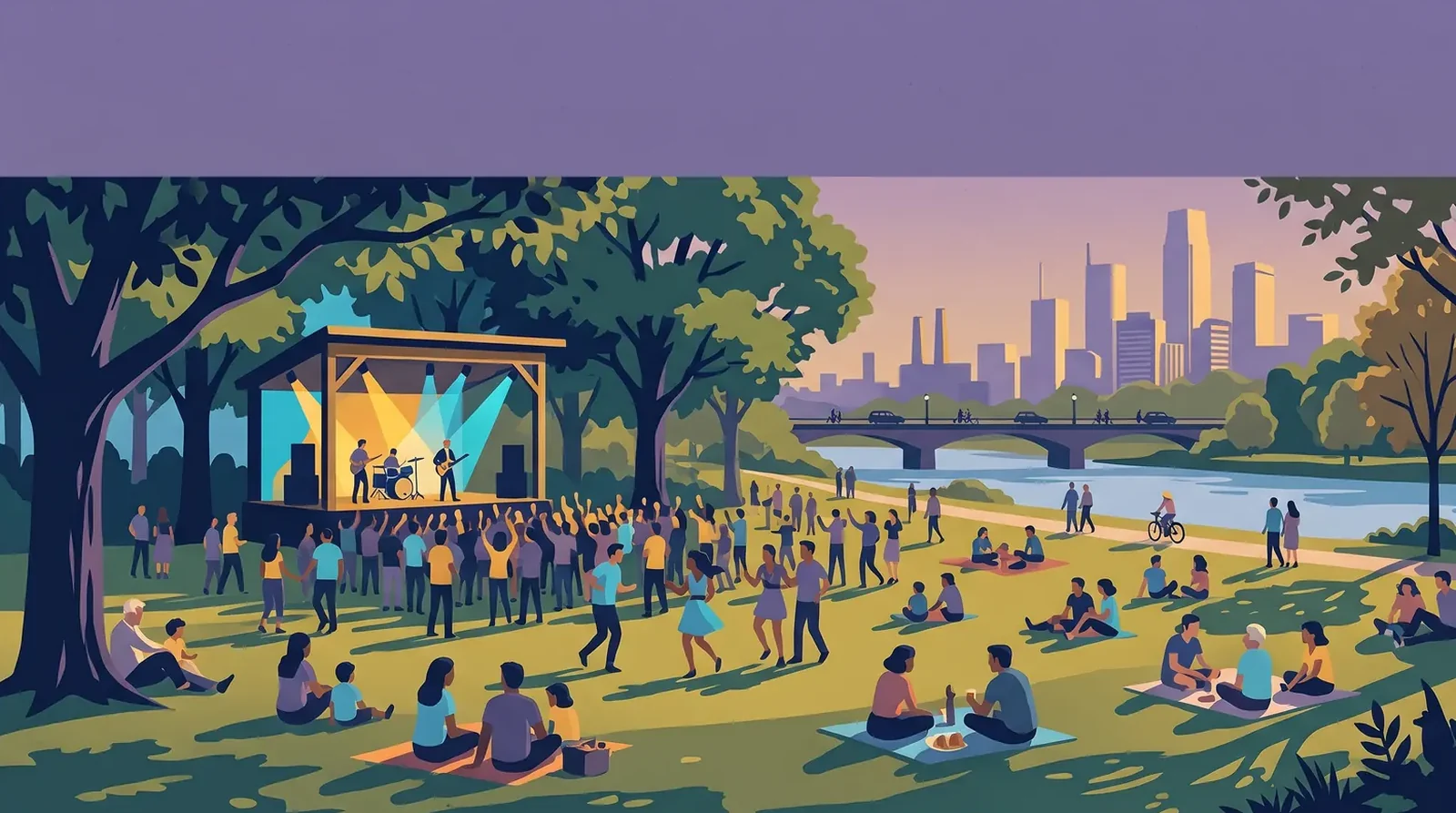
One day, in daylight, finished by ten and home by eleven. Not an event so much as a series: the same site, the same people, once a month or twice a year, so no single edition has to be a big deal or sell out in November. You get most of what a festival gives you and you keep the Monday, which after a certain age isn’t a small thing. The Monday is the product.
What it loses is the part that only happens after everyone sensible has gone home. Nothing decisive occurs at four in the afternoon. The crowd is mixed in a way that’s pleasant and slightly toothless, there are prams, and the last hour is always a bit polite. This type has started telling people it has grown out of nights, which is true, in a tone suggesting they should too. The risk was the point.
Are Day Parties Better Than Nights Out?
Better for the week, worse for the story. Korean day parties cluster in May and again in October, the two windows either side of the monsoon and the August heat, which is why the same series runs a spring edition and an autumn one. Nobody books a Monday off for one.
Beautiful Mint Life and Grand Mint Festival are the spring and autumn halves of the same idea in Olympic Park. The Seongsu and Yeouido afternoon parties run on rooftops and by the river with everybody at work the next morning. Piknic Electronik in Montreal has twenty years of Sunday afternoons with children and dogs present and still books properly, and CRSSD in San Diego runs a waterfront park twice a year.
The Desert Gathering
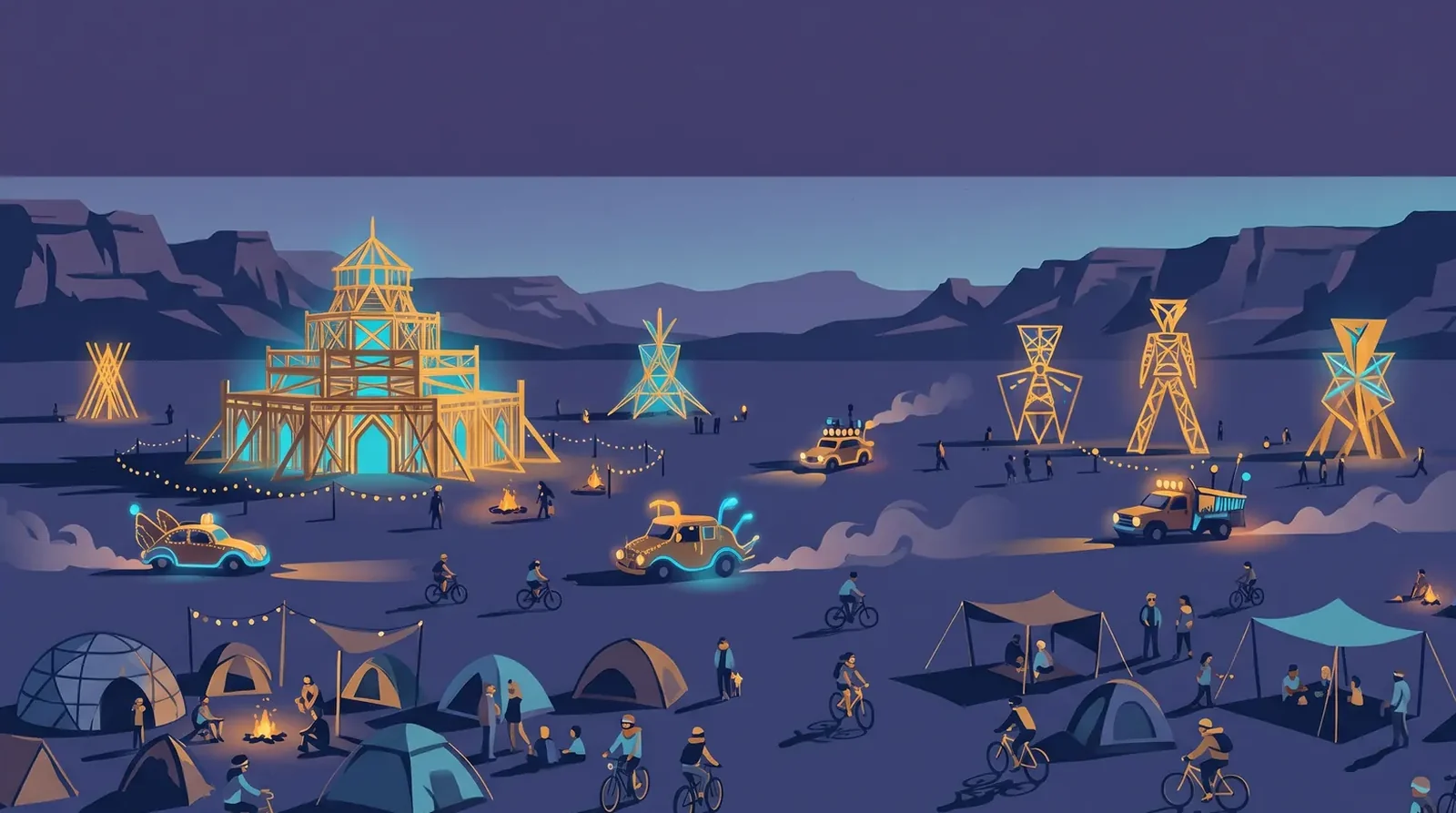
Dust, wind, art somebody spent nine months building, and no lineup poster anywhere. You bring your own water and carry out your own rubbish. The whole thing collapses if a few hundred people decide not to bother this year. Korea has a small west coast version that’s exactly as chaotic as you would expect, the Karoo runs one in South Africa, and Nevada runs the largest. This type isn’t there to be entertained, which is a rarer distinction than the people who say it think. Nothing is provided.
The criticism writes itself. Self reliance at these things is heavily subsidised by a small number of people who quietly do the logistics, and that hasn’t often been you. The absence of a lineup guarantees a great deal of very bad music played very loudly by people whose friends built the stage. There’s also a vocabulary and a set of manners here that’s unbearable to anybody outside it. Somebody else built that.
What Should I Pack For A Desert Gathering?
Water first, then shade, then everything else. The west coast dune sites in Korea have no shops and no bus out, so you arrive by car with the whole weekend in the boot or you spend two days borrowing from people who packed properly. Take out what you brought in, including the parts that got wet.
Korea Burn on the west coast dunes is the Korean regional of the same model. The self built gatherings in Gangwon have no poster and no bar. Burning Man in the Black Rock Desert is the original at the scale where self reliance becomes a logistics problem, and the British Columbia regional burns are the version worth your time without a week off work.
The Livestream

No site, no queue, no weather. The 2020 format was meant to be a stopgap and turned into a permanent parallel scene. Boiler Room from a bedroom, a shipping container in Brooklyn broadcasting all day, and in Seoul a radio station in Yongsan putting local DJs on air since long before anybody had to. This type watches alone, watches closely, and has heard more music this year than anybody who spent the summer standing in fields. All of it, from the start.
The cost is describing rooms it hasn’t been in. A stream flattens everything that matters about a crowd, and this type holds strong opinions about sets it experienced as a rectangle. Four hundred hours of archive isn’t one night where something went wrong and got fixed in front of you, and it’s certainly not the twenty minutes after a wet Saturday in Korea takes an outdoor site off the schedule and four hundred people end up in a room that was never built to hold them. No camera was ever pointed at that. The format also produced a layer of DJs who are excellent on camera and unproven at four in the morning. This type is more forgiving of that than it should be. You weren’t there.
Are Livestream Sets Worth Watching?
Yes, and the archive is the better half. Korean festival season is short and almost entirely outdoors, so the streams carry the eight months when nothing at all is running in a field, and a Yongsan station has kept a local archive going throughout. Watching closely is still not the same as standing in the room.
Seoul Community Radio in Yongsan is the only local archive of its kind. The Boiler Room Seoul editions are online in full, and several Korean club streams that started in 2020 never stopped. The Lot Radio in Brooklyn is the format at its least produced, and Cercle films in places nobody could hold an actual event.
Frequently Asked Questions
What Festival Should I Go To?
Start with how you want to sleep, not with who is playing. The site decides the weekend, because a day ticket in a Seoul park, a tent ninety minutes out in Gapyeong and an indoor February weekender in Seongsu are three different lives with the same kind of poster on them. The lineup is the smallest variable. The Festival Type quiz scores the six axes and hands you a format rather than a bill.
How Many Types Of Music Festival Are There?
Twelve in this system, sorted on six hidden axes rather than by genre. Twelve is enough to separate a stadium night in Jamsil from a forest weekend in Gapyeong without producing sixteen results that all read the same. Genre never comes into it, because the format is the part you actually live in for three days.
What Are The Best Festivals In Korea?
There’s no single best one, only a match. Korea covers most of the twelve: stadium scale in the middle of Seoul, jazz on a river island in Gapyeong, a rock weekend in Songdo, beach events in Busan and on Jeju, and winter weekenders indoors in Seongsu and Mullae. What’s thin here is camping, because most Korean festivals are built around a crowd that goes home the same night.
Are Music Festivals Worth The Money?
It depends on the format, and the cheap ones win more often than people expect. A day ticket in a city park with the subway thirty metres away costs a fraction of a weekender and delivers most of the same music. The expensive formats are selling you the site, the crossing and the fact that nobody can leave. Work out which of those three you’re paying for.
Is There A Best Festival Type?
No, and any quiz that gives you one is selling flattery. The Main Stage does scale better than anything else, The Boutique Forest does attention better, The Livestream hears more of the year than anybody standing in a field, and The Island Crossing produces the one weekend people still describe in December. Each of the twelve carries a real criticism here for that reason.
What Is The Rarest Festival Type?
The Lanyard Festival and The Desert Gathering, each landing on five percent of results. Both ask for something most people won’t hand over, which is a weekend spent working the room or a weekend spent supplying your own water. The most common is The City Festival at twelve percent, with The Main Stage at eleven, because most people want a festival they can get home from.
Where To Go Next
Twelve formats, six axes, no correct answer. A forest with two thousand people and a stadium with forty thousand are both here on purpose, because most arguments about festivals are really arguments about which discomfort somebody prefers. For the scored version, take the Festival Type quiz.
That’s all five. The DJ types, the clubber types, the eras and the venues are the rest of the set. Seventy two archetypes across six quizzes, six axes, one argument about whether any of it is about music. The quizzes sit together on the quizzes page if you want them in order.
Every archetype is at The Types, and the rest are at Quizzes. For the Korean events above, the honest guide to Korea's DJ festivals covers sites and what each one is like.
The DJ Diaries is written by a Canadian DJ living in Seoul. About // Book a DJ
Stay in the Loop
New writing on DJ culture, electronic music, and the Seoul underground, delivered when it matters.
More From The DJ Diaries


Play with the history
Four tools built from the same research as this site.