At three in the morning on King Street, nobody in the room has bought a drink, because the Paradise Garage never sold any. The floor has been going five hours and will go five more. The man watching from the ramp came alone. He knows about forty people by sight, and he will not speak to any of them until the lights come up. Seoul on a Saturday reaches the same hour with the trains already stopped, in a basement off a hill in Itaewon, and the arithmetic is identical, because nobody is leaving for another three hours whatever gets played. Every era here is a different answer to that hour. The dates are real. So are the endings.
Before you read on
Which era of dance music is actually yours?
It takes a few minutes. No sign up and no email. Every result comes with the reasoning behind it, not just a label.
Get your result, then read the full write up below.
The Era Type quiz sorts people into twelve real periods of dance music, each with real dates. Most of the questions are not about music, because nobody has a rehearsed answer about lending a kettle. Where you land says more about how you handle time and other people than about what is on your phone.
Six hidden axes carry the scoring: Control from Improvised to Planned, Allegiance from Reads Room to Holds Line, Depth from Canonical to Dug, Patience from Slow Build to Wants Peaks, Social from Solitary to Communal, and Time from Reverent to Futurist. That last one does the heaviest lifting here.
These are not vibes. Each era is a period with dates, records, cities and a reason it ended. Chicago made its own records from 1984 because importing them was slow. Detroit techno got its name from a British compilation in 1988. The stadium decade ended with a bankruptcy filing in early 2016.
Underground and mainstream both get a section, and the EDM festival decade is treated as seriously as Detroit. Each era carries a criticism, usually about who got paid and who got credited. The question people type is eras of dance music. Below are the twelve.
The Paradise Garage Years, New York, 1977 to 1987
Dance music sorts into twelve eras here, each defined by dates rather than by feeling. This is the earliest. The Paradise Garage was a members club on King Street in lower Manhattan, open from 1977 until it closed in 1987, with Larry Levan playing on a system built by Richard Long. It took its shape from David Mancuso's Loft parties, running since 1970 on invitation. Nights were long by design. The records were how the room talked.
Landing here means treating a night as a place rather than a performance. The criticism is that this is the most romanticised room in the whole history of this music, and reverence for it has hardened into a kind of laziness, so that somebody who lands here can spend a decade defending an experience they did not have against every room that is actually open tonight. It was a private club. It had a door, and a door decides who counts. You were not there.
Why Is The Paradise Garage Still Talked About?
Because it settled what a night could be. Long hours, a system built for one room, dancers instead of spectators, and every serious club since has argued with those terms. Seoul has no room with that lineage, so the nearest thing here is an Itaewon basement where the same forty people arrive before one and are still there when the trains start.
Cakeshop in Itaewon has run long enough to have regulars who know each other by first name, and Modeci builds the night around the record rather than the booth. Smartbar in Chicago has run on residents since it opened in 1982, which is what you are really after.
Chicago House, 1984 to 1987
Chicago had the Warehouse, where Frankie Knuckles held the residency from 1977, and the Music Box, where Ron Hardy played louder and rougher. From 1984 the city made its own records rather than importing them. Jesse Saunders put out On and On, then Trax and DJ International pressed almost anything that moved, often badly. A Roland bass machine built for guitarists got misused into acid. In January 1987 Steve Silk Hurley's Jack Your Body went to number one in Britain. The secret stopped being local.
This era belongs to people who would rather finish something than perfect it. That is a real strength and it is also how you end up with a hard drive of nearly finished ideas, because releasing forty rough things is easier than being judged on one careful one. Roughness starts as a choice. Chicago also shows what happened next, which is that the people who made the records mostly did not get paid. That problem is real and it is not settled. It is not a footnote.
When Did House Music Start?
House started in Chicago in the early 1980s, in a room before it was on a record. The Warehouse ran from 1977 and the city began pressing its own records in 1984. The name is usually traced to the club itself. House reached Korea without a scene attached, as imported records rather than as a movement, which is why the Chicago lineage in Seoul is carried by a few small rooms rather than a generation of clubs.
Modeci in Yongsan is the Seoul room most likely to play a Trax record without announcing it. Cakeshop in Itaewon is small, loud and unfussy. Sub Club in Glasgow has run Subculture, its weekly house residency, since 1994, which is the Chicago model transplanted.
Detroit Techno, 1985 to 1992
Three friends who went to school in Belleville, outside Detroit, built a music out of Kraftwerk, Parliament and the late night radio of the Electrifying Mojo. Juan Atkins got there first, as Cybotron and then as Model 500 on his Metroplex label. Derrick May released Strings of Life on Transmat in 1987, and Kevin Saunderson had the crossover records. The word techno was fixed by a British compilation in 1988.
Landing here means thinking in systems and long horizons, and preferring to be understood in ten years rather than liked tonight. The criticism is that futurism is easy to perform and hard to deliver, and a lot of people who land here have mistaken being difficult for being early, and nobody can disprove that for ten years. Detroit techno was made by Black musicians in a city being written off, then exported, renamed and monetised largely elsewhere. Claim the lineage and claim that too. Difficult is not early.
What Is The Difference Between House And Techno?
House came out of disco and gospel, and techno came out of machines and science fiction. Both are Black American music from the same few years in the same part of the country, so the split is about intent rather than about tempo. In Seoul the Detroit line runs through the Itaewon and Hapjeong basements, where a record made in 1987 can still set the terms of a Saturday and nobody in the room announces it.
vurt. in Hapjeong lets an idea play out over an hour without apology. Volnost in Itaewon will let a set stay cold and mechanical until the floor comes to it. Faust makes Detroit records sound like the future they described. Movement in Detroit puts the lineage in front of you.

UK Acid House and Rave, 1988 to 1992
A handful of London DJs came back from Ibiza in 1987 having heard a room that mixed everything, and put it into small clubs like Shoom. Within two years it had outgrown every building it was in and moved to fields near motorway junctions, with phone lines telling thousands of people where to drive. Parliament legislated against unlicensed parties, and by 1994 the phrase repetitive beats was in British law. By then the mass version had already become an industry.
This is the least controlling result in the quiz. A night is something that happens to a group rather than something one person delivers, and this type is genuinely good at surrendering to a room. The criticism is that the era is remembered through the feeling and almost not at all through the records, which is convenient if you never had to have taste. Loving everything and loving nothing look identical at five in the morning. Name one record.
What Was The Second Summer Of Love?
Britain in 1988 and 1989, when acid house went national. The phrase covers the two summers when small London clubs emptied into fields near motorway junctions, and the story ends in legislation rather than in boredom. Korea never had that outdoor moment, and the nearest relationship to it is a festival field an hour out of Seoul where most of the crowd did not come for one name on the bill.
World DJ Festival is the nearest thing in Korea to a field full of people who did not come for one act, and Faust in Itaewon is big enough to lose your friends in. fabric in London turned the illegal warehouse into a licensed institution, and Toronto has run unlicensed warehouse parties since the early 1990s.
Hardcore and Jungle, 1992 to 1994
British rave sped up until it broke. What came out was jungle: breakbeats cut to pieces and pitched up, with sub bass from sound system culture underneath. It ran on dubplates and London pirate radio before shops would stock it, so a track could rule a room for a month without officially existing. The engine of most of it was six seconds of drumming from a 1969 B side by the Winstons.
Landing here means an unusual tolerance for pace and for things being unfinished. The criticism is that this instinct burns through material, and it burns through people too, because a scene moving at that speed cannot hold a record for longer than about a month and does not keep track of who made it either, which is how jungle spent the middle of the decade being sanded down and re credited to people who arrived long after the hard part was done. Notice how often you drop something the moment it stops being difficult. Nothing was allowed to age.
What Came After Jungle?
Drum and bass came next, and then everything it fed. Jungle did not stop so much as split. One half took the newer name, and the rougher half stayed roughly where it was. Korea met the sound through its descendants rather than through 1993, so a Seoul floor taking real sub weight is usually taking it from a drum and bass night rather than from a jungle one.
Cakeshop in Itaewon has booked bass music since it opened and takes sub weight without complaining. Soap books fast and broken as readily as house. Toronto kept jungle when London moved on, and the city still books it as a music of its own.
Goa and the Psytrance Diaspora, Mid 1990s
Parties in north Goa ran from the 1970s freak scene onward, and by the early 1990s the format was fixed: sets played from DAT tapes, tracks released nowhere, timed so the peak landed with the sun. When local pressure made it harder, the scene scattered rather than died, into Israel, Japan, Britain and later Portugal. It has never once been fashionable.
This is the rarest result here. It means planning far ahead, serving an arc rather than a crowd, and being comfortable outside the conversation entirely. The criticism is that a scene which cannot be embarrassed cannot be corrected, and psytrance built a closed vocabulary that files outside opinion as ignorance, and the same move is available to you. Certainty that has never been tested is not conviction. A closed room stays closed.
Is Psytrance Still Popular?
Yes, quietly, and mostly outside the cities. It never had a mainstream year to lose, which is one reason it has outlasted several scenes that were much bigger than it. Korea's version of it runs outdoors, on sites a train ride out of Seoul, timed to a sunrise the same way Goa was.
Faust will let one DJ hold the floor for six hours without a handover, which is the only part of the Goa format that survives indoors in Seoul. Shambhala in British Columbia has run since 1998 with no corporate sponsors.
UK Garage and 2 Step, 1996 to 2001
It began as an after hours room. American vocal house played fast, for a crowd that wanted something warmer than jungle. Then the drums dropped their second kick and 2 step arrived, all shuffle and gap, built for a crowd that came to be seen as much as to dance. Between 1999 and 2001 it was on daytime radio and at the top of the charts. Then it split in two. One half went pop. The other got colder and harder and became grime.
Landing here means taking the social contract of a night seriously. You dress for it, you show up for the people, and enjoying yourself is not treated as a lesser way of listening. The criticism is that this is the most audience pleasing result here, and pleasing an audience is a skill that turns into a ceiling, because the room will always ask for the thing it already knows and you will always be able to give it, right up to the night when you notice that you have not had an idea of your own in two years. Garage shows the cost. The moment it was fully accepted it was over, and the interesting part was the half that had been refused entry. Acceptance was the ending.
What Is The Difference Between UK Garage And 2 Step?
2 step is a rhythm inside UK garage, not a rival to it. Garage is the wider scene, and 2 step is the shuffle that appeared once the second kick came out of the bar. In Seoul the sound arrives as a dress code as much as a tempo, and the rooms carrying it are the ones where people came out to be seen rather than to study the booth.
Soap is the Seoul room where people still dress for the night, and Cakeshop in Itaewon has booked the London lineage from garage through grime for a decade. Toronto's Caribbean and British diaspora kept 2 step alive through the years London forgot it.
The Minimal and Blog House Split, Roughly 2003 to 2009
In the 2000s the floor split. One half went minimal: long tracks where almost nothing happens, centred on Berlin and Cologne and, by way of Windsor, Ontario, Richie Hawtin. The other half went the opposite way, compressed and bright and loud, distributed as MP3s through blogs and MySpace pages, with the Paris label Ed Banger at the front. Both halves despised each other and were reacting to the same event. The file had replaced the record.
You land here if you are the most deliberate person in the room and the least interested in whether the room agrees. The criticism is that both halves mistook a stance for an idea, and a stance can be held for years without ever being tested, which is how minimal ran out of things to remove and blog house ran out of headroom at more or less the same time. Reacting against a trend is still being led by it. A stance is not an idea.
Why Did Minimal Techno Fall Off?
It ran out of things to remove. Reduction is a finite strategy, and once a track is down to a kick and one gesture there is nowhere left to go except backwards. Seoul still has rooms that never softened the position, and a Hapjeong black box will put a floor through forty minutes of almost nothing without apologising for it afterwards.
vurt. took the minimal position seriously and never softened it for the weekend crowd, and Volnost in Itaewon has a stated policy that a floor either accepts or leaves. Stereo in Montreal has run since 1998, its main room serving no alcohol and a system built for long reduced sets.
The Streaming and Algorithm Era, 2015 to Now
Distribution stopped being the difficult part. A track can be finished on a Tuesday, carried by a playlist or a clip, and be everywhere by Saturday. It is gone inside a month. Sets get cut into fragments and served back as content, which changes how people behave in the room while it is still happening. The whole history arrives flat, so a record from 1988 and one from last week land in the same queue with no context at all.
Landing here means being fast, unsentimental and good at finding things, and being right that a lot of nostalgia is a defence mechanism. The criticism is that everyone in this era shares the same references while believing they arrived at them independently, because the thing feeding you is feeding several million other people the same week. It cannot tell a discovery from a delivery. If you cannot say where something came from, you did not find it. You were served it.
Is Streaming Ruining Dance Music?
No, but it removed the order things used to arrive in. Scarcity did some of the sorting before. Now it is done by a feed with no memory and no stake in the outcome. Korea runs on phones more than most places, and a Gangnam Saturday can be built almost entirely on a record that a clip made unavoidable four days earlier.
Soap books what is moving this month rather than a fixed policy. Octagon in Gangnam plays on Saturday the record that went everywhere on Tuesday. Cakeshop in Itaewon is small enough that a clip filmed there travels further than the room did. Toronto's version of this era is not a building at all, but a promoter with a following and a room borrowed for one night.
The EDM Festival Decade, Roughly 2010 to 2015
For about five years dance music became American stadium music. Electric Daisy Carnival moved from Los Angeles to Las Vegas in 2011, and Ultra in Miami grew into a broadcast event. Swedish House Mafia sold out Madison Square Garden in December 2011 before splitting a year later. Vegas casinos signed DJs to residencies worth more than most touring careers, Skrillex, deadmau5 and Avicii were on pop radio, and the form narrowed to the build and the drop alone. SFX Entertainment bought festivals worldwide and filed for bankruptcy in early 2016, which is as good a closing date as any.
Landing here means wanting the payoff now and wanting the whole room to get it at the same second. That instinct built the largest audiences this music has ever had, and sneering at it is mostly a way of avoiding how hard it is to do well. The criticism is that a form which delivers a peak every ninety seconds cannot hold anything at all between them, and it drove out most of the people who came for the in between, and because the decade ran on a sponsor's calendar rather than on a scene's there was no lineage underneath it to catch what fell when the money moved. The money left first.
Why Did EDM Peak And Then Fade?
It did not fade so much as stop being the centre. The money that inflated it moved on. The form had narrowed to the point where the only thing left to do with it was repeat it. In Korea the decade landed in the biggest rooms and stayed there, which is why a Gangnam Saturday at one in the morning can still sound like a main stage.
Octagon carried the decade in Seoul and still books that way on a Saturday, Ultra Korea brought the American main stage format to Seoul in 2012, and World DJ Festival absorbed the fireworks. Veld in Toronto has run at Downsview Park since 2012, apart from the two pandemic summers, and XS at Wynn is the casino residency model in its first room.
Amapiano and Afro House, 2019 to Now
Amapiano came out of the townships around Pretoria and Johannesburg in the middle of the 2010s, built from kwaito, deep house and South African jazz, and settled into its shape around 2019. A little over 110 beats a minute, long stretches of almost nothing, then a bassline on the log drum sound that became its signature. Kabza De Small and DJ Maphorisa released the first Scorpion Kings record that year, and the sound stopped being a local one. Afro house is the older cousin, the deep house lineage Black Coffee carried out of Durban and Johannesburg. What made amapiano different is how it travelled: dance challenges and short clips moved a track from Soweto to Lagos to London in weeks.
Landing here means being patient in a way that is social rather than solitary. The criticism is that a sound which spread on a fifteen second clip gets judged on fifteen seconds, and there is a good chance you are doing it too, humming a log drum you have heard four hundred times. There is also the older problem. South African producers made the records and much of the money is made elsewhere, in the pattern Chicago and Detroit already showed. The clip is not the record.
What Is Amapiano?
Amapiano is South African dance music built around the log drum. It sits a little over 110 beats a minute, leaves long stretches where very little happens, and rewards a crowd willing to wait for the bassline. It reached Seoul through clips long before it reached Seoul through DJs, and it is still easier to hear here on a phone than on a floor.
Soap is the Seoul room most likely to give amapiano a full night rather than a guest slot. Cakeshop booked the South African sound early for Seoul. Modeci sits it next to what it grew out of. Konka in Soweto is the room the movement built for itself, and Toronto's African diaspora runs Sunday day parties that suit the tempo.
The Lockdown Streams, 2020 to 2021
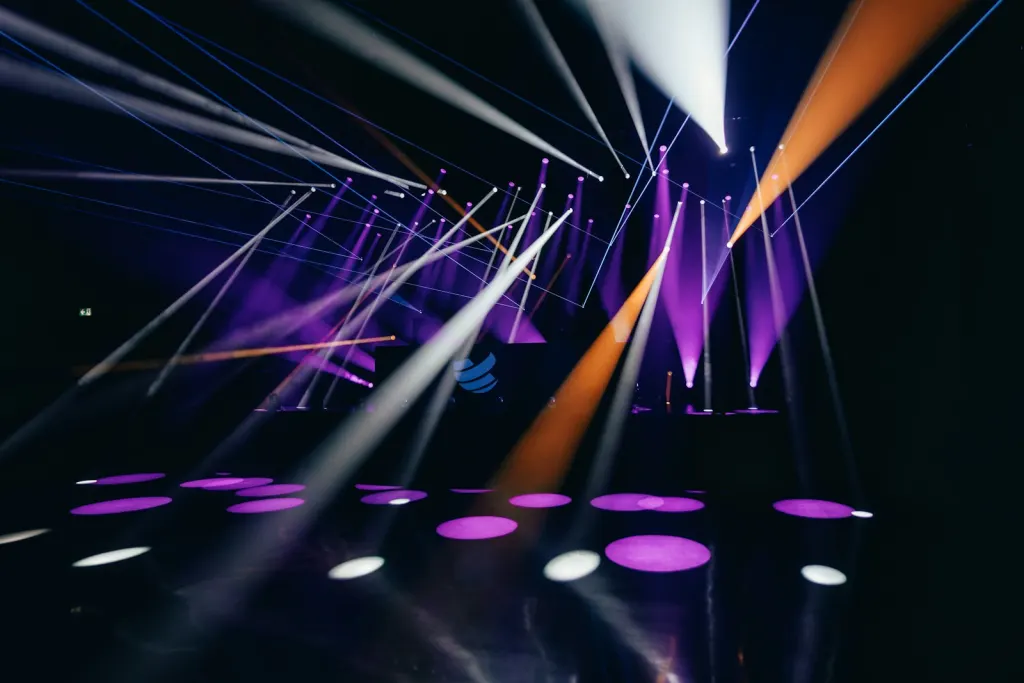
In March 2020 the clubs closed, nearly everywhere, nearly at once. Berlin's venues pooled into United We Stream within days, and Boiler Room ran Streaming From Isolation from living rooms. Club Quarantine, started in Toronto, ran nightly on a video call with a door policy of a meeting link. HÖR, the tiled Berlin room, became the stream people kept open. In Seoul, a cluster of cases traced to the Itaewon clubs in early May 2020 closed the district and put the word club into the national news for the wrong reasons.
Landing here means being most yourself with the work and least yourself with the crowd, and finding that a set watched alone on a laptop was the best thing you heard that year. The criticism is that the stream cut the room out, and the room was doing a job nobody missed until it had gone, because a set played to a camera forces no decisions at all. Some people came back in 2021 less patient with strangers. It is worth asking whether you did. Nobody could disagree with you.
What Happened To Clubs During Covid?
Most of them closed, and the sets moved to screens. Some never reopened. The rooms that did come back found a crowd that had spent a year listening alone. Seoul's version of that year is specific, because the Itaewon cluster in May 2020 made the district itself the story and the rooms there carried it for months afterwards.
Cakeshop kept its name alive online and was one of the rooms Seoul came back to first. vurt. is as close to a solitary listen as a club gets. Faust in Itaewon lets you be in a crowd without being part of one. Club Quarantine in Toronto was the only room a lot of people had that year.
Frequently Asked Questions
Which Era Of Dance Music Am I?
You are one of twelve real periods, and which one depends on six things: how much you plan, whether you serve the floor or your own idea, how deep you dig, how fast you want the peak, how social you are, and whether you face backwards or forwards. That last axis carries the most weight here. The Era Type quiz scores all six, and most of the questions are not about music at all.
What Are The Eras Of Dance Music?
Twelve in this system, each with dates. The Paradise Garage years in New York, 1977 to 1987. Chicago house, 1984 to 1987. Detroit techno, 1987. UK acid house and rave, 1988 to 1992. Hardcore and jungle, 1992 to 1994. Goa and the psytrance diaspora in the mid 1990s. UK garage and 2 step, 1996 to 2001. The minimal and blog house split, roughly 2003 to 2009. The EDM festival decade, roughly 2010 to 2015. The streaming and algorithm era, 2015 to now. Amapiano and afro house, 2019 to now. The lockdown streams, 2020 to 2021.
When Did Dance Music Start?
It depends where you start counting. New York rooms were doing the essential thing by the early 1970s, with the Loft from 1970 and the Paradise Garage from 1977. Dance music made on machines rather than out of other people's records starts in Chicago and Detroit in the middle of the 1980s. Korea came to all of it later and out of order, which is why a Seoul floor can hold a 1987 record and a record from last month without anybody treating the gap as strange.
What Was The Best Era Of Dance Music?
Whichever one you can name records from. The quiz refuses to rank them, because the alternative is the usual writing that decides in advance which five years counted and then defends the choice forever. The two most common results are Chicago house and the lockdown streams, at fourteen percent each, which is not the pair anybody expects.
Is There A Best Era To Land On?
No, and rarity is not quality. Goa and the psytrance diaspora is the rarest result at four percent, the EDM festival decade and amapiano follow at five percent each, and hardcore and jungle sits at six. Landing on a rare one means your answers were unusual rather than good. The Paradise Garage years, the result most people hope for, come up ten percent of the time.
Do The Eras Overlap?
Constantly, and the dates are edges rather than walls. Chicago house and Detroit techno overlap almost entirely, the streaming era was already running while the EDM decade was still being paid for, and the lockdown streams sit inside the streaming era rather than beside it. Every result gives a primary era and two secondaries for that reason, and the secondaries are usually the more useful half.
Where To Go Next
Twelve eras, real dates, no correct answer. The quiz treats the Vegas residency decade and the Paradise Garage with equal seriousness, because pretending only one of them counts is how most writing about this music goes wrong. For the scored version, take the Era Type quiz.
This is the third of five. The DJ types and the clubber types are already up. The venues and the festivals close the series, and both quizzes are live now: venue, festival. If you want the one that started it, the DJ quiz is still the shortest way in.
Most results point at a Seoul room, and the ones that do not point at Toronto, Detroit or a field. Every archetype sits at The Types, and the rest are at Quizzes. For the longer history, start with Spin Through Time or the dance music tree.
Matthew is a Canadian DJ and writer living in Seoul. About // Book a DJ
Stay in the Loop
New writing on DJ culture, electronic music, and the Seoul underground, delivered when it matters.
More From The DJ Diaries

Play with the history
Four tools built from the same research as this site.