The vinyl revival is real, but it’s not a revolution. It’s a choice, and choices cost money. Once you look at who is choosing, and why, the story gets more interesting than the nostalgia headline.
The Headline Number and Its Fine Print
In 2022, UK vinyl album sales revenue exceeded CD sales revenue for the first time since 1987, and the tidy narrative wrote itself: the format never died and is now enjoying a renaissance. Partially true, significantly misleading. The buyers aren’t primarily young converts discovering analogue purity. Much of the money comes from established fans buying music they already know, often albums they once owned on CD. A 2016 UK poll by ICM, reported by The Fader, found the biggest buyers were 25 to 34, adults with income rather than teenage converts. A meaningful share of new vinyl is never played at all: it’s merchandise, a poster you can theoretically listen to. None of that is a criticism. It’s a different thing from the one being marketed.
What the Object Actually Sells
Strip the mythology and vinyl’s 2026 value proposition has three legs. Ownership: a record can’t be delisted, relicensed or algorithm-buried, which matters more every year streaming demonstrates the impermanence of digital catalogues. Ritual: the deliberate, full-attention listening that a side of vinyl enforces, the exact opposite of the playlist, and the foundation of the listening-bar culture now spreading from Tokyo through Seoul. And signal: owning the object is a public commitment to the music, which is why artists’ fans buy pressings they never unseal. Sound quality, the argument audiophiles insist on, is the weakest leg. A well-mastered digital file wins most blind tests. Vinyl’s superiority is behavioural, not spectral.
The DJ Economy’s Version
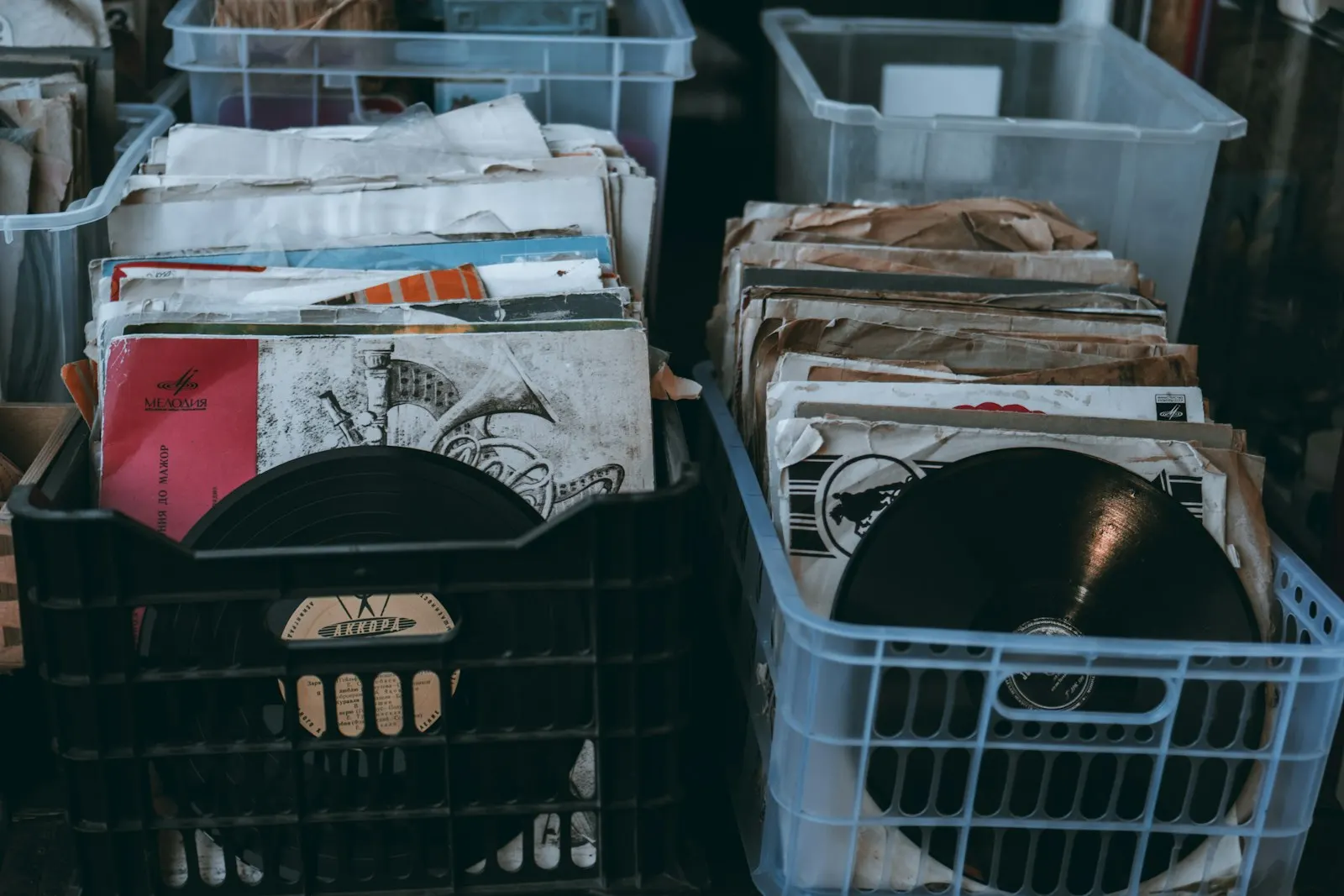
For DJs the calculus is sharper. Playing vinyl in 2026 costs real money, new 12-inches run £12 to £15 after the pressing queue inflated costs, and real constraint: you carry sixty records, not sixty thousand files. That constraint is the point. A vinyl set is pre-committed curation, and crowds and bookers can hear the difference between a selector who chose sixty records and one scrolling a library mid-set. It’s also a visible craft, the skill stack the digital transition nearly orphaned, which is why 1200s stayed in the booth and why vinyl-only nights now market themselves as such.
My Own Records
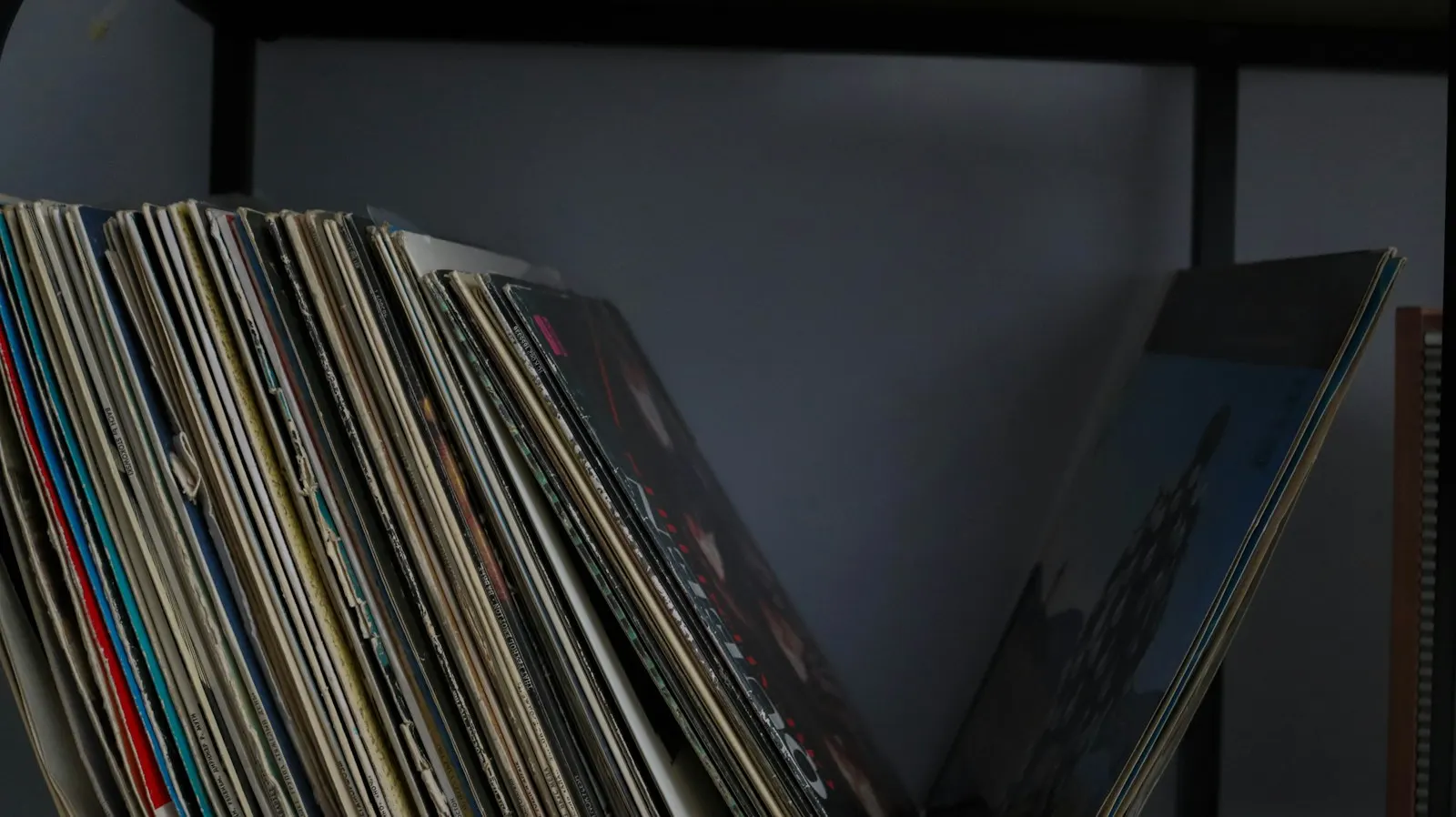
I don’t play vinyl anymore. I have switched over to digital completely, and there’s a large box of records sitting in my parents’ basement. My love of records started long before I bought one. My father had an extensive vinyl collection of 70s and 80s music, and I remember, as a little boy, going through it, playing the records and reading the covers and the lyrics. Those records are iconic, and they definitely influenced me. The first record I ever bought myself was around 1988, when I was in middle school: INXS’s Kick, the album with “New Sensation” on it.
I moved to digital once CDJs arrived. Through the 2000s we would download our music and burn CDs, and carry massive books of them. With long dance tracks each CD only held about eight, but I still bought the music. Then CDJs added USB, and that was the end of the CD wallet too.
Why is vinyl hip again? Part of it is the retro idea, but most of it is ownership: owning something and holding it. It’s yours. With so much of our music and media now living on platforms, we no longer own that content, and the platforms keep taking that ownership away. That’s wrong. Vinyl is the answer to that, and good records slowly go up in price. I wish I hadn’t sold so many of mine when I was younger.
A lot of people also like the tactile side of DJing with records, the discs, the platters, and the authenticity behind it. And a record costs a lot more than a download, so if you’re going to buy that track, you had better love it and use it.
What the Comeback Actually Means
So the revival is neither the format’s triumphant return to the centre, streaming holds the centre, permanently, nor an empty nostalgia trade. It’s the format finding its real, durable niche: the physical tier of a digital music economy, where commitment is the product. The pressing plants are rebuilding, small labels treat short runs as loyalty infrastructure, and every LP bar that opens in Seoul makes the same quiet argument: in an age of infinite access, scarcity is the luxury good. The revolution already happened, and it was digital. Vinyl won something subtler, the right to mean something.
The Seoul Version of This
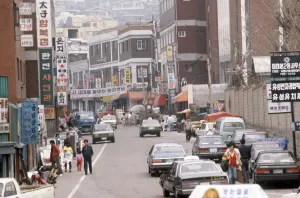
The fine print reads differently from here, because in Seoul the new buyer is younger. Herald Business reported in May 2026 that turntable transactions on the shopping platform 29CM rose 96 percent year on year over the first twelve days of May. On 11Street, turntable sales were up 32 percent on the previous month. The same report named people in their 20s and 30s as the new core customers, and a record shop owner of 30 years said he never expected that age group to come looking for LPs, yet they’re now his main trade. So the rebuying pattern from the UK data, adults buying again what they once owned, doesn’t map neatly onto Korea. Here the turntable is often a first purchase, not something brought back down from the attic.
Then there’s the signal leg of the argument above, at full volume. The yellow vinyl pressing of Jannabi’s second album, Legend, sold at 55,000 won, about CAD $53. Herald Business put its resale price at 640,000 to 700,000 won, roughly CAD $615 to $673, more than ten times the original. Nobody pays that to hear the record. They pay it to own the object, which is the merchandise tier I described, only priced like art.
As for where to listen: Seoul’s LP bars are a great addition to the city, a way for whisky and listening bars to adapt to contemporary taste. There are too many to list, but the ones people mention most include Gopchang Jeongol in Hongdae for Korean oldies, Woodstock in Hongdae for rock, Suzie Q in Sangsu, Kompact Record Bar in Seongsu and Sinsa, and the free Hyundai Card Music Library in Hannam-dong for daytime listening. More in Seoul on Wax.
What Changed in 2026
The best long-run gauge in this city is Seoul Record Fair. Newsis reported that attendance grew from about 2,000 in 2011 to 20,000 in 2019, and has settled around 13,000 since the pandemic. The 14th edition, in October 2025 at PUBG Seongsu, had 62 booths and about 40 LPs released there for the first time. The same report noted that Korea now has three LP pressing plants. In 2011 it had none.
Read those numbers together and the Korean comeback looks less like nostalgia and more like a new habit that has found its level. The fair lost a third of its peak crowd and kept the rest, which is what a durable niche looks like. Local plants mean local releases don’t have to cross an ocean to exist, a point I dig into in the piece on the pressing queue. For DJs, a generation buying turntables for the living room is also a generation that might one day walk into a booth and ask what the two decks are for. My worry sits with the resale end. When a 55,000 won record trades at 700,000 won, the people who wanted to play it are priced out by people who want to flip it, and that’s not a culture, it’s a market. The middle ground is still the LP bar, where the record gets played for a room and nobody owns it but the selector.
Go Deeper: Watch, Listen, Read
Where to dig further into who is buying records, where to hear them in Seoul and what the numbers say.
- Seoul Record Fair (서울레코드페어): the official site, with dates and each year’s list of first-release and limited LPs.
- Visit Seoul: Hyundai Card Music Library and Vinyl & Plastic: the official tourism guide to Seoul’s best-known listening library and record shop.
- Record Store Day: the independent shops’ annual event that did much to restart the revival, and its own account of why.
- Vinyl Nation (2020): a documentary that asks who the new buyers are and whether the culture is open to them.
- Music Business Worldwide: RIAA 2025 report: US vinyl grew for a 19th straight year in 2025, the hard data behind the niche.
Frequently Asked Questions
Why are young Koreans buying vinyl records?
Retail reports from 2026 name people in their 20s and 30s as the main new buyers of turntables and LPs. They tend to treat the record as a collectible and a lifestyle object as much as a way to listen. Rare pressings from popular bands also carry real resale value, which pulls in collectors.
How big is Seoul Record Fair?
Attendance went from about 2,000 in 2011 to 20,000 in 2019 and has held around 13,000 since the pandemic. The 2025 edition, the 14th, ran 25 and 26 October at PUBG Seongsu with 62 booths. Check the fair’s official channels for the next dates.
Are vinyl records pressed in Korea?
Yes. Korea now has three LP pressing plants, according to Newsis, where in 2011 it had none. That gives Korean labels a domestic option instead of relying only on plants overseas.
Why is the Jannabi LP so expensive?
The yellow vinyl edition of Legend originally sold at 55,000 won. Demand from fans and collectors has pushed resale prices to 640,000 to 700,000 won. Scarcity, not sound, sets that price.
Sources
- Herald Business: Turntable sales and LP demand among 20s and 30s, Jannabi LP resale
- Newsis: Seoul Record Fair 14th edition, attendance history and Korea’s pressing plants
- 29CM, Korean shopping platform
- 11Street, Korean shopping platform
Written from Seoul, by someone who has been in the booth for more than twenty years. More on the site, or book a DJ.
Stay in the Loop
New writing on DJ culture, electronic music, and the Seoul underground, delivered when it matters.
More From The DJ Diaries


Play with the history
Four tools built from the same research as this site.