The hardest DJ job in Seoul is not a festival main stage. It is a hotel lounge on a Tuesday, where the music has to make the room feel expensive without anyone noticing it is there. If you run a hotel bar, a rooftop, a members’ lounge or a restaurant and you are thinking about a resident DJ, this is why it pays, how the work is done, what to ask, and what you get.
Why a resident DJ pays for itself
Guests stay for another drink and do not know why. That is the whole business case. A room with a pulse holds people; a room with a playlist is a room people finish their drink in. A residency, meaning the same DJ or a small rotation on set nights every week, is almost always the better structure, because the DJ learns the room: which corner is loud, when the after-work crowd becomes the late crowd, what your regulars respond to. That consistency is what turns a lounge into a destination, and it is the model the best rooms in this city run on; we wrote about it in the residency model.
How the work is actually done
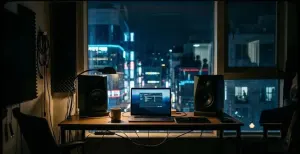
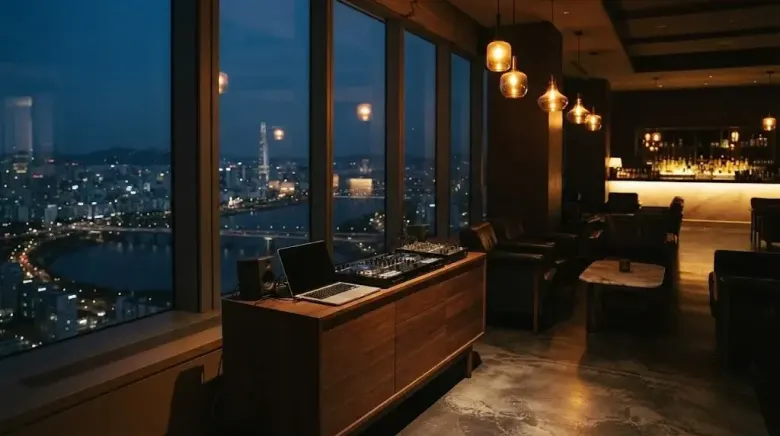
Lounge DJing is a different craft from club DJing, and it is worth knowing what you are paying for. The tempo sits low, the mixes are long and seamless, and the selection moves with the room across the evening: something warm and unhurried at seven, a little more pulse at nine, a real mood by eleven if the room wants one, and never a moment where a table has to raise its voice. The rig is small and tidy: two CDJs or a laptop and controller, a compact mixer, a single monitor kept very low, all on a surface that does not look like a DJ booth. Most hotel lounges run ceiling speakers designed for speech; they can be made to work, but I want to hear the room before the first night, and sometimes a small additional pair of speakers, tucked out of sight, is the difference between good and forgettable.
What you actually get
- A house sound, in plain words you can put in a brief: “warm, mostly instrumental until ten, nothing anyone would recognise from the radio.”
- Agreed volume levels for dinner and for late, and one named person who can change them.
- A DJ who knows your regulars by their second month.
- A room that feels local without feeling like a theme, for the most international guests in the city.
- Cover for the nights your resident cannot make, from someone I have worked with, briefed on your room.
What to ask any DJ before you book
- Have you played a lounge or hotel room, or only clubs? The answer should be specific.
- Will you come and hear the room before quoting?
- How do you handle volume when a manager and a guest disagree?
- What is the plan for nights you cannot play?
- What does the setup look like in our space, and can it be made invisible?
The full list, with the answers that should worry you, is in what to ask before you book a DJ in Seoul.
What to send
The venue, the nights and hours, the capacity, who your guests are, and what you want the room to feel like in plain language. A residency quote without hearing the room is a guess, so expect a visit before a number.
How we work
A small team, led by me. For most events it is me in the booth. For larger or multi-room nights I bring in DJs I have worked with for years, and I stay responsible for the whole night. You are never handed to an account manager. Rooms in Seoul are usually mixed Korean and international, and that is a planning conversation we have in the first email, not a playlist problem on the night.
There is no price list, on purpose. Every room, night and brief is different, and a number given blind is either padded or wrong. What moves the quote is explained here, and a same-day quote comes from telling us about your event.
Hotels that run a lounge programme usually host launches too, which my piece on brand activations covers. The corporate event piece deals with the ballroom side. For the reception before a conference dinner, networking events have their own rules.
Frequently Asked Questions
Why should a hotel lounge hire a resident DJ?
A resident DJ keeps guests in the room for another drink without them knowing why. Rooms with a pulse hold people, while a room with a playlist is a room people finish their drink in. A residency works best because the DJ learns the room, from its loud corner to the moment the after work crowd becomes the late crowd.
How is lounge DJing different from club DJing?
Lounge DJing keeps the tempo low, the mixes long and seamless, and the selection moving with the room across the evening. It might open warm and unhurried at seven, add a little more pulse at nine and build a real mood by eleven if the room wants one. The rule throughout is that no table should ever have to raise its voice.
What equipment does a lounge DJ need?
A lounge setup is small and tidy: two CDJs or a laptop and controller, a compact mixer and a single monitor kept very low. It should sit on a surface that does not look like a DJ booth. Most hotel lounges run ceiling speakers designed for speech, and sometimes a small extra pair of speakers tucked out of sight makes the difference between good and forgettable.
How much does a hotel lounge DJ cost in Seoul?
There is no fixed price list for a hotel lounge DJ in Seoul, because every room, night and brief is different. A residency quote without hearing the room is a guess, so expect a visit before a number. Sending the venue, nights and hours, capacity, guest profile and the feel you want speeds things up, and this guide explains what moves a DJ quote in Seoul.
Further Reading
- Wikipedia: lounge music and its history
- Wikipedia: background music in hospitality and retail
- Wikipedia: deep house, a staple of the lounge set
- Wikipedia: nu jazz and the downtempo sound of hotel bars
Written from Seoul, by someone who has been in the booth for 25 years. More on the site, or book a DJ.
Stay in the Loop
New writing on DJ culture, electronic music, and the Seoul underground, delivered when it matters.
More From The DJ Diaries

Play with the history
Four tools built from the same research as this site.