Seoul has one of the deepest vinyl cultures in Asia, and most visitors never see it, because it doesn’t live in the clubs. It lives in LP bars where the owner is the selector, in record shops doubling as scenes, and in a small circuit of DJs who still carry crates up basement stairs. If the vinyl revival means anything here, this is where it means it.
The LP Bar: Korea’s Own Format
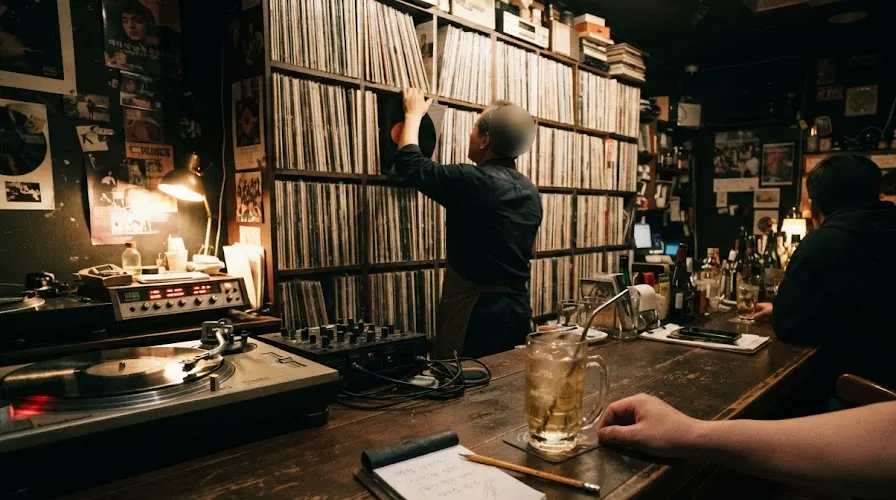
The LP bar predates the global vinyl revival by decades. The format took shape in the 1970s music dabang era, when cafes employed a resident selector to spin records on request, and it never fully died. The classic rooms still run on the same contract: shelves of records floor to ceiling, a request slip or a shouted title, and an owner who treats the collection as a biography. Gopchang Jeongol in Hongdae is the canonical example, decades of Korean pop, rock and folk on the shelves and a room that fills with every generation at once. The Woodstock-style rock bars scattered through Hongdae and Jongno work the same way at higher volume. This is listening culture as hospitality, closer to a Japanese kissaten than to a DJ bar, and it’s the foundation everything newer builds on.
Kyunghyang Shinmun (경향신문) traced that line in 2004: in the late 1950s, music dabang such as 세시봉 (Sesibong) and 은하수 (Eunhasu) were the main route by which pop songs spread in Korea, their music box DJs were stars, and campus dabang kept resident DJs working until the mid 1980s.
Where the New Scene Drinks
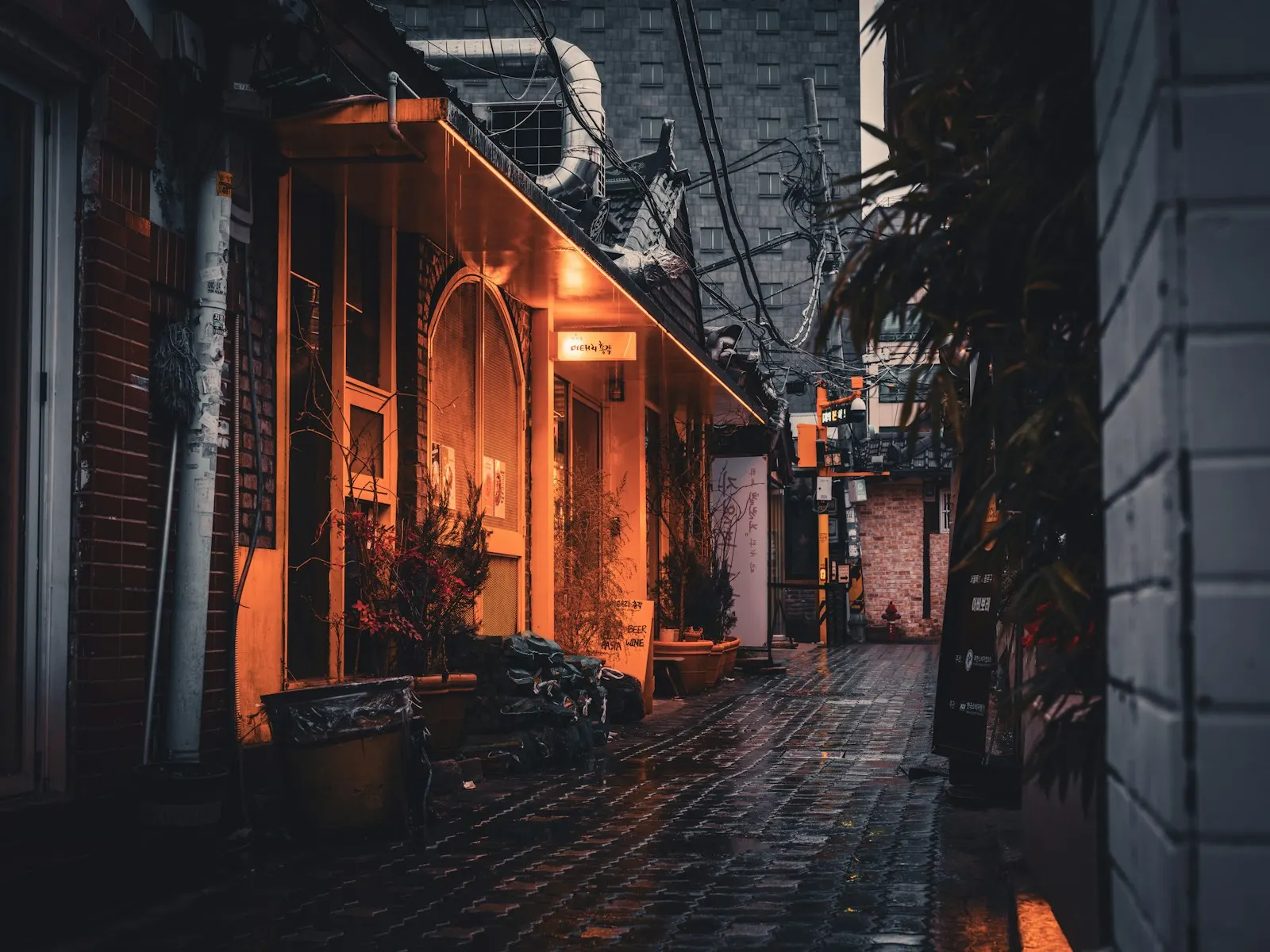
The newer wave imported the club-adjacent version: audiophile rooms and selector bars where the records lean house, disco, jazz and ambient rather than Korean classics. You find them clustered where the scene already lives, HBC and Itaewon, the Euljiro alleys, and the streets around Hannam, rooms of thirty to eighty people, a rotary mixer, and a no-requests policy that would scandalise a dabang owner. Record shops anchor the daytime end of the same circuit: Clique in the Itaewon orbit for club music, Dope Records in Hongdae for hip-hop and funk, Seoul Vinyl and the secondhand floors around Hoehyeon underground arcade for diggers with patience. A Saturday that runs shop to bar to basement party without leaving wax is possible, and I recommend it. Listening rooms active on Resident Advisor through 2026 include Cul Sec on Noksapyeong-daero, RO Seoul off Noksapyeong-daero, Bar Piment in Myeongdong, and XIMXIM, MIXMIX TV’s record bar on the S-Factory rooftop in Seongsu; their listings show no cover charge.
The Telekom Electronic Beats city guide to Seoul adds rm.360, the shop started by DJ Soulscape and his 360 Sounds crew and stocked mostly with 1960s and 1970s Korean records alongside jazz and psych, and its writer’s favourite place to dig is Dongmyo market in the north of the city.
Selectors to Follow
A short list, weighted toward people you can catch in Seoul, with a few internationals whose visits organise the local calendar. Treat it as a starting crate, not a canon.
- DJ Soulscape, the dean of Korean digging: funk, soul and Korean rare groove, and the person most responsible for treating old Korean records as a living archive.
- Mogwaa, Seoul’s most prolific young producer and a serious record collector whose DJ sets lean warmly analogue.
- Peggy Gou, whatever else her career has become, her sets remain rooted in a proper record collection.
- DJ Koco a.k.a. Shimokita, the Japanese 45s virtuoso whose Seoul appearances are events in themselves.
- Muro, Tokyo’s king of diggin’, a regular reference point for every Korean crate digger I know.
- Hunee and Antal, the Rush Hour axis, vinyl-first selectors whose Asian tours reliably route through Seoul.
- Sadar Bahar, Chicago soul-in-the-hole royalty, whose occasional visits convert a room faster than any local evangelism.
- Theo Parrish, the standard for what long-form vinyl sets can be, and a direct influence on half of Seoul’s rotary-mixer bars.
Why It Persists
Vinyl in Seoul works as a filter. A bar built on records selects for owners who care, DJs who prepared, and audiences who listen, the same filter Cakeshop applies with programming and the underground applies at the door. The format survived the streaming decade for the same reason it survived the digital-DJ decade: it makes the room smaller and the intent larger. In a city whose mainstream nightlife spent years optimising for spectacle, the LP bar is the counter-argument, and Seoul keeps building more of them.
Frequently Asked Questions
What’s an LP bar in Korea?
An LP bar is a Korean bar where the owner acts as the selector, playing records from shelves that run floor to ceiling, often on request. The format took shape in the 1970s music dabang (음악다방) era, when cafes employed a resident selector to spin records. It predates the global vinyl revival by decades and works as listening culture offered as hospitality.
Where can you find vinyl bars in Seoul?
The classic Seoul LP bar is Gopchang Jeongol in Hongdae (홍대), with decades of Korean pop, rock and folk on its shelves. Newer selector bars playing house, disco, jazz and ambient cluster in Haebangchon (해방촌), Itaewon (이태원), the Euljiro (을지로) alleys and the streets around Hannam (한남). These rooms usually hold thirty to eighty people, run a rotary mixer and take no requests.
Where can I buy vinyl records in Seoul?
Record shops worth visiting in Seoul include Clique Records in Euljiro for club music, Dope Records in Hongdae for hip-hop and funk, and Seoul Vinyl. The secondhand floors around the Hoehyeon underground arcade suit diggers with patience. A Saturday can run from record shop to LP bar to basement party without ever leaving vinyl.
Why is vinyl culture still strong in Seoul?
Vinyl persists in Seoul because it works as a filter rather than as nostalgia. A bar built on records selects for owners who care, DJs who prepared and audiences who listen. In a city whose mainstream nightlife spent years chasing spectacle, the LP bar is the counterargument, and Seoul keeps building more of them.
Sources
- Kyunghyang Shinmun (경향신문): from music dabang to discotheque to club, the DJ’s transformation (2 May 2004)
- Telekom Electronic Beats: city guide to Seoul
Written from Seoul, by someone who has been in the booth for more than twenty years. More on the site, or book a DJ.
Follow the rooms: Cakeshop on Instagram
Stay in the Loop
New writing on DJ culture, electronic music, and the Seoul underground, delivered when it matters.
More From The DJ Diaries
Play with the history
Four tools built from the same research as this site.