
The sync button controversy was never about the technology. It was about what it means to be a DJ, and Traktor was the software that forced the argument into the open.
A Laptop Learns to Mix
Native Instruments released Traktor DJ Studio in 2000, software for mixing audio files on a laptop when that idea still sounded like a joke told at vinyl’s expense. Where Serato later positioned itself as the turntablist’s bridge, preserving decks and hands, Traktor pushed the opposite direction: four decks instead of two, looping and cue-point juggling as first-class techniques, and effects as instruments. The four-deck model meant a DJ could run a bassline on one deck, a drum tool on another, a melodic layer on a third and an effect return on the fourth, less mixing records than remixing live. It was a new grammar for the job.
Traktor
The laptop learns to mix, and the sync wars begin
- Type
- DJ software
- Launched
- 2000, as Traktor DJ Studio. Four decks from version 3, 2005
- Changed
- Started controllerism and the sync argument
- Today
- Its ideas won. Sync, stems and effects as performance are everywhere
The machinesTen instruments on The DJ Diaries, from 1970 to 2006, drawn to scale. Tap a dot to read its story.
Controllerism and the Sync Wars
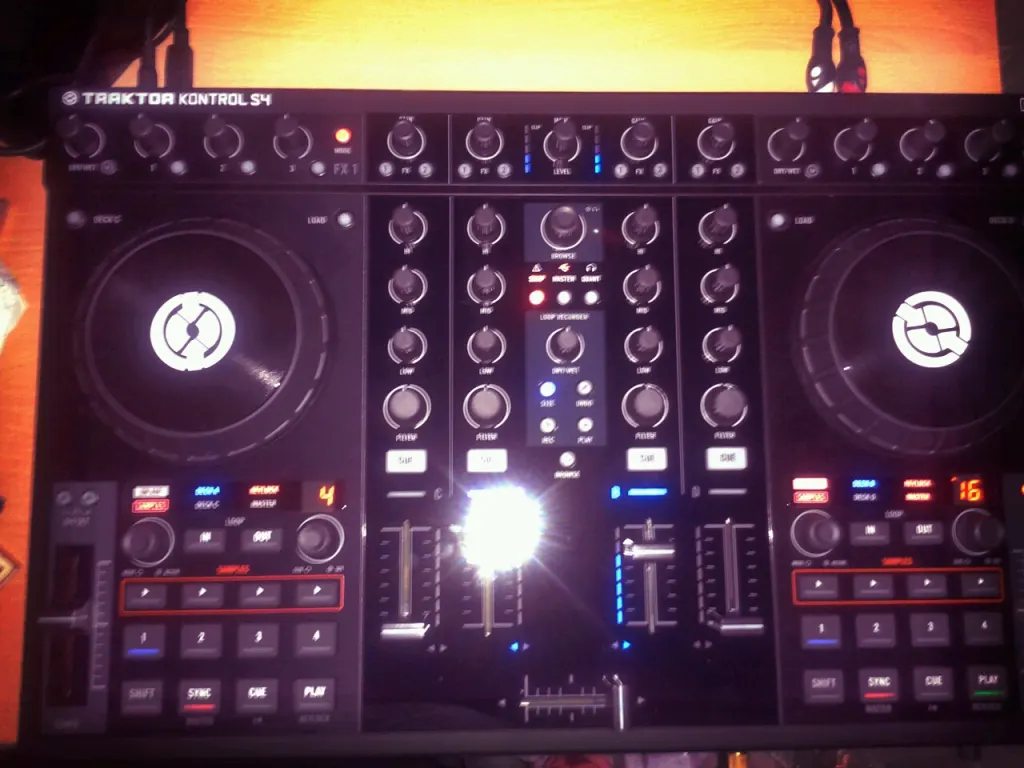
Hardware followed, NI’s Kontrol controllers from the late 2000s onward, and around them grew controllerism: performance built on grids, loops and mapped gestures rather than platters, with artists remixing on the fly in ways two turntables physically can’t. The enabling feature was sync, one button holding tracks in tempo lock, and it split the culture. To one camp, sync freed hands and heads for the musical decisions that matter, reading the room, structuring energy, layering. To the other, beatmatching by ear was the craft’s entry exam, and skipping it produced button-pushers. The argument raged for a decade of forum wars and festival think-pieces, and it was always about gatekeeping versus access, the same fight every technology in this culture provokes, from the 303 to Ableton.
How the War Ended
Quietly, and by everyone adopting the loser’s position. Sync won as a feature: it’s in every CDJ, every controller, every app, and beginners now learn structure before beatmatching. But Traktor lost the platform war it started: Pioneer’s CDJ-and-rekordbox ecosystem captured the booth standard, Serato held the open-format world, and NI let Traktor drift through the 2010s while its rivals shipped. The software that invented the future ended up a niche within it, beloved by technical DJs, four-deck loyalists and the stem-mixing avant garde it anticipated by fifteen years.
The 2026 Verdict
History has been kind to Traktor’s ideas and unkind to its market share. Stems separation, sync-locked layering, effects-as-performance, the whole toolkit of the modern hybrid set, including the AI-assisted mixing in 2026’s streaming-era booths and the motorised-standalone wave led by Rane’s System One, is controllerism vindicated. The heresies became factory settings, as I keep finding in these essays. The DJs who spent 2008 defending the sync button were early, and in this culture, early is the most expensive thing to be.
Traktor in a 2026 Booth
Native Instruments did eventually ship. Traktor Pro 4, released in July 2024, added flexible beatgrids, stem separation, the Pattern Player sequencer and the Ozone Maximizer limiter. The stems run on RX technology from iZotope, splitting a track into drums, bass, instruments and vocals right on the deck. That’s the stem mixing idea this piece credits to the four deck model, finally built into the software that started it. The company behind it has had a harder 2026. Native Instruments entered insolvency proceedings in Berlin early in the year, and in May inMusic, the owner of Akai and Moog, agreed to buy it. The deal closed that month and was followed by about 100 layoffs, MusicTech reported. inMusic also owns Denon DJ and Numark and has promised continued investment across every brand. What that means for Traktor is the open question for its users.
Flexible beatgrids are the feature I’d point any older DJ toward. Disco, funk and live band records drift in tempo, and a fixed grid either fights them or forces you back to riding the pitch by hand. A grid that follows the drummer lets a disco record sit in a sync-locked mix without sounding quantised. For someone who plays a lot of soulful house and disco, that closes one of the oldest gaps between software and real records. Many classic disco edits were cut with tape and a razor blade, and their tempo wanders between sections. A grid that follows those joins lets you keep sync on without flattening the record’s own feel.
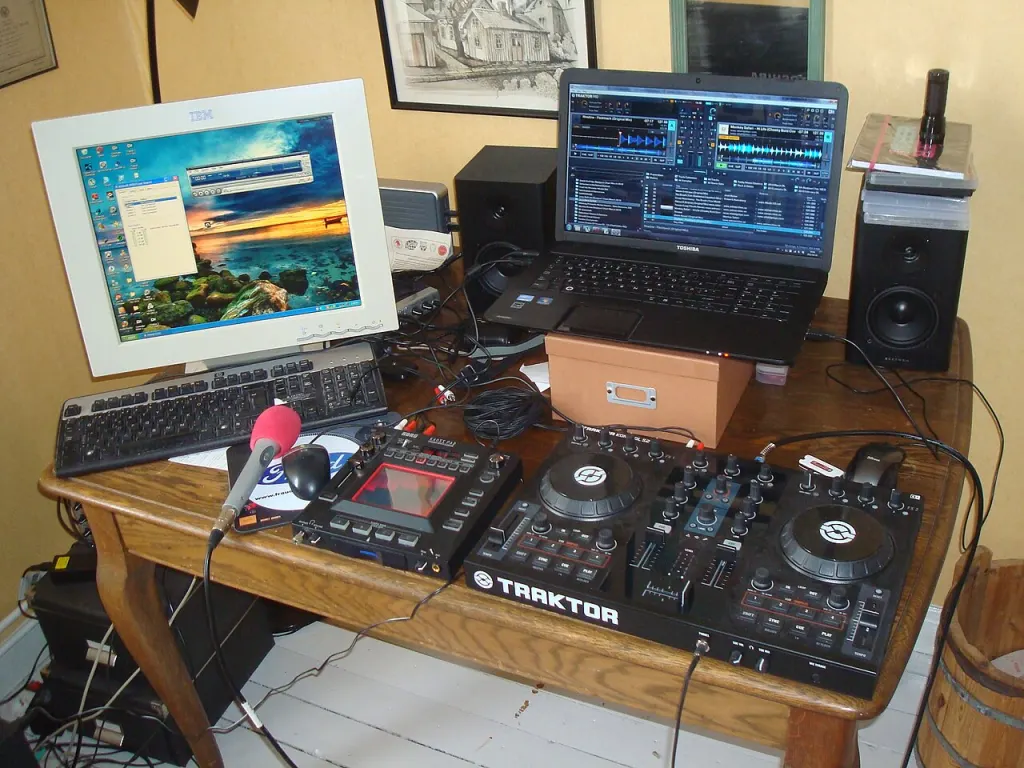
The booth itself hasn’t moved in Traktor’s direction. Most clubs in Seoul, like most clubs worldwide, run CDJs and a Pioneer mixer, so a Traktor user arrives with a laptop, an audio interface or timecode vinyl, and a changeover to plan. Traktor still supports timecode control vinyl and Ableton Link for syncing with other gear, which helps in a hybrid set. The cost is time. A laptop changeover needs a word with the DJ before you and a few minutes nobody should spend during a peak. I covered the manners of that in set time etiquette, and the hardware choice in my guide to controllers and CDJs.
My view is that sync and stems are settled, and the argument has moved to taste. Anyone can pull the vocal out of a record now. Knowing when to leave it in is the job. Stems make that choice easier to hear and easier to get wrong, and no software update has touched that part.
Where I Stand on Vinyl Versus Laptop
On vinyl versus laptop DJs, the person I agree with most is DJ Jazzy Jeff. As he put it to MusicRadar: “If you suck before Serato, you suck after it.” It’s the same argument as the sync button, and his answer there was just as blunt: play good music and stop worrying about it. What matters is how you play, not what you play on. You do you, I’ll do me.
I see both sides. Vinyl purists have a point: the tactile response, and the care that goes into selecting every record. But vinyl is an expensive hobby, and until you build up a massive collection you only have so much music. That takes time. With a laptop you can physically carry far more music. I remember hauling milk crates and heavy record bags to gigs. I don’t miss that.
On the sync wars, I’ve never really used sync. There might be a place for it, but I don’t think you need it, and if you rely on it you become more of a jukebox. Beatmatching is one of the basic skills of being a DJ. We all make mistakes, and we learn from them, but new DJs should practise more so they build that skill and that confidence in the booth.
Where laptop DJs earn my respect, or lose it, is the changeover. There’s nothing worse than a DJ pushing in ten or fifteen minutes before the end of my set so they can set up and start on the hour. Real professionals walk in with a USB stick, plug in, play their first track off the USB, and set up the laptop while that track is running. I’ve seen several local DJs do exactly that, and much respect and love to them for it. If you need extra time to set up during someone else’s set, sorry, you don’t belong in that booth yet. Set up before the club opens.
Go Deeper: Watch, Listen, Read
Where to follow the software, the sync argument and the company’s uncertain next chapter.
- Native Instruments: Traktor Pro 4 press page: the official rundown of stems, flexible beatgrids and the Pattern Player.
- Digital DJ Tips: Traktor Pro 4 review: a hands-on verdict from a site built for working and beginner DJs.
- DJ TechTools: Traktor Pro 4 stem separation: how the stems feature works in practice, from the site that grew up with controllerism.
- Music Business Worldwide: inMusic buys Native Instruments: the business story behind Traktor’s new owner.
- MusicTech: the layoffs after the takeover: what changed inside the company after the sale, and what’s still unclear.
Frequently Asked Questions
What’s Native Instruments Traktor?
Traktor is DJ software from Native Instruments, first released as Traktor DJ Studio in 2000 for mixing audio files on a laptop. From version 3 in 2005 it pushed a four deck model, with looping and cue point juggling as core techniques and effects treated as instruments. A DJ could run a bassline, a drum tool, a melodic layer and an effect return at once, which was closer to remixing live than mixing records.
What’s controllerism in DJing?
Controllerism is DJ performance built on grids, loops and mapped gestures rather than turntable platters. It grew around Native Instruments Kontrol controllers from the late 2000s onward, with artists remixing on the fly in ways two turntables physically can’t. Its enabling feature was sync, one button holding tracks in tempo lock.
Is using the sync button cheating as a DJ?
The sync argument was never really about cheating; it was about gatekeeping versus access. One camp said sync freed DJs for the decisions that actually matter, such as reading the room, structuring energy and layering. The other saw beatmatching by ear as the entry exam of the craft. Sync won as a feature, is now in every CDJ, controller and app, and beginners now learn structure before beatmatching.
Why did Traktor lose market share to Pioneer and Serato?
Traktor lost the platform war it started even as its ideas won. Pioneer’s CDJ and rekordbox ecosystem captured the booth standard, Serato held the open format world, and Native Instruments let Traktor drift through the 2010s while its rivals shipped. It remains a niche loved by technical DJs, four deck loyalists and the stem mixing avant garde it anticipated by fifteen years.
Further Reading
- Native Instruments: the official Traktor product pages
- Wikipedia: the history of Traktor from DJ Studio onward
- Wikipedia: Native Instruments, the Berlin company behind Traktor
- Wikipedia: controllerism and performance with mapped controllers
- Wikipedia: beatmatching, the skill the sync button automates
Written from Seoul, by someone who has been in the booth for more than twenty years. More on the site, or book a DJ.
Stay in the Loop
New writing on DJ culture, electronic music, and the Seoul underground, delivered when it matters.
More From The DJ Diaries


Play with the history
Four tools built from the same research as this site.