Ask a visitor where Seoul goes out and you will get Hongdae, Itaewon, Gangnam. Ask a fifty five year old man who spent thirty years on a production line in Guro. You will get a completely different city, one where the answer was Yeongdeungpo nightlife, right outside the factory gate. That is because central Seoul was an hour away on a bus after a ten hour shift.
That street is still there. Several of them are. The southwest of this city, Yeongdeungpo and Guro and Mullae and the blocks around them, holds one of the largest and least documented drinking economies in Korea. It exists for a reason that has nothing to do with students, tourists or nightlife as a leisure category. It exists because that is where the factories were.
This is a guide to it, and to why it looks the way it does. I have played and drunk out there, and I would send any curious expat there before I sent them to a third night in Hongdae.
Yeongdeungpo Nightlife: the Short Version
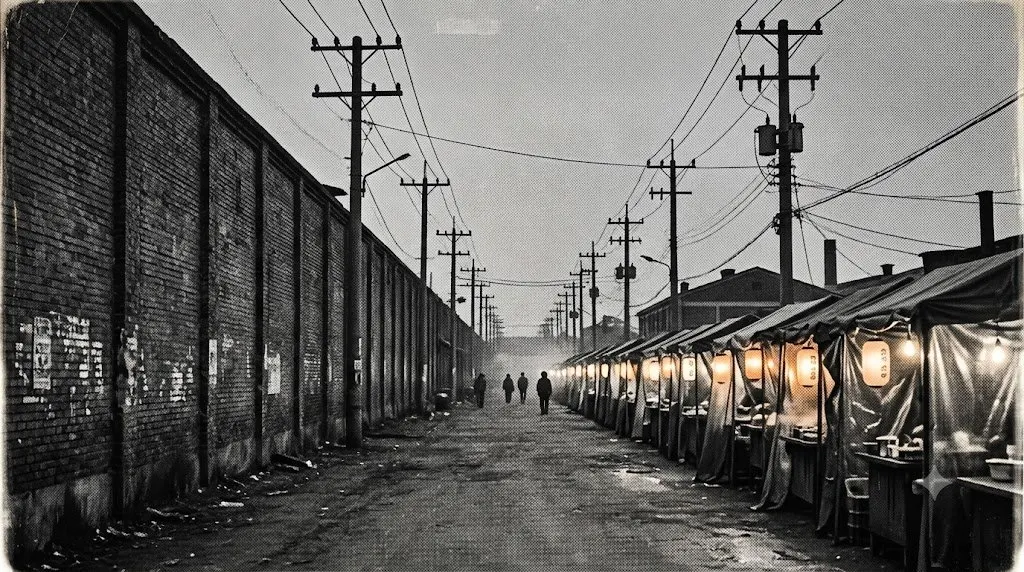
Yeongdeungpo and the surrounding southwest are Seoul’s working-class night. Expect: cheap, older, food-first, loud, absolutely no door policy, very little English, and an early start. People are drinking at seven because their shift ended at six, not pre-drinking for something at eleven.
You will find hof and pocha in enormous density, grilled meat, jokbal, 국밥, standing bars, old-style nightclubs and singing rooms. Almost nothing curated for anyone under thirty five. What you will not find is a scene in the sense this site usually uses the word. That is fine. It is a different product and in some ways a better one.
If you want one landmark to orient by: Yeongdeungpo station. The streets radiating from it, with Times Square as the modern anchor and the older drinking blocks around and behind it.
How the Factories Got to Yeongdeungpo
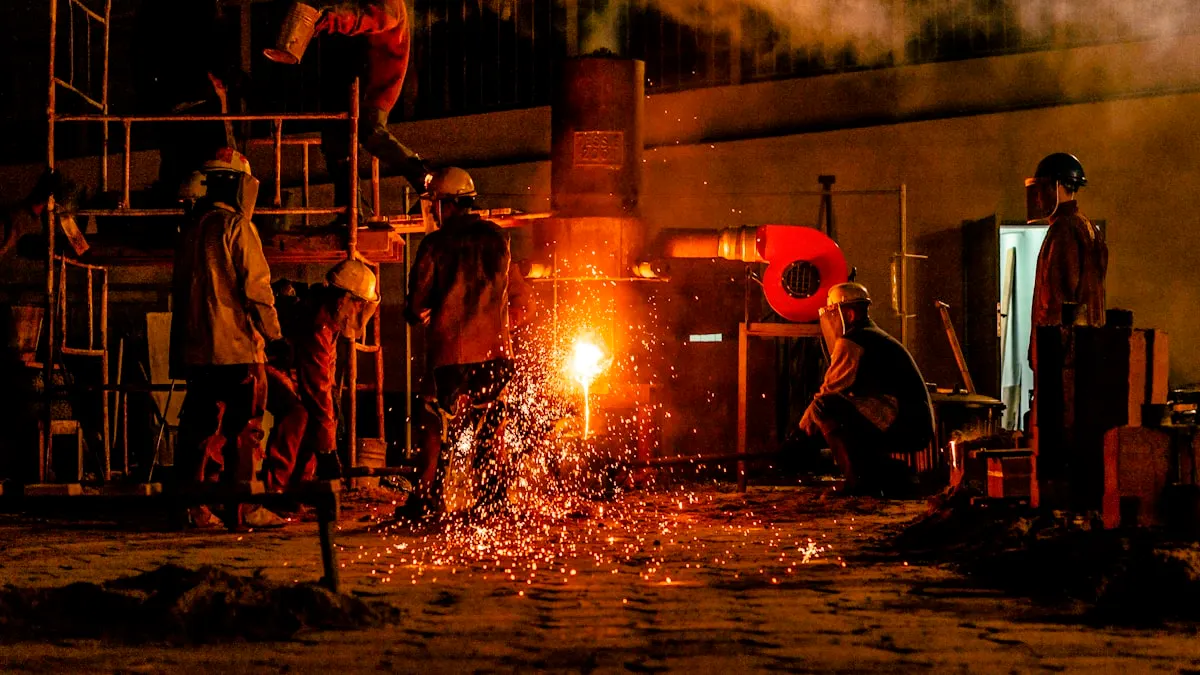
Yeongdeungpo was Seoul’s industrial district before Gangnam was anything at all, and the reason is unromantic: flat land next to a railway.
Rail arrived in the early twentieth century, factories followed, and by 1936 Seoul had absorbed the area as an industrial zone. It became one of the city’s first formal wards in 1943. Textiles, including the Gyeongseong Spinning operation whose old office building still stands as a heritage property. Then breweries and heavy manufacturing across the decades that followed. For most of the twentieth century, when Koreans said Yeongdeungpo they meant work.
The bigger wave came south of it. The Guro export industrial complex opened on 1 April 1967 as Korea’s first inland export zone, with President Park Chung-hee at the ceremony. It started with 2,460 workers. By the end of 1978 it employed about 114,000. Exports passed a billion dollars in 1971 and reached 1.87 billion by 1980, something like a tenth of everything the country sold abroad.
A hundred and fourteen thousand people, in one place, working shifts.
Who They Were, and Why It Matters to a Bar
The Guro workforce was overwhelmingly young, overwhelmingly rural in origin, and overwhelmingly female. The women who staffed Korea’s export miracle came from the countryside as teenagers and lived in the honeycomb rooms of Garibong-dong. Those were the 벌집, subdivided buildings where a corridor of tiny rooms shared a single toilet between dozens of people. Average monthly take-home pay for a woman on those lines in the early eighties was in the region of 74,000 won.
I am not going to editorialise about that beyond noting the obvious. Every Korean over sixty knows this history, most foreigners living here have never heard it. It is the direct ancestor of the country you are currently enjoying.
What it produced, in nightlife terms, is specific. A district full of people with a little money, no kitchen of their own worth cooking in, a shared room they did not want to sit in. A shift that ended at a fixed hour. That is the ideal customer base for cheap food-and-drink businesses at volume, and the southwest filled with them accordingly. The pattern is identical to what a steel town in Ontario or a mill town anywhere produces. That is why the atmosphere in an old Yeongdeungpo hof is legible to anyone from a North American industrial city even if they cannot read a word of the menu.
Why They Did Not Go Downtown
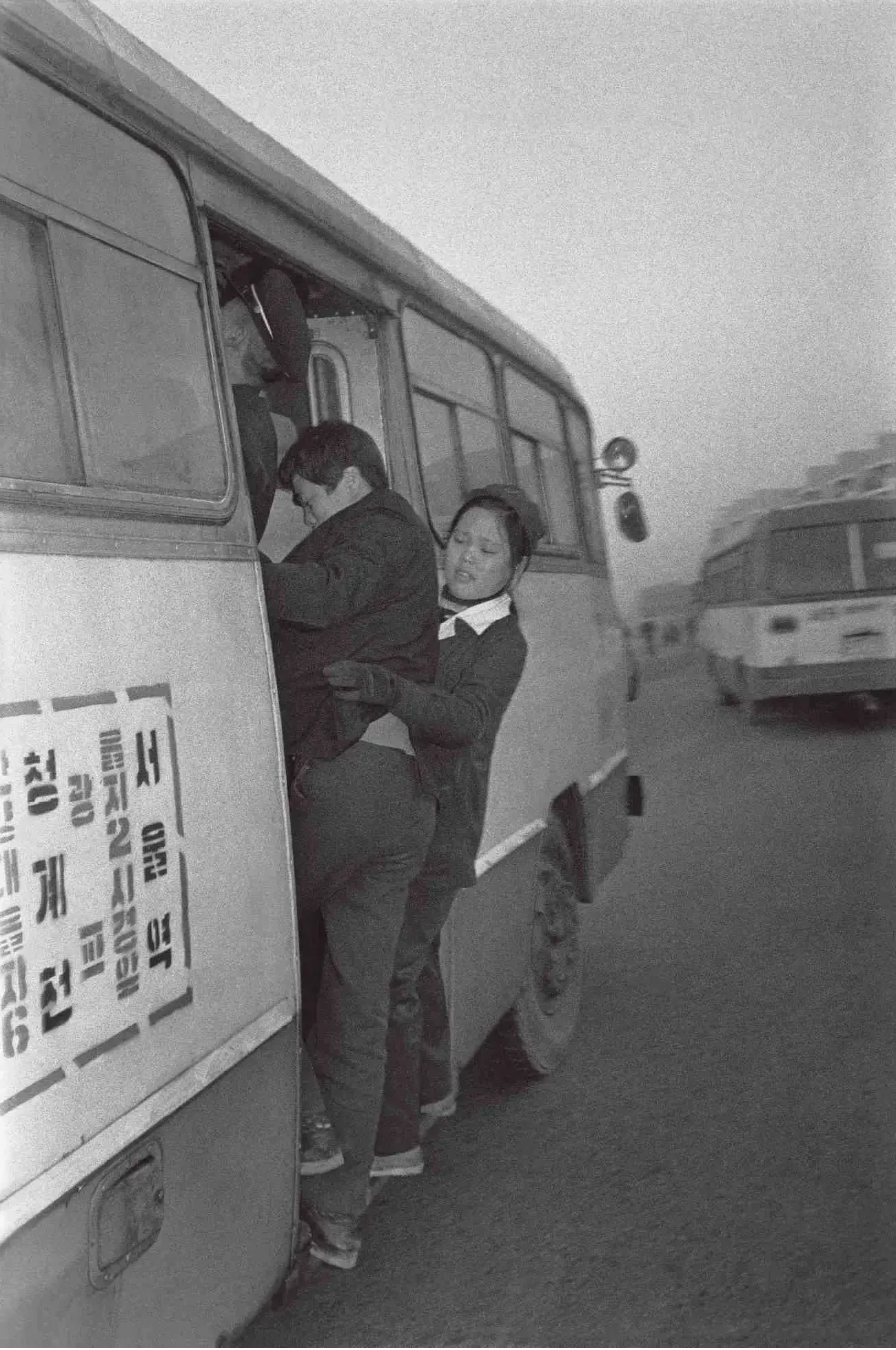
This is the part that shapes the whole geography, and it is worth spelling out for anyone used to a city with a single centre.
Getting from the southwest into Jongno or Myeongdong in the seventies and eighties meant a long bus ride each way, at the end of a very long day, to spend more money in a district built for office workers and students. The subway network that makes that trip trivial now was still being built. Line 2 famously got rerouted into a loop to serve the new Gangnam development rather than the old industrial west.
So the southwest built its own night, and it built it at working-class prices, on a working-class schedule, with working-class portions. Once a district like that exists it is extremely durable, because the economics that made it never really go away. Because the people who drank there in 1985 are still drinking there in 2026 with their former colleagues.
This is also the honest answer to the question expats ask constantly. That is why parts of Seoul feel so much cheaper than others for identical food and drink. It is not randomness. It is which century, and which industry, built the street you are standing on.
What Happened to the Factories, and What Is There Now
The complexes did not close so much as transform. Guro’s exports slid through the nineties under wage growth and international competition. In 2000 the city rebranded the whole thing as the Seoul Digital Industrial Complex, the district everyone now calls G Valley. By 2015 it held nearly ten thousand companies and around 160,000 workers. That is more people than the factories ever employed, just doing very different work.
So the customer base did not vanish, it changed clothes. The bars around Guro Digital Complex station now serve software engineers on the same street pattern that served machinists. The 회식 culture of an IT company is not structurally different from that of a factory. Same 1차, 2차, 3차 rhythm, and if you want that explained properly there is a whole article on this site about it.
The Shape It Left
Yeongdeungpo itself has been redeveloping steadily around Times Square. The area near the station has been the subject of major redevelopment plans confirmed in 2021 that will replace the last of the old low-rise blocks near the station, including the long-standing red light area, with high-rise mixed use. Parts of the district you might read about in older guides are gone or going.
Mullae is the one to watch. The steel workshops between Mullae and Yeongdeungpo have spent the past fifteen years acquiring galleries, studios and small bars in the gaps between working metal shops. That is precisely the sequence that produced Seongsu a decade earlier. It is the closest thing the southwest has to an arts district. It is the most likely place out there to interest anyone reading this site.
How to Actually Go, as a Foreigner
Some practical notes, because this is not a district set up for visitors and that is most of its appeal.
Go early. Seven or eight in the evening is peak. By midnight the older rooms are winding down, which is the opposite of Itaewon.
Order food. Every one of these rooms is a food business first, both culturally and, as this site has explained at length, in terms of how it is registered. Sitting down and ordering only alcohol reads as strange and creates a problem for the owner.
Expect no English and bring translation. Point at things. Nobody will mind.
Be aware that some blocks near Yeongdeungpo station are, or recently were, part of an old red-light area currently being redeveloped. It is well signposted by its appearance. Walk around it.
And go with the right expectation. You are not going out there to find a great room with a great sound system, because you will not. You are going to see the version of Korean nightlife that most Koreans over fifty actually grew up with, in the district that built the country’s export economy, at about half the price of the districts in the guidebooks.
Once you have done that, the rest of the city makes a lot more sense.
FAQ
Is Yeongdeungpo good for nightlife?
Yes, if you want the working-class Korean version rather than the international one. Expect density: hof, pocha, grill restaurants and older-style bars. Prices sit well below Hongdae or Itaewon. It starts and finishes earlier, and there is very little English. What it does not have is a club or live music scene in the sense visitors usually mean.
Why is there so much nightlife around Yeongdeungpo and Guro?
Because that is where Seoul’s factories were. Yeongdeungpo became the city’s industrial district from the colonial period onward. The Guro export complex opened in 1967 and employed roughly 114,000 people by 1978. Getting into central Seoul after a shift meant a long bus ride. So the districts built their own dense, cheap drinking economy on site, and it survived the factories.
What was the Guro Industrial Complex?
Korea’s first inland export industrial zone, opened on 1 April 1967 in southwest Seoul, initially making textiles and clothing and later electronics and optical goods. It grew from 2,460 workers to about 114,000 by the end of 1978, mostly young women who had migrated from rural areas. Accounted for roughly a tenth of national exports at its peak. The complex became the Seoul Digital Industrial Complex, now called G Valley, in 2000.
Where do working-class Koreans drink in Seoul?
Predominantly in the industrial southwest around Yeongdeungpo, Guro and Mullae, in the older parts of Jongno. In ordinary neighbourhood alleys near residential subway stations across the city. The common features are early hours, food-led menus, low prices, no door policy. A customer base of colleagues rather than friend groups or tourists.
Is Mullae worth visiting?
For anyone interested in how Seoul districts change, yes. Mullae is a working steel and metalworking district that has gradually acquired galleries, artist studios, cafes and small bars in the spaces between operating workshops. It is following the same trajectory Seongsu did a decade earlier. Visit on a weekday if you want to see the industry, and in the evening if you want the bars.
Sources and Archives
The industry. The National Archives record of the Guro Industrial Complex is the source for the worker and export figures in this article. Pressian on the honeycomb villages and the women who lived in them and Kyunghyang on what the complex left behind are the human side of the same numbers. the Guro cultural encyclopedia entry on the 벌집 documents the housing itself.
The district. Yeongdeungpo-gu’s own history pages · Opinion News on Yeongdeungpo as the face of Seoul south of the river · the modern industrial heritage of the Gyeongin belt · the surviving Gyeongseong Spinning office building. On the station-area redevelopment confirmed in 2021, Asia Economy and Financial News both reported it at the time. For Mullae, the district’s art village page and a walkthrough of the steel-and-art streets.
What That Left Behind
Old photographs, and this is the good part. The industrial southwest is one of the most heavily photographed parts of twentieth century Korea. That is because the state was documenting its own economic miracle. Search 구로공단, 가리봉동, 영등포 and 벌집 in e영상역사관 national archive photography and National Archives of Korea digital collections for the official record, including factory floors. The export ceremonies, then search the same terms in Seoul Photo Archive (서울사진아카이브) and Seoul Institute, Seoul in Photographs for the street-level version. The contrast between the two archives, the ceremony and the housing, tells the story better than any article can.
Read next: how every Seoul nightlife district was made · the traditional districts most expats never find · the print alleys under Euljiro · the neighbourhood by neighbourhood guide
Picture Credits
- The Seoul bus commute, November 1976
National Museum of Korean Contemporary History, via Wikimedia Commons. Licence: Public domain. View the original file and its full licence terms. - Present day photographs
Matthew Clement, for The DJ Diaries.
Historical images on this site are used under the licence stated for each file. KOGL Type 1 is the Korean public sector open licence permitting commercial use and adaptation with attribution; public domain items carry no restriction. If you hold rights in any image here and believe it has been used in error, get in touch and it will be removed.
Written from Seoul, by someone who has been in the booth for more than 25 years. More on the site, or book a DJ.
Stay in the Loop
New writing on DJ culture, electronic music, and the Seoul underground, delivered when it matters.
More From The DJ Diaries
Play with the history
Four tools built from the same research as this site.