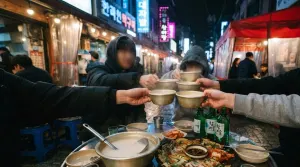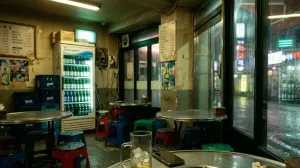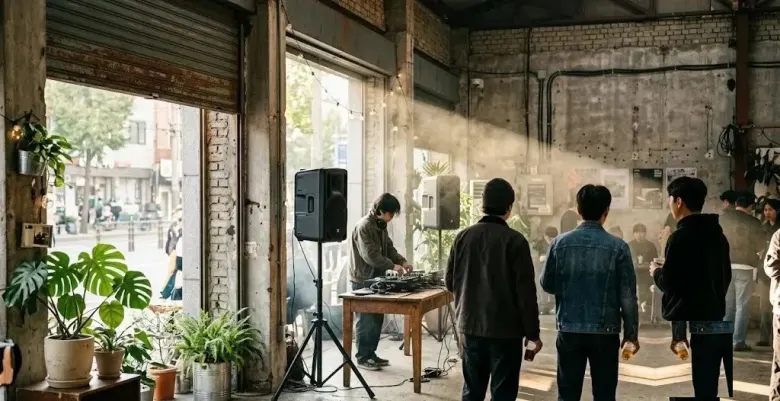
The most interesting growth in Seoul’s dance music culture right now isn’t happening at 2am. It’s happening at 10am in coffee shops, at 2pm on rooftops, and at 7pm in rooms full of people exchanging business cards between tracks. The night still matters, but the daytime event is where new audiences are being made.
The Coffee Rave
The format that broke through: a cafe, a DJ, daylight, no alcohol, and a floor that’s done by early afternoon. Seoul took to the global coffee-rave wave with unusual enthusiasm from 2024 onward, and the local version thrives in exactly the neighbourhoods you’d guess, Seongsu’s converted warehouses, Euljiro’s walk-ups, the cafe streets of Yeonnam and Mangwon. The music leans house and disco at conversational volume, the crowd is more mixed in age than any night floor, from students in their early twenties to people in their thirties and older, and the economics are friendly: no late-night staffing, no licence anxiety, coffee margins instead of bar margins. For a generation drinking measurably less alcohol, it’s the first version of clubbing they meet, and the night rooms now treat morning floors as a recruitment channel. By autumn 2025 brands had moved in: Newsis reported 7am morning raves of two to three hours run by Budweiser (Early Bud, held in Itaewon), Fruit of the Loom, Diadora, Discovery Expedition and the Seoul Morning Coffee Club, with tickets selling out.
Day Parties and Morning Raves
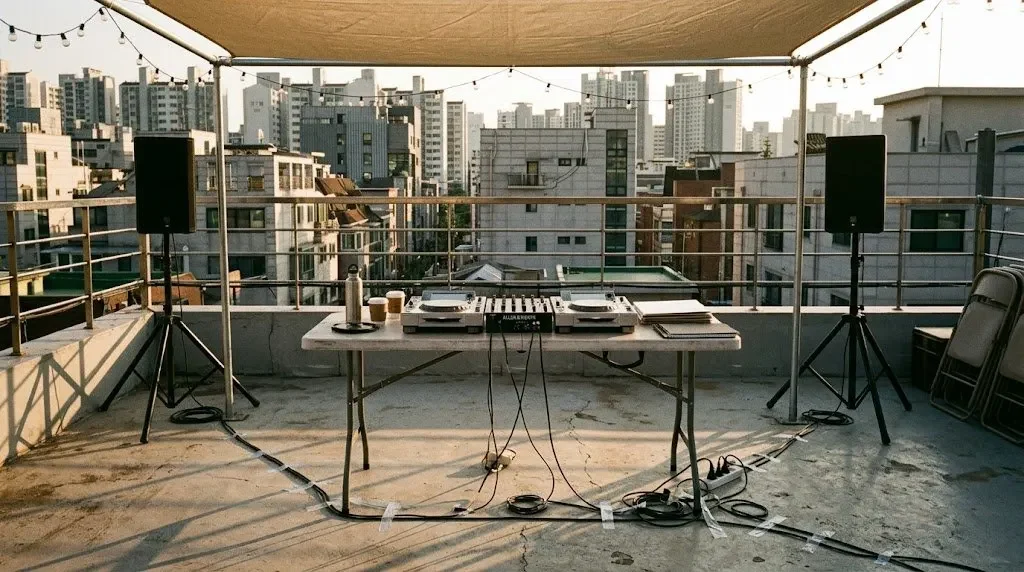
One rung up in intensity sits the true day party: rooftop sessions through the spring and autumn weather windows, open-air floors along the Han in summer, and the occasional genuine morning rave, doors before 9am, done by noon, built for people who want the floor without the hangover or who work nights themselves. Promoters love the format for the same reason the underground circuit loves small rooms: daytime slots are cheap to hire, easier to license, and forgiving of experimentation. Some of the best sets I heard last year happened before sunset, played to floors that were entirely sober and entirely present.
The Networking Floor
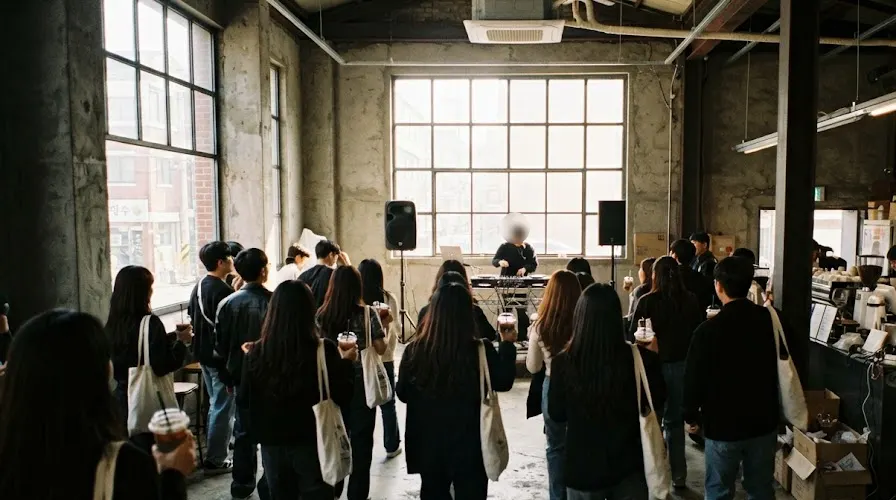
The third format is the one nobody admits is a party: the industry mixer with a proper selector in the corner. Seoul’s creative industries, fashion, tech, music, run a steady calendar of openings, brand events and after-work socials where the DJ is doing real work, holding a room at talking volume for three hours, the discipline I describe in Reading a Room. These events are where a working DJ’s bookings actually come from in this city: the promoter you meet at a Tuesday gallery opening books you for a Saturday basement two months later. For newcomers to the city, they’re also the single fastest way into the scene, faster than any night out, because people can hear each other speak. Brand-run morning parties are usually booked in advance and fill fast (Newsis reported one reaching capacity within three hours of registration opening), so book ahead rather than turning up at the door.
Why Daytime Is Winning
Three structural reasons. The audience is changing: post-2020 habits mean earlier nights and less drinking, the shift that helped end the megaclub era. The city is changing: noise rules and licensing make a 2pm floor administratively trivial compared to a 2am one. And the culture is changing: a floor you can photograph in daylight, leave by dinner, and remember completely has obvious advantages for a scene trying to grow beyond its regulars. The night isn’t dying, Seoul’s serious rooms still run to sunrise. But if you want to see where the next audience is coming from, skip the queue and go to brunch.
Why Daytime Actually Works Here
Daytime events get written off as a novelty. In Seoul they’re a structural fit, and the reasons are specific to this city.
The last train is the whole problem, and daytime removes it. The subway stops around one and restarts around five thirty, which forces a Seoul night into either an early finish or an all-nighter; and the one o’clock finish is weekdays only (Korean), with most lines stopping around midnight on Saturdays, Sundays and holidays. A daytime event has no such fork. People come, stay four hours and go home on the train, and for anyone over thirty that’s the entire appeal.
Small rooms have empty daytimes. A venue paying rent on a space used only from ten at night has an obvious incentive. Daytime programming is the cheapest additional revenue a small room can generate, which is why it spread faster here than the trend coverage suggests.
Cafe culture did the groundwork. Korea already had a habit of spending long stretches of a weekend afternoon in a cafe. Adding a sound system to that is a much shorter leap than persuading people to go clubbing at 2pm.
Who Actually Turns Up, and Why It Matters
The crowd is meaningfully different, and I’d put it ahead of any other audience in the city right now.
It skews older, it skews toward people with jobs and children, and it contains a lot of people who used to go out and stopped. It’s also, in my experience, more attentive: a room at three in the afternoon has nothing to hide behind, so the music has to be good. You can’t coast on darkness and volume.
For networking events specifically, the daytime format solves a real problem, which is that a normal club is a terrible place to have a conversation. If you’re organising something where people are meant to talk to each other, this is the format, and the same rooms will host it.
The Honest Limits
It’s not a replacement for a night, and people who claim otherwise are overselling. Certain music needs the dark and the hour, and a peak-time techno set at 4pm is a different and lesser thing.
There’s also a quiet economic problem: daytime crowds drink less, which is the business model of most of these rooms. A packed afternoon can take less money than a half-empty night, and operators know it. If you like these events, that’s the reason to buy a drink rather than a coffee.
FAQ
What are daytime parties in Seoul?
Music events run in the afternoon and early evening, often in cafes, small bars and club spaces that would otherwise be empty during the day. They range from coffee-and-records sessions to full daytime club events and networking parties, and they have grown considerably because they suit a city whose subway stops around one in the morning.
Why are daytime events popular in Korea?
Chiefly because they solve the last-train problem: a Seoul night forces a choice between leaving early and staying out until dawn, while a daytime event lets people attend for several hours and travel home normally. They also let small venues earn from hours they were already paying rent on, and they build on an existing culture of spending weekend afternoons in cafes.
Who goes to daytime parties in Seoul?
A noticeably older crowd than club nights, including many people with work and family commitments who had largely stopped going out. The atmosphere is more attentive, since an afternoon room has none of the cover that darkness and volume provide, and the format works far better than a night club for events where people are meant to talk to each other.
Further Reading
- Wikipedia: Seongsu-dong, the Seoul neighbourhood of converted warehouses and cafes
- Wikipedia: Euljiro, the old print and hardware district turned creative hub
- Wikipedia: Yeonnam-dong and its cafe streets near Hongdae
- Korea Tourism Organization: official visitor guide to Seoul and beyond
- Wikipedia: the history of house music, the sound of the daytime floor
Written from Seoul, by someone who has been in the booth for more than twenty years. More on the site, or book a DJ.
Stay in the Loop
New writing on DJ culture, electronic music, and the Seoul underground, delivered when it matters.
More From The DJ Diaries
Play with the history
Four tools built from the same research as this site.