Not every good night in Seoul ends on a dance floor, and some of the best ones never go near a door charge. If the club format does not fit your night, your budget, or your ears, the city offers a full set of alternatives that still deliver the thing clubbing is actually for: music, company, and a reason to stay out. Consider this the counter-programme to the neighbourhood club guide.
The Han River Night Picnic
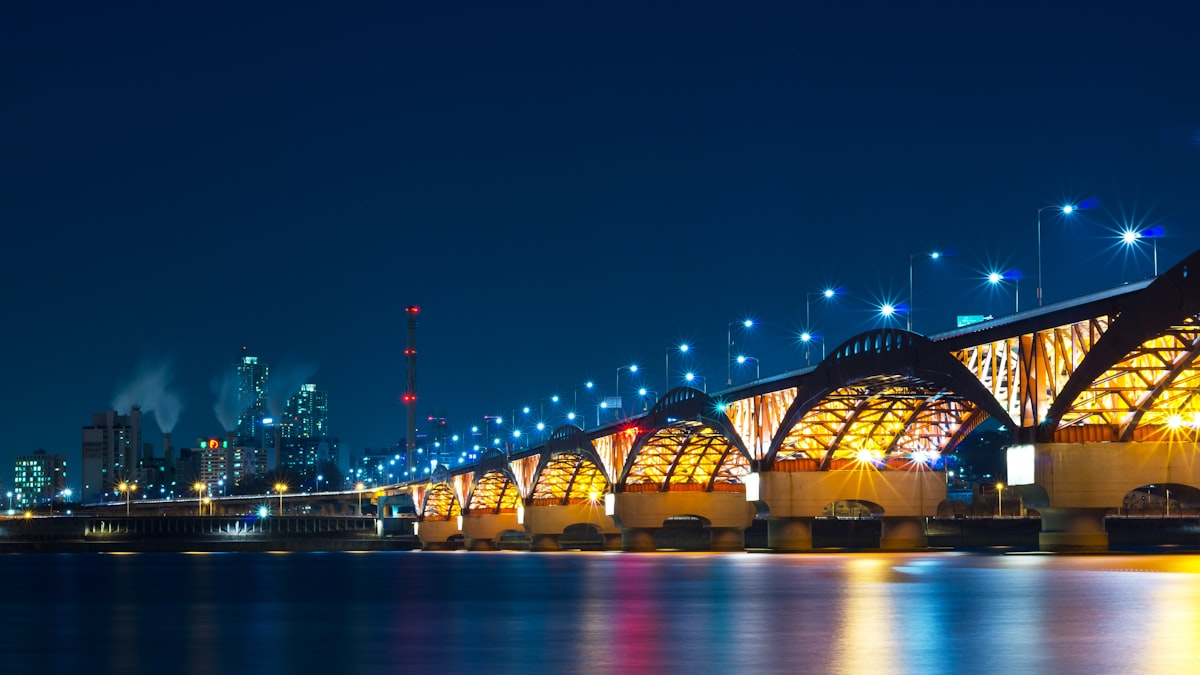
The city’s great free venue. The parks along the Han, Yeouido, Banpo, Ttukseom, fill on warm evenings with blankets, delivery chicken ordered to a GPS pin, convenience-store beer, which is legal to drink outdoors, and a thousand small speakers. It is Seoul’s most democratic nightlife: no lineup, no list, total cost under 20,000 won. The scene’s semi-official soundtrack culture grew from here too, the battery-rig sessions I describe in the Korean rave essay often start as picnics that acquired a subwoofer. Go before the September chill, stay for the Banpo bridge fountain, and note that the last trains still apply.
The city has started counting it. Seoul’s night economy chief adviser, Lee Ji-hyun, told Financial News (파이낸셜뉴스) in September 2026 that about 126,000 of the roughly 556,000 visits to Han River pools and water play areas this summer came at night, with DJing and Hangang Bamping (한강 밤핑, Hangang bamping) night camping in the programme, and that the number of people staying out at night around Yeouido, Ttukseom and Mangwon rose 65.5 percent on the year while the camping ran.
Run Clubs and Sober Social Fitness
The run club is the decade’s stealth nightlife format. Seoul crews meet on weekday evenings along the Han and the Cheonggyecheon, run five to ten kilometres, and then do exactly what a bar crowd does, talk, flirt, make plans, minus the alcohol and the cover charge. Several crews now end runs with a DJ and a cooldown floor, which tells you everything about where this is heading: it is the daytime-party logic applied to sneakers. For newcomers to the city it is the lowest-friction social entry point Seoul offers.
Silent Discos and Listening Rooms
Silent discos surface reliably at festivals, riverside events and rooftop series through the warm months, the headphone format solving the noise-ordinance problem that constrains every outdoor floor in this city. At the opposite volume extreme sit the listening bars and LP rooms, where the point is sitting still with a record and a drink, and the audiophile cafes that run album-playback evenings. Both formats select for the same thing: people who came for the music rather than the scene around it.
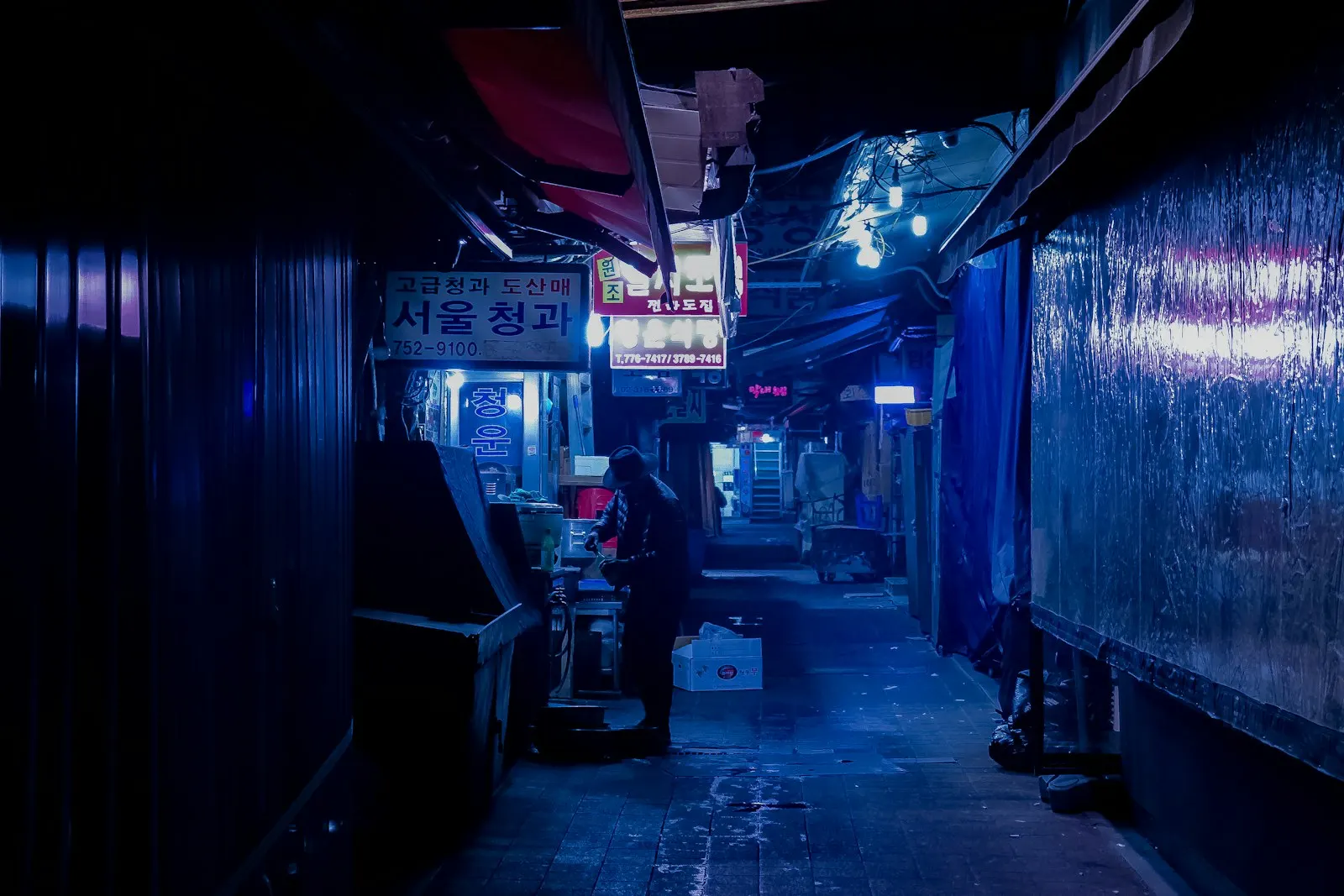
Jongno 3-ga: The Old City After Dark
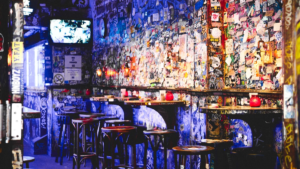
The most underrated night in Seoul. Jongno 3-ga’s pojangmacha alleys, tent bars serving grilled everything to office workers, retirees and students at the same plastic tables, deliver the density and noise of a club district with none of its self-consciousness. The area layers decades of the city on top of itself: the old cinemas, Nagwon’s instrument arcade, Insadong’s tea houses a street away, and one of Seoul’s most established LGBTQ+ bar scenes running quietly through it all. It pairs naturally with an evening in Euljiro, one subway stop and one century apart.
Time Out agrees. On 17 September 2026 it ranked Jongno 3-ga the coolest neighbourhood in the world, pointing to the pocha tables that fill Donhwamun-ro 11-gil every evening, the younger crowd now joining the office workers there, and queer-friendly bars that took root in the area as early as the 1970s.
Noraebang, Board Cafes, and the 24-Hour City
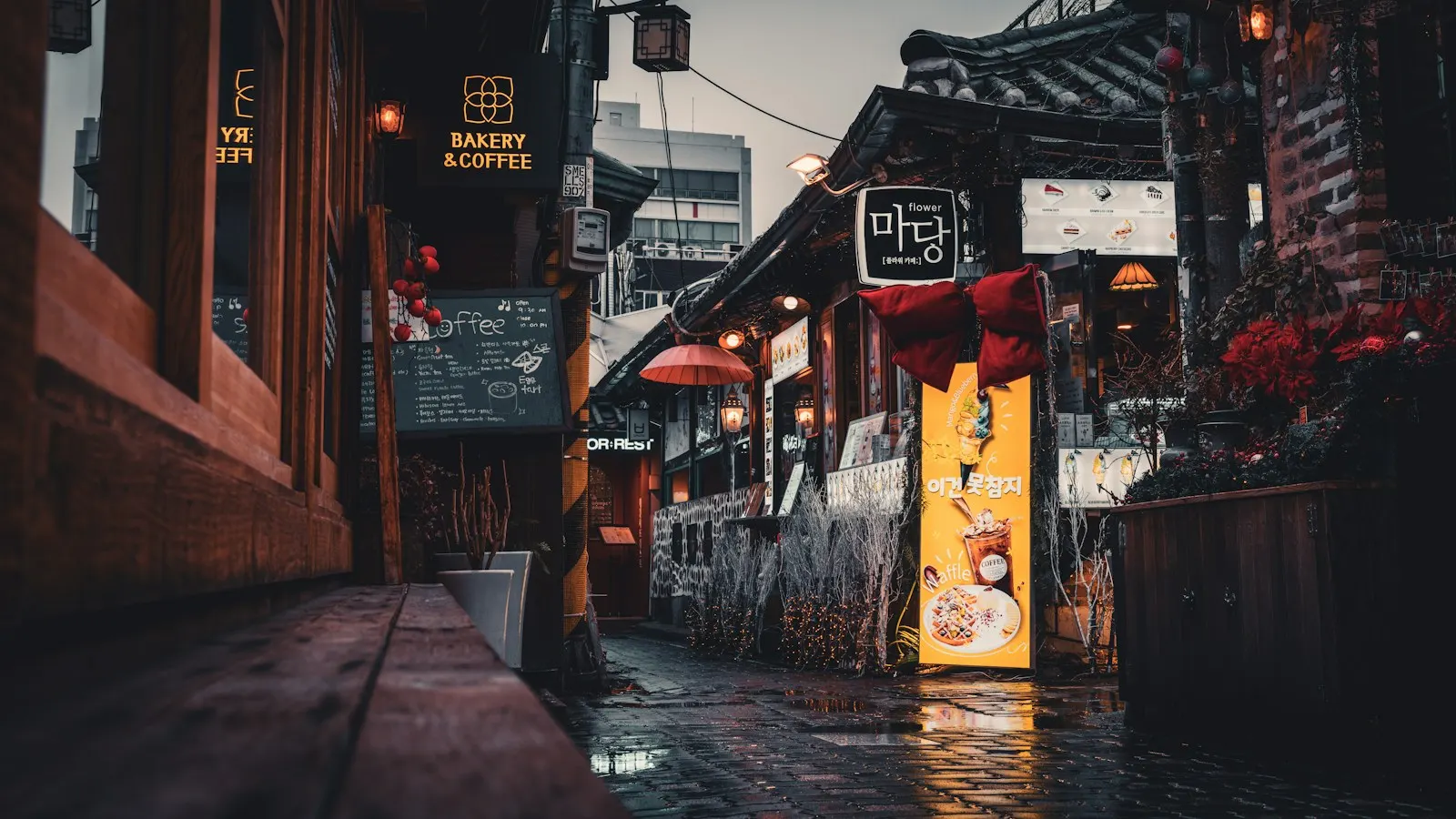
Round out the list with the formats Koreans actually use most: the noraebang as the standard third stage of any night, board game and comic cafes for the sober hours, 24-hour jjimjilbang saunas as the traditional final destination when the last train is long gone, and dawn food, haejangguk, gimbap, or the Gwangjang market floor, as the honest end point. None of this is a consolation prize. The club is one instrument in Seoul’s night; the city plays a full orchestra, and the people who know it best move between all of it in a single evening.
What Changed in 2026
This list needs an update, because 2026 turned several of these alternatives from side options into proper formats. The clearest case is the silent disco. On 10 May, a Han River silent disco at Saebit Island (세빛섬, Sebitseom) drew about 900 people, above the usual 600 to 800. One Instagram Reel from the night passed 760,000 views. The organisers kept two rules, no smoking and no pressure to drink, and those two rules are the whole pitch.
Then came the Sunday morning party. Budweiser ran Early Bird Vol.5 at Cove House in Mapo on 20 September, a DJ party where the only drink served was Budweiser Zero. First day advance tickets sold out, and the first four volumes drew more than 500 people between them. A beer company throwing a dance party without alcohol would have sounded like a joke when I opened Dojo. Now it reads as market research, and the market answered. It is also a clean example of the brand activation format done with some taste.
The run club got its rulebook too. As crews multiplied, some parks pushed back, as the Korea Times reported. Yeouido Park discourages shirtless running, clapping and shouting, group running and yelling at people to move aside. Songpa asks runners not to move in groups of three or more around Seokchon Lake. Seocho keeps groups under five on the Banpo track. None of it has legal force, and the city answered with a “running manners” campaign instead. My own rule for newcomers: small group, shirt on, and save the noise for the cooldown.
The headline number that circulates everywhere, 10 million runners in Korea, deserves some doubt. Wednesdata disputes it and points to an official survey showing participation closer to 7.5 percent. Running is clearly big here. It is just not as big as the marketing says.
Later Museums and the One Off Meetup
Culture got later hours as well. Eight Seoul city museums now stay open until 9pm five days a week, and Han River tent hours run to 10pm. The city’s night economy plan adds Moonlight Night Markets (달빛야장, dalbit yajang), with five pilots in 2026 and a target of 25 by 2028. For anyone who likes the picnic energy but not the cold, that is a real option.
Why people go to these markets has been studied. Kim Sung-min, Song Seop-gyu and Lee Hoon surveyed 547 visitors to the Seoul Bamdokkaebi Night Market (서울 밤도깨비 야시장, Seoul bamdokkaebi yasijang) at the Yeouido and Banpo Han River parks for a 2019 paper, and found seven motives: adventure, play, socialising, night-time aesthetics, cultural uniqueness, food, and showing off.
The biggest shift is how people find company. Electronic Times reported that 46 percent of Koreans in their 20s and 30s have no regular social group and prefer one off meetups. In that age group, 44.5 percent use KakaoTalk Open Chat to find them, and 27.7 percent each use Danggeun (당근) and Somoim (소모임). New Danggeun meetups rose 48.7 percent quarter on quarter in early 2026. Getting home matters too: in my Seoul Nightlife Report, 52.2 percent of respondents had been stranded after midnight. An evening meetup that ends by the last train solves that problem before it starts.
For a DJ, this is the most interesting part of the whole picture. The crowd is still out there. It just assembles itself one night at a time, around a run, a headphone party or a market stall, and the DJ who can play that room, like the ones who handle Han River boat parties, will keep working.
Watch and Listen
Silent Disco Korea filmed one of this summer’s Han River nights, a good picture of how many people now meet dance music.
Frequently Asked Questions
What can you do at night in Seoul besides clubbing?
Han River picnics, silent discos, run clubs, listening bars, noraebang and late museums all make a full night. Eight Seoul city museums stay open until 9pm five days a week. The city is also piloting Moonlight Night Markets in 2026.
Is there a silent disco on the Han River?
Yes. A Han River silent disco at Saebit Island drew about 900 people on 10 May 2026, with typical sessions drawing 600 to 800. Organisers ban smoking and put no pressure on anyone to drink.
Are there rules for running crews in Seoul parks?
Some parks discourage large groups, shirtless running and shouting. Songpa asks for no groups of three or more at Seokchon Lake, and Seocho limits groups to under five on the Banpo track. These guidelines have no legal force, but crews that ignore them wear out their welcome.
How do people in Seoul find meetups and new friends?
Among Koreans in their 20s and 30s, KakaoTalk Open Chat is the most used tool at 44.5 percent, followed by Danggeun and Somoim at 27.7 percent each. One off meetups are growing fast, with new Danggeun meetups up 48.7 percent in the first quarter of 2026.
Sources
- Hankyung: Han River silent disco at Saebit Island draws about 900
- Hankyung: Budweiser Early Bird Vol.5 Sunday morning party
- Korea Times: Shirtless runners and group running stir debate in Korea
- Wednesdata: The truth about 10 million runners
- Korea Herald: Seoul museums and Han River open later
- Korea JoongAng Daily: Seoul wants to become the city that never sleeps
- Electronic Times: How Koreans in their 20s and 30s use meetup apps
- Financial News (파이낸셜뉴스): interview with Seoul’s first night economy chief adviser (20 September 2026)
- Time Out: Jongno 3-ga, the coolest neighbourhood in the world in 2026 (17 September 2026)
- Kim Sung-min, Song Seop-gyu and Lee Hoon, Night tourism motives at the Seoul Bamdokkaebi Night Market, 예술과 과학기술 15(4), 2019
Written from Seoul, by someone who has been in the booth for more than 25 years. More on the site, or book a DJ.
Stay in the Loop
New writing on DJ culture, electronic music, and the Seoul underground, delivered when it matters.
More From The DJ Diaries
Play with the history
Four tools built from the same research as this site.