
V-Hall and Queen Live Hall had each been part of Hongdae (홍대) for around twenty years when both shut in 2020 (Korean). Neither was badly run. The pandemic outlasted their cash, and two rooms that had trained a generation of bands and crowds were gone within a year.
When a club closes, a city loses more than a business. It loses a room where a particular kind of social and cultural life was possible. Venues rarely die of one thing, and almost never of the thing the closing post says, and the ways they die tell you exactly what a city values.
한국어 요약
클럽은 왜 문을 닫는가
클럽이 한 가지 이유로 문을 닫는 경우는 드뭅니다. 흔한 패턴은 동네가 뜬 뒤의 임대료 재계약, 수년간 문제없던 공간에 갑자기 생기는 규제 문제, 현금 여유를 넘어서는 충격입니다.
후계자 없이 지쳐 버린 운영자, 그리고 음악이 아니라 분위기를 보러 온 손님 때문에 원래 관객이 떠나는 것도 원인입니다. 홍대의 V-Hall과 Queen Live Hall은 각각 약 20년을 버텼지만 2020년에 문을 닫았습니다.
잘못된 정보나 날짜가 있다면 알려 주세요.
The Building Is Often Worth More Than the Club
The End in London closed in 2009 after thirteen years. It had a single great room and a phenomenal sound system, programming of world standard and a healthy business. It closed anyway, because the building sold to a developer for whom luxury flats were worth more than any nightclub’s rent. The End was profitable; the building was more valuable empty.
Britain Lost Almost Half Its Nightclubs in Ten Years
Number of nightclubs in Britain
영국 나이트클럽 수, 10년 만에 거의 절반으로
How to read itA drop of 1,411 clubs, about 45%. This is a count for Britain as a whole; no London only count exists.
This is the most common cause of death in the genre: the venue as underpriced land. It has no villain, just arithmetic, and the Haçienda’s afterlife as an apartment block made it the standard punchline. London was reported to have lost half its clubs between 2005 and 2015 largely this way, though strictly that half is a figure for Britain: nightclubs fell from 3,144 to 1,733.
Famous rooms aren’t immune. In Berlin, Watergate closed at the end of 2024 after 22 years, its cofounder citing inflation, the energy crisis, rising costs and the high rent on its central site. Wilde Renate announced it would close at the end of 2025 after 18 years, saying its rent had more than doubled and its lease couldn’t be extended.
One Bad Licensing Month Can Undo Years of Good Work
Fabric’s 2016 closure showed the second mechanism: licence revocation, after drug deaths in a venue with better harm reduction practice than almost any of its peers. The revocation lasted months before a public campaign and 160,000 signatures forced a negotiated reopening.
The episode became the defining argument for London’s night czar, a post that was already a mayoral pledge and went to Amy Lamé that November, and for the wider night time economy movement: treat clubs as culture worth governing well, not nuisances to put out. Berlin got there first, granting clubs the status of cultural institutions. Most cities still haven’t, and Seoul’s licensing patchwork sits somewhere in between.
In Korea this is the single most underestimated risk in nightlife. A venue can operate the same way for six years and then be inspected, fined and suspended within weeks because a district office came under pressure about something unrelated. I’ve written about it as weather rather than climate.
Shocks Kill the Rooms With the Biggest Overheads
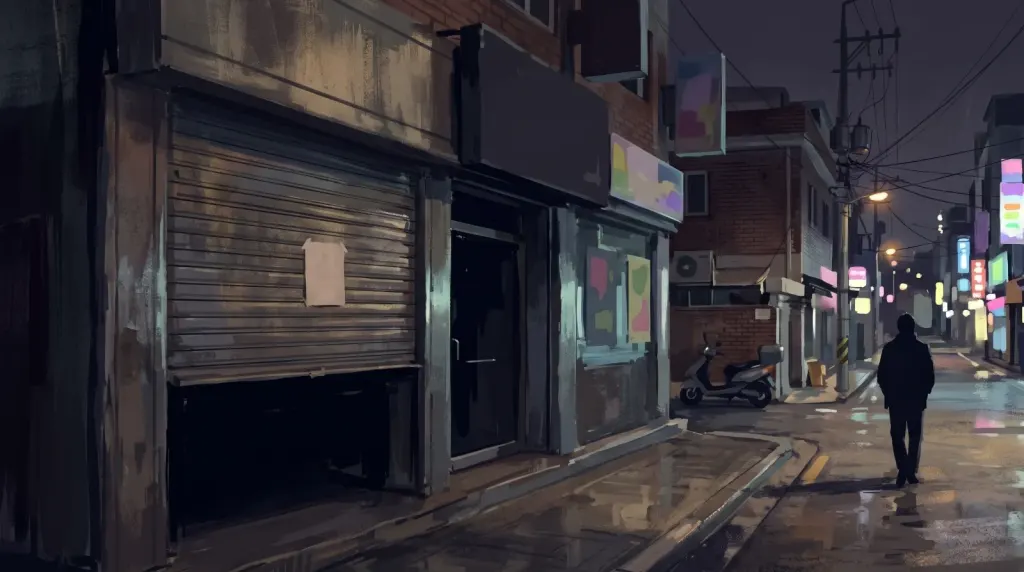
The third mechanism is the shock that outlasts the cash reserve. COVID closed more venues than any policy in nightlife history, V-Hall and Queen Live Hall among them. In Tokyo, the 2,400 capacity Ageha fell to a lost lease in 2022. Seoul’s Gangnam megaclubs (강남) stacked scandal on pandemic until the format itself died.
Shocks are survivable with low overheads and loyal regulars, which is why the small basement outlives the superclub. Seoul’s current map shows that pattern street by street. In the UK the shock hasn’t ended. The Night Time Industries Association counted 1,240 nightclubs in March 2020 and 835 by November 2024, and a CGA report found 65 had closed in the first nine months of 2024. By mid 2025, traditional nightclubs were down 33.8% since 2020, according to CGA and the NTIA, though their number had ticked up 5% over the year.
The Quiet Killers: Rent Reviews, Tired Founders and the Wrong Crowd
I’ve watched a lot of rooms go, and beyond the headline causes the same few patterns repeat.
Four Ways a Club Dies
The pattern, a case from this article, and what it looks like from inside
클럽이 문을 닫는 네 가지 이유
| Cause | A case | From inside |
|---|---|---|
| Property | The End, 2009 | A profitable room in a building worth more empty |
| Regulation | Fabric, 2016 | A licence pulled after years of steady trading |
| Shock | V-Hall and Queen Live Hall, 2020; Ageha, 2022 | A crisis that outlasts the cash |
| Slow fade | Small rooms everywhere | A rent review, a tired founder, the wrong crowd |
The ruleThe first three make the news. The fourth closes more good rooms and rarely gets a closing post.
The rent review, not the rent. Rooms survive high rent for years. What kills them is the renewal that arrives after the district gets popular, priced against what a cosmetics shop would pay for the same floor.
The founder getting tired. Unglamorous and extremely common. Most good small rooms are one or two people doing a hard job for a decade with no exit, and there’s often nobody to hand it to.
Success in the wrong direction. A room that gets busy attracts a crowd that came for busy rather than for the music. The original crowd leaves, and eighteen months later the new crowd moves on to whatever is busy now. This kills more good venues than failure does.
What Deserves Mourning Is the Next Room
The accounting error in every closure is treating the loss as one business. A club is compressed infrastructure: the residencies that train selectors, the door and bar jobs, the promoter apprenticeships, the social space that’s safe at 3am for communities that have nowhere else, and the reputation that makes touring artists route through a city at all. When a defining room dies, the scene it organised scatters and partly dissolves rather than moving somewhere new intact.
Still, the romantic version, where every closure is a loss and the city is being hollowed out, isn’t one I fully accept. Scenes are supposed to move. The rooms that mattered most to me over more than twenty years were mostly temporary, and some were only good because they were temporary: run cheaply in a building nobody wanted, by people with nothing to protect. When a venue becomes permanent it often becomes careful, and careful is worse.
What’s worth mourning is less the individual room than the disappearance of the conditions that let the next one open: cheap space, low scrutiny, and a landlord who doesn’t know what the room is for. Losing a beloved club is sad. Losing every building where a beloved club could have started is the real emergency, and that’s what Seoul should be watching in Euljiro (을지로) and Mullae (문래) right now.
What Helps, If You Care
Go on a normal night, not just the big one. A room dies of quiet Thursdays, never of quiet Saturdays. Buy your drinks at the bar rather than drinking outside first, because the bar is the business.
Follow the venue’s own account, because Korean rooms programme late and a half empty night is often a night nobody knew about. And when a room does close, follow the people rather than mourning the address. They always start something else.
Frequently Asked Questions
Why do nightclubs close down?
Rarely for a single reason. The most common patterns are a rent review after a district becomes popular, a sudden regulatory problem after years of stable operation, a shock such as the pandemic that outlasts the cash reserve, founder exhaustion with no succession, and success that brings in a crowd who came for the crowd rather than the music. Financial failure is often the symptom rather than the cause.
How many nightclubs has Britain lost?
Full Fact found that the number of nightclubs in Britain fell from 3,144 in 2005 to 1,733 in 2015. The Night Time Industries Association counted 1,240 in March 2020 and 835 by November 2024, and by mid 2025 traditional nightclubs were down 33.8% since 2020. Property values, licensing and the pandemic all played a part.
How can you support a club so it doesn’t close?
Go on ordinary nights rather than only headline ones, since venues die of quiet weeknights. Spend at the bar rather than drinking somewhere else first. Follow the venue directly, because many rooms announce programming only days in advance and quiet nights are often unadvertised ones. When a venue does close, follow the people who ran it, since they usually start something new.
Further Reading
- Wikipedia: The End, the London club that closed in 2009 when its building was sold
- Wikipedia: Fabric, the London club that lost its licence in 2016 and fought to reopen
- Wikipedia: Music Venue Trust, the UK charity set up to protect grassroots venues
- Wikipedia: gentrification and how rising property values reshape city districts
- How Seoul’s Club Scene Survived COVID, and What Changed
- Why Seoul Clubs Have Kitchens
Sources
Kyunghyang Shinmun (경향신문), on the closure of V-Hall and Queen Live Hall in Hongdae (February 2021)
Time Out London, When clubs die: five legendary closing parties
The Observer, on The End (October 2005)
The Guardian, on Fabric and Britain’s shrinking clubland (September 2016)
Full Fact, on nightclub closures in Britain
The Guardian, Fabric licence revoked (September 2016)
Dazed, Fabric has won the fight to reopen
Evening Standard, Fabric to reopen after deal with Islington Council
Mayor of London, the UK’s first night czar
Mixmag, Berlin clubs declared cultural institutions
Time Out Tokyo, Ageha closing in January 2022
Resident Advisor, Berlin club Watergate to close at the end of 2024
Mixmag, Wilde Renate to close permanently in 2025 (August 2024)
Mixmag, NTIA warns of pressure on nightclubs (January 2025)
The Drinks Business, CGA and NTIA Night Time Economy Market Monitor, Q2 2025 (September 2025)
Written from Seoul, by someone who has been in the booth for more than twenty years. More on the site, or book a DJ.
Stay in the Loop
New writing on DJ culture, electronic music, and the Seoul underground, delivered when it matters.
More From The DJ Diaries



Play with the history
Four tools built from the same research as this site.