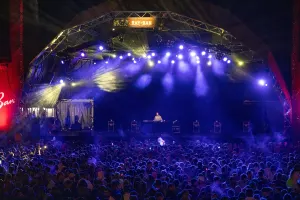
The first time I lost the beat in front of a full room, I wanted to walk out of the booth and keep going until I hit the sea. The kick drums of two tracks were landing at completely different moments, the transition fell apart in real time, and the dancefloor looked at me with the specific confusion of people who had been enjoying themselves until very recently. I was in my twenties, I thought I knew what I was doing, and I didn’t.
That night is still the most useful thing I can tell a beginner. Taste, a deep crate and a big personality can’t save you when two kick drums are fighting in front of an audience, so the technical foundations come first and everything else sits on top of them. The good news is that the foundations take months rather than years, and the gear costs less than the shops would like you to believe.
This guide runs in the order the work happens: what to buy, which skills to learn first, how to practise so it produces progress, how to build a library and a sound, and how to get in front of real crowds. It’s written for someone who has never touched a set of decks, and for someone who has been practising in their bedroom for a year without a clear idea of what to work on next.
The Beginner Path, in Order
Six steps, the same order every working DJ learned them
Decide Where You Want to Play, Then Buy Less Than You Think
Where you want to play decides what you buy. Underground electronic music in clubs sets a high technical bar and a deeper equipment budget. Parties for friends, corporate events and mobile gigs need little more than a controller and a solid library. Bars and restaurants with no installed DJ gear make portability the priority. Whichever it is, you need less gear than the industry wants you to think: a laptop, an entry level controller and closed back headphones. Speakers can wait, because you’ll practise on headphones.
Four Ways to Start, and Which to Pick
What each setup costs and what it teaches you
입문 DJ 장비, 무엇부터 살까
| Setup | Cost | What it teaches | Verdict |
|---|---|---|---|
| Controller and laptop, such as the DDJ-FLX4 | About US$300 for the controller | Everything you need for the first two to three years | Start here |
| A used DDJ-400 | The same or less, secondhand | The same skills, on the older model | A good buy |
| A DJ app on a phone or tablet | Low | No hand skills, no headphone cueing | Skip it |
| CDJ-3000s and a club mixer | Hourly rental at a school or studio | The layout waiting in the club booth | Before your first club gig |
The ruleA full beginner setup, headphones and software included, comes in under US$500. Spend the rest on music.
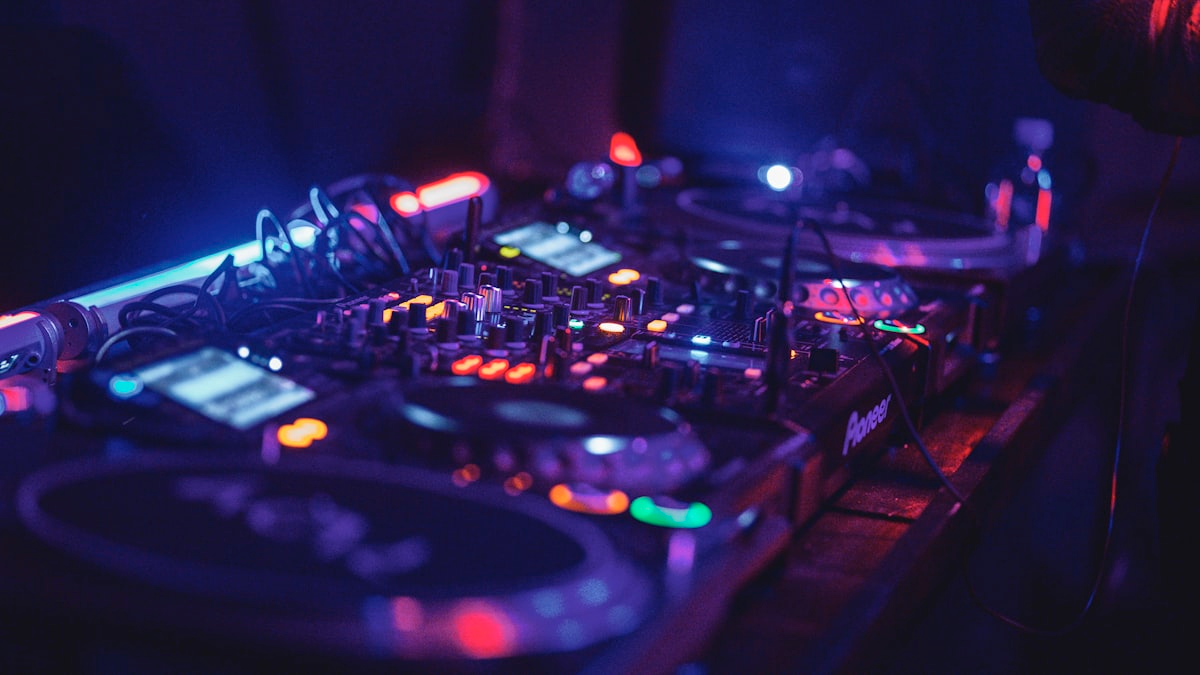
A controller puts everything you need to learn in one unit: two virtual decks, a mixer section, jogwheels for cueing and scratching, and EQ controls, all connected to DJ software on your laptop. The Pioneer DDJ-FLX4 is one of the best entry level options. It runs both rekordbox and Serato, costs around US$300, and will teach you everything you need for your first two to three years. Its predecessor, the DDJ-400, is still excellent for the same price or less secondhand. What matters is real software and muscle memory that carries over to club equipment.
Don’t start on a phone or tablet app. Those tools have their uses, but they don’t build hand and eye coordination, headphone cueing instincts or the hardware familiarity you need when you stand in front of a club’s installed setup and have thirty seconds to work out where everything is.
That installed setup will almost always be Pioneer CDJs and a standalone mixer, the industry standard in professional booths. A controller is fine for the fundamentals, but at some point you need to know the club layout. Most cities have DJ schools, rehearsal studios or rental shops where you can practise on CDJ-3000s by the hour without buying them. The controllers versus CDJs guide goes deeper on when to make the jump.
For software, learn whatever your controller unlocks for free; the skills transfer. rekordbox, Pioneer’s free library and DJ software, is the sensible default, because the CDJs in club booths are built around it, so time spent setting cue points, analysing tracks and building playlists there carries straight into the booth. Serato DJ Pro is just as professional and stronger in hip hop and scratch, and Native Instruments Traktor has a loyal following in techno. The Mixing Through Time equipment guide traces how all of this grew out of the turntables of the 1950s.
Whatever you buy, start with the music. The word DJ comes from disc jockey, a term coined in 1935 for radio hosts who played records on air, and today it covers a hip hop DJ at a college party, a techno DJ in a 5am club room and a wedding DJ taking four decades of requests. They share a job title and not much else. You’ll spend a lot of hours alone with headphones and a screen, and only enthusiasm for what you’re hearing gets you through them. The history of DJing runs in a straight line from obsessives who couldn’t stop buying records to the people who built careers out of it. Start where your obsession is.
Learn the Skills in Order, With Sync Turned Off
Beatmatching comes first. It means lining up the tempo of two tracks so their beats fall together and one can blend into the other without the transition collapsing. Set both tracks playing, use the pitch fader to match their BPMs, nudge the jogwheel until the beats sit together in your headphones, then bring the second track in over the first. It feels impossible the first hundred times. Then it clicks, and like riding a bicycle, you never fully lose it.
Practise it by ear with sync turned off. Software can do it for you, and auto sync is handy, but it fails at inconvenient moments, and when it does you need to fix the problem in real time without thinking. Most of the common mistakes beginners make at their first gigs trace back to a skill the software was doing for them.
The EQ comes second. A DJ mixer has three main bands: bass, mid and treble. The standard move is to cut the bass of the incoming track as you bring it in, then swap the basslines over gradually, restoring the new track’s bass as you take it out of the old one, so two basslines never fight. A filter sweep, bringing a high pass filter down over the outgoing track to strip its bass and mids before the cut, is one of the cleanest tools in the basic kit. Learn what each band does to a track on its own before you try it in a mix.
Key comes third. Harmonic mixing means choosing tracks in compatible musical keys, so the blend sounds consonant rather than sour. The Camelot wheel, created by Mark Davis and now part of Mixed In Key, maps keys onto a numbered clock face so compatible keys sit next to each other: tracks at the same number or a neighbouring one will mix. Mixed In Key is the software most professionals use to tag a library with those numbers. You don’t need it for every transition, and some of the best moments in a set are deliberate clashes, but knowing the system means you’re making a choice, not an accident.
Practise on Purpose, and Record Every Mix
The biggest mistake beginners make is treating practice like listening. Sitting behind the decks with music playing, moving a fader now and then, doesn’t build skills. Real practice means picking one technical problem and working on it until it’s solved. An hour split three ways works well.
A Beginner Practice Hour, in Three Parts
The routine this guide recommends
초보 DJ를 위한 한 시간 연습법
| When | What you do | Why |
|---|---|---|
| First 20 minutes | Two tracks, sync off, pitch fader and jogwheel only | Until the beats line up every time |
| Next 20 minutes | Transitions with the EQ and crossfader, recorded | So you can hear them back |
| Last 20 minutes | Go through your library: cue points, tags, pairs that work | You learn your music, not just the tools |
The step most people skipListening back to the recording. A mix sounds different from behind the decks than it does to someone hearing it fresh.
Listening back is the most valuable part of the session and the one most beginners skip. How a mix sounds while you’re making it is completely different from how it sounds to someone hearing it for the first time. Things you thought were smooth often aren’t, and transitions you thought were rough sometimes work. Practice closes the gap between what you meant and what you played, but only if you listen to what you played.
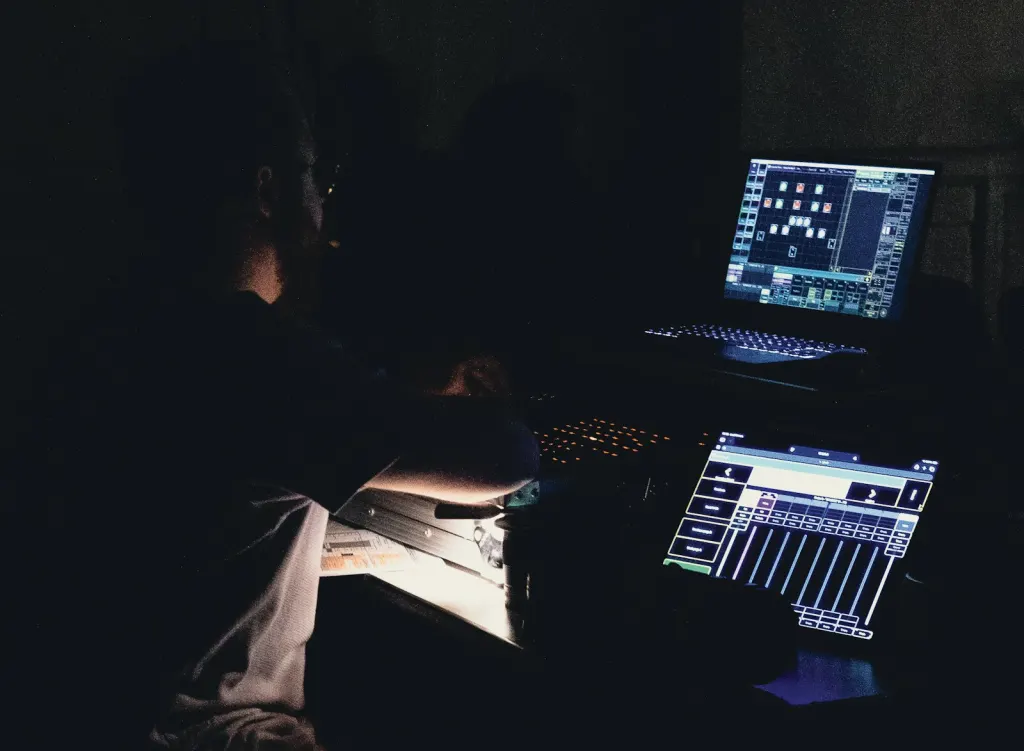
About twenty years ago I wandered into a drum and bass night in Seoul, which wasn’t my scene at all. The DJ turned out to be DJ Marky, the Brazilian drum and bass legend, and watching him was an education. The technique was extraordinary, but what struck me was the listening. He had his headphones half off one ear the whole set, catching the room’s response to every track and adjusting as he went. That’s the advanced version of the listening back habit you build in the bedroom. I took it into my house sets, along with a second lesson: stepping outside your usual genre, even for a night and even as part of the crowd, shows you instincts you’d never pick up at home.
A Small Library You Know Beats a Big One
Your library decides the mixes you can make, which decides the crowds you can move. The DJs with twenty year careers aren’t the ones with the biggest libraries; they’re the ones who know theirs well enough to make decisions under pressure. Take it seriously from the start and you avoid the problem that catches a lot of DJs three or four years in: thousands of tracks that seemed like a good idea at the time and don’t fit together into anything.
Beatport is the standard store for electronic music, strongest in techno, house and their subgenres. Traxsource runs deeper in soulful house, disco and Afrobeat flavoured electronic music. Bandcamp is where independent artists put music that won’t appear anywhere else, and buying there puts money straight into the artist’s hands. Juno Download was the broad all rounder until it closed in June 2026; Juno still sells vinyl. The DJ music downloads guide has the full breakdown.
Then organise. Set cue points on every track before it goes into an active playlist. Tag tracks by key, BPM and energy. Build playlists for moments rather than genres: openers, peak hour, closers, tracks that work at low volume, tracks that have worked in particular rooms.
Your sound grows out of that library. It’s the sum of everything you’ve listened to and played, the taste you’ve built by paying attention, and the way you move a room. It arrives slowly, and the way to get there is to follow your curiosity rather than copy someone else. DJ AM’s genre blending and mashups, deadmau5’s focused, high production electronic music and The Blessed Madonna’s joyful, disco tinged selections are all legitimate, and none of them is the right way. Each is a personality that developed over years of listening and experimenting.
What doesn’t work is deciding what kind of DJ you want to be and engineering the image backwards. The persona follows the music. Play what excites you, record it, listen back, play it for people whose ears you trust, and adjust. What you wear in the booth matters a little, but much less than your track selection and how well you read a room.
The Shortcuts Are Fine, Up to a Point
None of this means the modern shortcuts are bad. Sync, streaming and controllers have made DJing cheaper and easier to start than at any point in its history, and plenty of good DJs use all three. The catch is that every shortcut has a limit, and you want to find it in your bedroom, not in a booth.
Streaming is the clearest case. Since September 2025, Spotify Premium has streamed directly into rekordbox, Serato and djay on desktop, and since December 2025 into the rekordbox and djay mobile apps too. That’s a great way to explore. But it’s licensed for personal, non commercial mixing only, there’s no offline mode, and tracks disappear when licensing changes. Buy the files any paid set depends on.
Sync is the same. Use it once you can beatmatch without it, so that when it slips you can catch it by ear. The controller is the same again: it’s the right place to learn, but the club booth will have CDJs, so book an hour on a pair before anyone books you.
How to Get Your First Gig
The fastest route to a first gig isn’t emailing venues. Become a visible part of the local scene first. Go to the nights you want to play. Talk to the promoters and DJs as someone interested in what they’re doing, not as someone who wants something. Offer to help: carry gear, work the door, hand out flyers. Show that you turn up, follow through and are easy to be around. It’s slow, and it’s the route that leads to gigs that don’t evaporate after one night.
Make a mix that sounds like you and put it where people can hear it: SoundCloud, YouTube or Mixcloud. It should represent what you do, not show off every technique you’ve practised. If you can’t yet hold sixty minutes at a steady standard, go shorter. A good thirty minute mix is worth more than an hour that loses focus halfway through. Play for friends before you play for strangers.
When gigs start coming, read the DJ bio guide before you write a press kit, because your bio is often read before anyone presses play. The piece on building a reputation on performance covers how careers grow from there. The DJs still playing thirty years in weren’t always the most gifted at the start; they stayed curious, kept updating their libraries and kept learning from other DJs and from crowds. Resident Advisor’s DJ profiles are a good place to read how working DJs think about that, in their own words.
One more thing before your first gig. Clubs are loud, often dangerously so, and hearing damage is permanent. Buy a pair of high fidelity earplugs and wear them at every gig. The Sound Advice piece covers this properly, and the DJs who wish they’d started sooner far outnumber the ones who think they were too careful.
I built a few free tools on this site for exactly this stage. The DJ and club glossary explains 100 DJ and club terms in plain language. The dance music timeline walks through 127 genres year by year with an official track for each, a good way to find the music you want to start with. If you’re torn between two styles, the genre face offs put them side by side, tempo included.
Test Yourself
Frequently Asked Questions
How do I start DJing as a complete beginner?
Get a two channel controller, a laptop, closed back headphones and the free software your controller unlocks, usually rekordbox or Serato DJ Lite. Spend your first weeks beatmatching by ear with sync off, then learn to blend with the EQ, recording short practice mixes and listening back. Pick a genre you love, build a small library you know well, and play for friends before you look for gigs.
What equipment does a beginner DJ need?
A laptop, an entry level controller such as the Pioneer DDJ-FLX4 or a secondhand DDJ-400, closed back headphones and music you own. The FLX4 costs around US$300, and a full starter setup comes in under US$500 with software. Speakers can wait, and you don’t need CDJs, turntables or an expensive mixer to learn the fundamentals, though you should rent time on club CDJs before your first club gig.
Can you DJ with Spotify?
Yes, with limits. Since September 2025 Spotify Premium has streamed into rekordbox, Serato and djay on desktop, and since December 2025 into the rekordbox and djay mobile apps. It’s licensed for personal, non commercial mixing only, there’s no offline mode and tracks can vanish when licensing changes, so buy the files any paid set depends on.
How long does it take to learn to DJ?
Most people can beatmatch and hold a clean thirty minute mix after three to six months of regular practice. Feeling comfortable in front of a live crowd usually takes a year or more of real gigs, and reading a room keeps developing for as long as you play. That last part is what gets you booked again.
Further Reading
- We Are Crossfader: The Complete DJ Course, a free video course in the same order as this guide
- Digital DJ Tips: tutorials, gear reviews and plain language news for beginners
- Red Bull Music Academy lectures: two decades of DJs and producers on how they learned
- How to DJ Right, by Frank Broughton and Bill Brewster, the classic book on the craft
- Seoul Community Radio: independent underground radio made in Seoul, good for hearing how local DJs build a mix
- DJ Controllers vs CDJs: Which Should You Learn On?
- Common DJ Mistakes and How to Avoid Them
- Daft Punk: History and Legacy
- Quiz: What Kind of DJ Are You?
Sources
Pioneer DJ, DDJ-FLX4 product page (rekordbox and Serato support)
Pioneer DJ, CDJ-3000 product page
Mixed In Key, the Camelot wheel
Spotify Support, using Spotify with DJ software
MusicRadar, Spotify returns to iOS and Android DJ apps, December 2025
MusicTech, Juno Download closes, June 2026
Wikipedia, Disc jockey (origin of the term, 1935)
World Health Organization, Deafness and hearing loss fact sheet
Written from Seoul, by someone who has been in the booth for more than twenty years. More on the site, or book a DJ.
Stay in the Loop
New writing on DJ culture, electronic music, and the Seoul underground, delivered when it matters.
More From The DJ Diaries


Play with the history
Four tools built from the same research as this site.